Portuguese Prepper
Emergency Weather Radios: NOAA Alerts, SAME & Backup Power
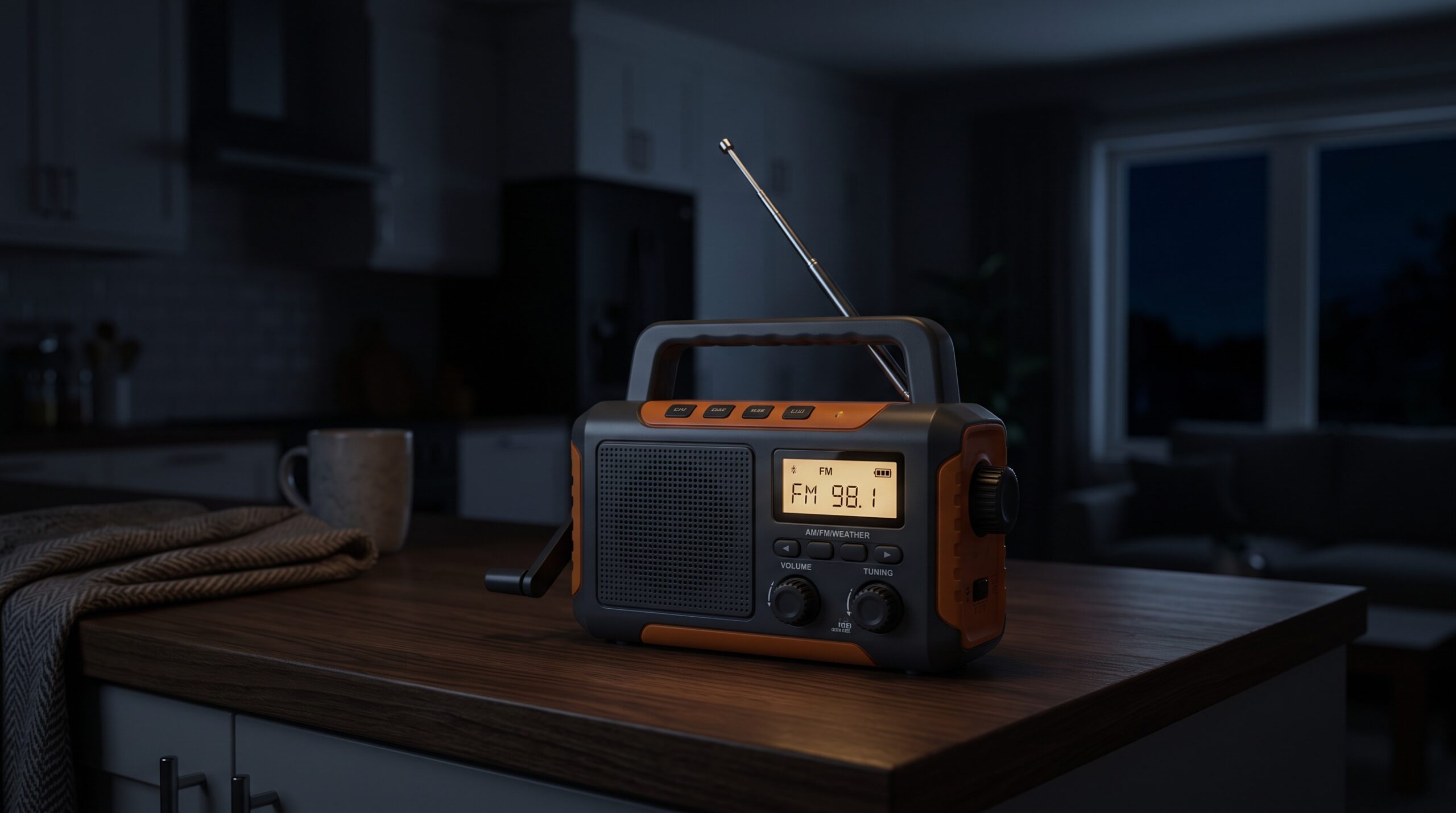
Short answer: for U.S. households, a dedicated NOAA Weather Radio can add a useful warning channel that does not depend on cellular data or home internet. For a fixed home location, a SAME-capable receiver such as the Midland WR400 is the more targeted choice. For portable use and multiple backup power options, the Midland ER310 is the more flexible format.
NOAA Weather Radio is a U.S.-specific system. If you live elsewhere, use the equivalent official public-warning and broadcast services for your country rather than assuming NOAA coverage applies.
Affiliate disclosure: This page contains affiliate links. If you purchase through these links, we may earn a commission at no additional cost to you.
WR400 vs. ER310: which format fits your plan?
| Need | Midland WR400 | Midland ER310 |
|---|---|---|
| Primary role | Home-base alert receiver | Portable emergency radio |
| SAME location filtering | Yes | Check the current model’s alert features and manual for your intended use |
| Power strategy | AC power with battery backup | Rechargeable battery plus alternate charging/power options |
| Best fit | Bedroom, kitchen or fixed household warning point | Emergency kit, travel or portable outage use |
Home base: Midland WR400
A fixed receiver built around localized alerting. SAME programming is useful when you want the radio to respond to warnings for selected counties or areas instead of every alert carried by the transmitter.
Find it on AmazonPortable option: Midland ER310
A portable emergency-radio format with multiple power options and integrated lighting. It is better suited to an emergency kit than a permanently installed bedside alert receiver.
Find it on AmazonWhat SAME actually does
Specific Area Message Encoding, or SAME, adds digital information to a warning broadcast, including the event and the geographic area affected. A properly programmed SAME receiver can activate for alerts that match the selected location. This reduces irrelevant alarms compared with a receiver that responds to every warning within a transmitter’s wider coverage area.
SAME is valuable, but it still depends on correct programming and reliable reception. Record the appropriate location code, test the receiver and keep its clock, backup batteries and settings maintained.
Reception is not guaranteed everywhere
NOAA transmitters often cover broad areas, but terrain and buildings can create weak spots. The National Weather Service notes that typical transmitter coverage is roughly 40 miles under favorable conditions, while valleys, dense construction and other obstructions can reduce practical reception. Place the antenna carefully and test the radio in the room where it will normally remain.
Power redundancy matters
A warning receiver only helps if it still has power. For a home radio, maintain fresh backup batteries even when the unit is normally connected to mains power. For a portable radio, treat hand-crank or solar charging as supplemental resilience rather than an excuse to ignore battery condition. Keep a tested primary battery source and know how long the radio can operate in your normal listening mode.
Use more than one warning channel
A weather radio should complement, not replace, other official alert channels. Mobile emergency alerts, local government notifications, broadcast radio, weather services and community information can provide overlapping coverage. Redundancy is especially useful because any single transmitter, network, device or power source can fail.
Sources reviewed: U.S. National Weather Service NOAA Weather Radio and SAME guidance, plus current Midland product documentation. Reviewed: September 2026.