
Portuguese Prepper
Emergency Communications: Staying Connected When Networks Fail
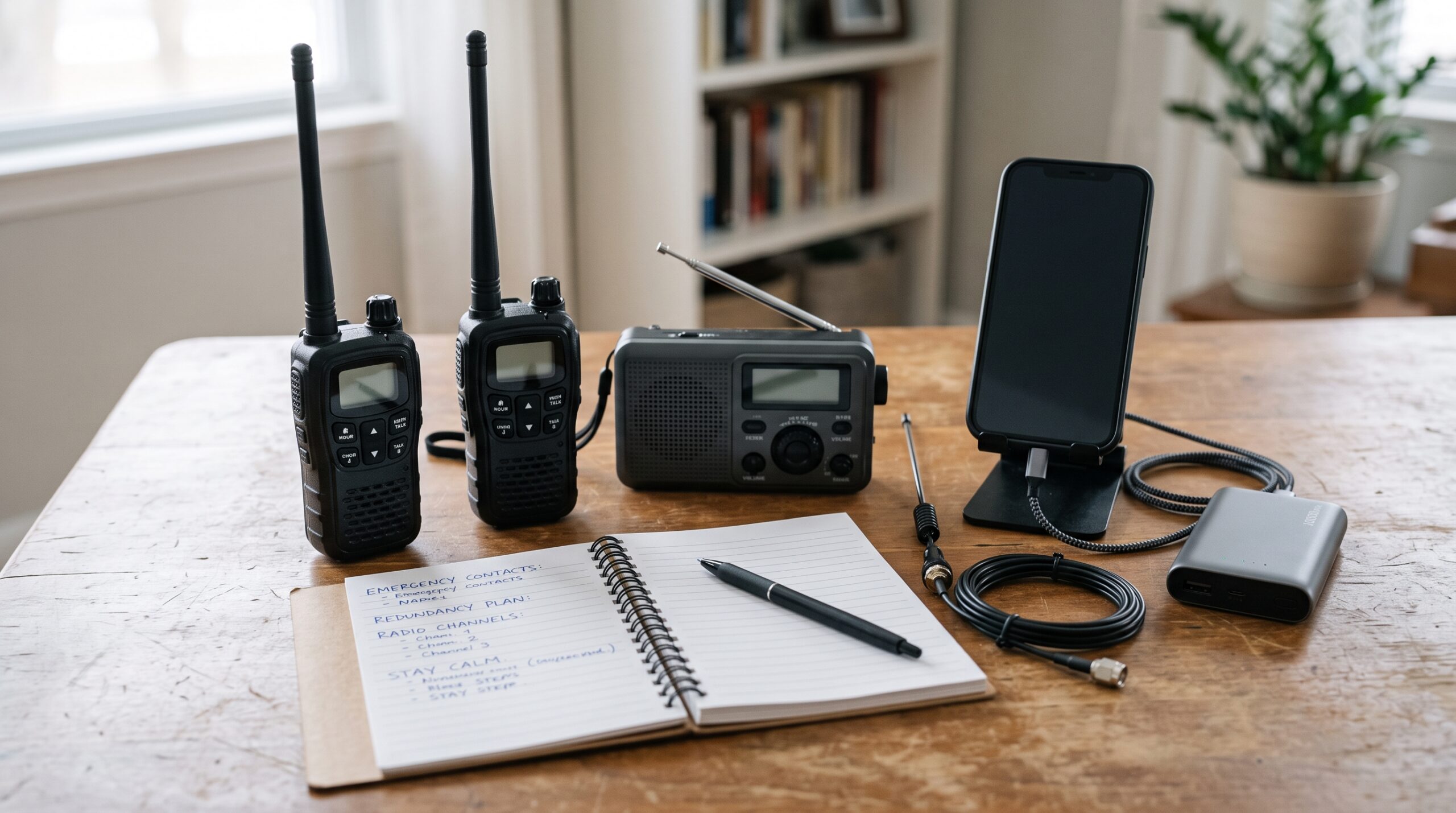
During an emergency, reliable information can affect almost every decision you make. Cellular networks, internet access, and other communications infrastructure may continue working normally, become congested, operate intermittently, or fail because of power loss, physical damage, or other disruption.
A resilient emergency communications system therefore should not depend on a single network, device, or power source. The objective is to maintain several practical ways to receive information and communicate with other people when your preferred method is unavailable.
Emergency Communications Has Two Jobs
An emergency communications plan needs to solve two different problems: receiving information and exchanging information.
1. Receive Reliable Information
You need a way to learn what is happening outside your immediate location. Depending on where you live and which systems remain operational, that may include official mobile alerts, broadcast radio, dedicated weather or emergency receivers, internet services, or information from local authorities.
2. Communicate With Other People
You also need ways to exchange information with family members, neighbors, your group, or emergency services. Cellular voice and messaging may remain your primary method, but appropriate two-way radios, satellite messengers, mesh devices, and predetermined low-tech procedures can provide additional options.
A system that can transmit but cannot receive useful external information is incomplete. So is a system that receives emergency alerts but gives your household no alternative way to communicate when normal networks are unavailable.
Start With a PACE Communications Plan
A useful framework for communications redundancy is PACE: Primary, Alternate, Contingency, Emergency. Instead of asking which single radio or device is best, identify several methods that can perform the same essential communication function.
Your Primary method is what you normally expect to use. The Alternate method provides another practical option if the primary method becomes unavailable. The Contingency method provides additional resilience during a more significant disruption. The Emergency method is the last practical fallback when your other options have failed.
The specific technologies assigned to each level depend on distance, location, infrastructure, regulations, equipment, and the people you need to reach. PACE is a planning framework, not a requirement to buy four different electronic devices.
Build Your Communications System in Layers
Layer 1: Normal Networks
Start with the systems you already use: cellular voice, SMS, messaging applications, internet access, and other established services. Emergency preparedness does not require abandoning infrastructure that is still functioning.
Layer 2: Local Independent Communications
Appropriate two-way radios can provide direct local communication without routing every conversation through a cellular network. The correct radio service depends on your location, licensing requirements, terrain, distance, and who needs to communicate.
Layer 3: Communications Beyond Local Infrastructure
When you need to communicate beyond the useful range of local systems, satellite messengers or other suitable long-distance technologies can provide another layer. These systems have their own coverage, subscription, visibility, power, and operational limitations.
Layer 4: No-Network Signaling
Your final layer does not necessarily need electronics. Whistles, visual signals, written messages, predetermined meeting locations, and agreed procedures can still communicate useful information when networks and powered devices are unavailable.
No single communication technology works everywhere. Terrain, distance, infrastructure, power, regulations, weather, equipment, and the location of the other person all affect which method is useful.
Start With a Communications Plan
Receive Emergency Information
Receiving information deserves its own place in your communications plan. Local conditions, evacuation instructions, weather warnings, infrastructure failures, and other official information may change what your household needs to do next.
The appropriate alert system depends on your country and location. In the United States, NOAA Weather Radio is an important component of many emergency-information plans; other countries use different broadcast and public-warning systems.
Local Two-Way Communications
Off-Grid Digital & Long-Distance Communications
Resilience & Last-Resort Communications
Radio Rules Depend on Where You Live
Owning a radio that is technically capable of transmitting on a frequency does not automatically mean you are permitted to transmit there. Radio services, frequency allocations, equipment requirements, power limits, and licensing rules vary by country and sometimes by service.
Our coverage of GMRS refers to the United States, where GMRS is regulated by the Federal Communications Commission. Amateur radio also operates under national licensing and operating rules.
If you are outside the United States, do not assume that U.S. radio services or frequencies can be used under the same conditions. Verify the regulations that apply in the country where you intend to operate.
This is particularly important with programmable radios capable of accessing multiple frequency ranges. Technical capability and legal authorization are not the same thing.
Communications Need a Power Plan
A communications system is only as resilient as its power supply. Phones, handheld radios, satellite messengers, mesh nodes, and many emergency receivers eventually become useless if their batteries cannot be replaced or recharged.
Know which batteries each device uses. Keep appropriate spare cells or charged battery packs where practical, maintain the necessary charging cables, and decide how you will replenish rechargeable equipment during a prolonged outage.
Power banks may be sufficient for phones and small electronics during shorter disruptions. Longer emergencies may require larger battery systems, vehicle charging, solar panels, generators, or a combination of several methods.
For a complete approach to batteries, power banks, portable power stations, generators, solar charging, and emergency lighting, see our Power & Lighting Preparedness hub.
Equipment Is Not a Communications Plan
Four radios stored in a cabinet do not automatically give a household an effective emergency communications system.
Decide in advance who needs to communicate, which methods you will try first, what happens when those methods fail, and where people should go if communication becomes impossible.
Depending on your situation, a practical plan may include agreed channels or communication methods, scheduled check-in times, important contact information stored offline, predetermined meeting locations, and a procedure for moving from one PACE method to the next.
Everyone included in the plan should understand the equipment before an emergency. A radio, satellite messenger, or mesh device that nobody knows how to configure or operate is a weak fallback.
Where Should You Start?
Start with the people you actually need to reach rather than with the radio you want to buy. Determine the distances involved, where those people are likely to be, which normal networks you already share, and which failures would prevent communication.
Then build a PACE plan around those requirements. Keep normal cellular communications as your primary method where appropriate, add a suitable independent alternative, consider a longer-distance option if your circumstances require one, and establish a simple no-network fallback.
Finally, test the plan. Verify practical radio range in the places where you expect to use it, learn the controls on your devices, confirm that batteries and charging systems work, and make sure the other people in the plan know what they are expected to do.