
Portuguese Prepper
Water Preparedness
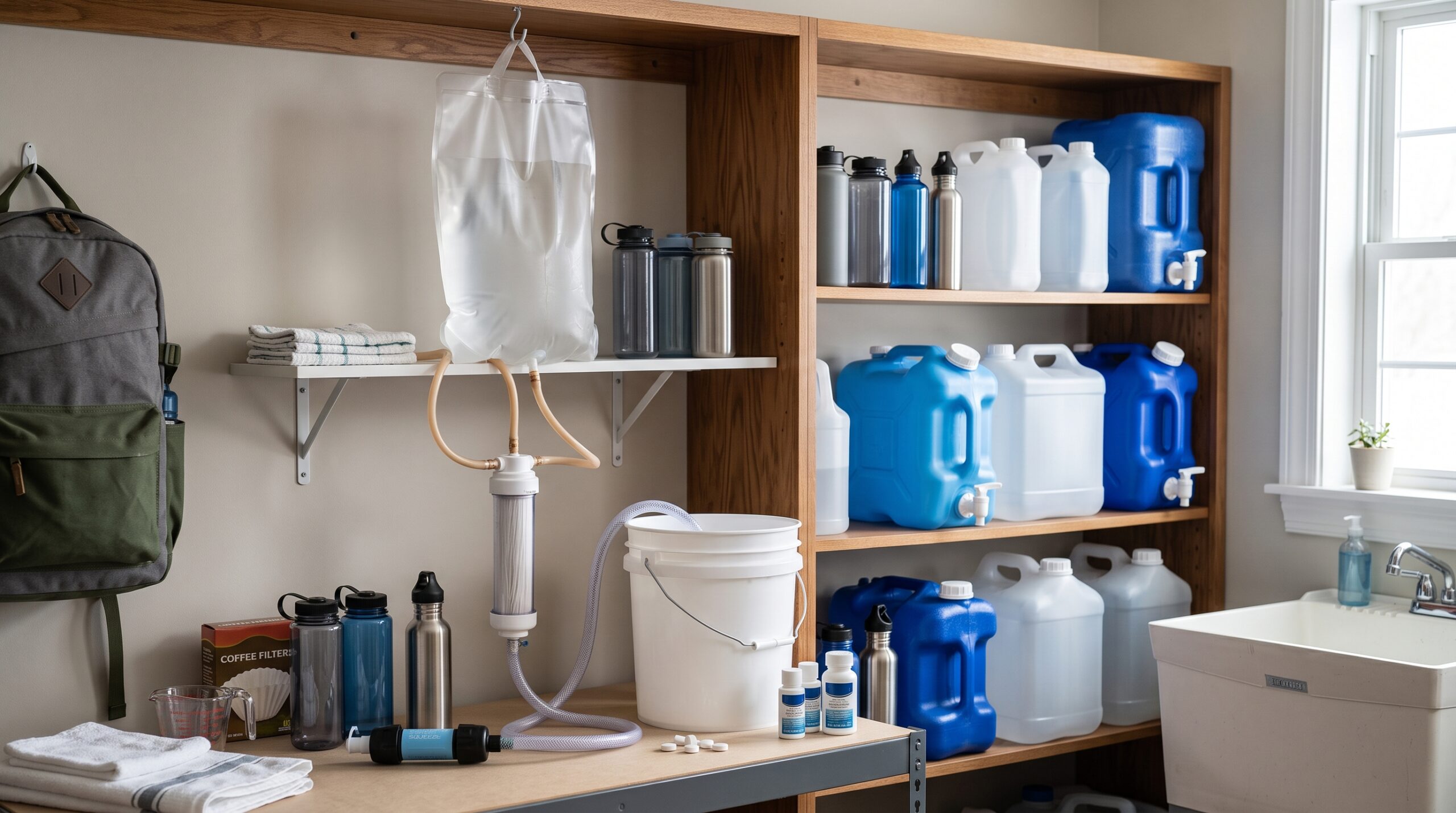
Water is one of the first priorities in any preparedness plan. It is also heavy, bulky, and difficult to improvise once normal supplies are interrupted. A resilient household therefore needs more than a water filter: it needs stored water, safe containers, treatment options, and a practical way to replenish supplies if an outage lasts longer than expected.
A practical water plan follows four principles: Store, Treat, Filter or Purify, and Replenish. Stored potable water covers immediate needs. Appropriate treatment helps keep water safe. Filters and purifiers provide additional options when the source is uncertain. A replenishment plan extends your supply beyond what you can physically store.
If you are starting from zero, begin with enough safely stored drinking water for at least the first 72 hours. Once that baseline is established, expand toward a longer household reserve and add redundant treatment and filtration methods.
Start With Stored Water
A filter cannot help if you have no accessible water source. For most households, the first layer of preparedness should therefore be water that is already stored, accessible, and ready to use.
Portable Filtration & Purification
Portable filters and purifiers become important when stored water is exhausted or when you need to collect water away from home. Different technologies address different contaminants, so there is no single device that is ideal for every source and every scenario.
Home & High-Capacity Water Treatment
Household water treatment has different requirements from a bug-out filter. Capacity, flow rate, replacement elements, storage volume, maintenance, and the contaminants a system is designed to address all matter when several people depend on the same supply.
Emergency Water Collection
Some emergencies provide warning before water service is interrupted. In those situations, temporary storage can dramatically increase the amount of water available to a household without requiring permanent tanks or dozens of containers.
Build Redundancy Into Your Water Plan
No single container, filter, or treatment method should be your entire water strategy. Containers can leak. Filters can clog or freeze. Chemical treatments can expire or become unsuitable for a particular source. The water source itself may become inaccessible.
A stronger system combines several layers: immediately available drinking water, additional household storage, a portable filtration or purification method, a backup disinfection method, and a plan for obtaining more water if the disruption continues.
The objective is stored supply, safe treatment, and redundancy. The longer the emergency lasts, the more important each layer becomes.
Where to Start
If you have no emergency water plan today, do not begin by buying the most expensive purifier. First calculate how much water your household needs, establish a basic stored reserve, and make sure everyone knows where it is. Then add portable filtration, chemical disinfection, and additional storage capacity as successive layers.