
Portuguese Prepper
Food Preparedness: Building a Practical Emergency Food Supply
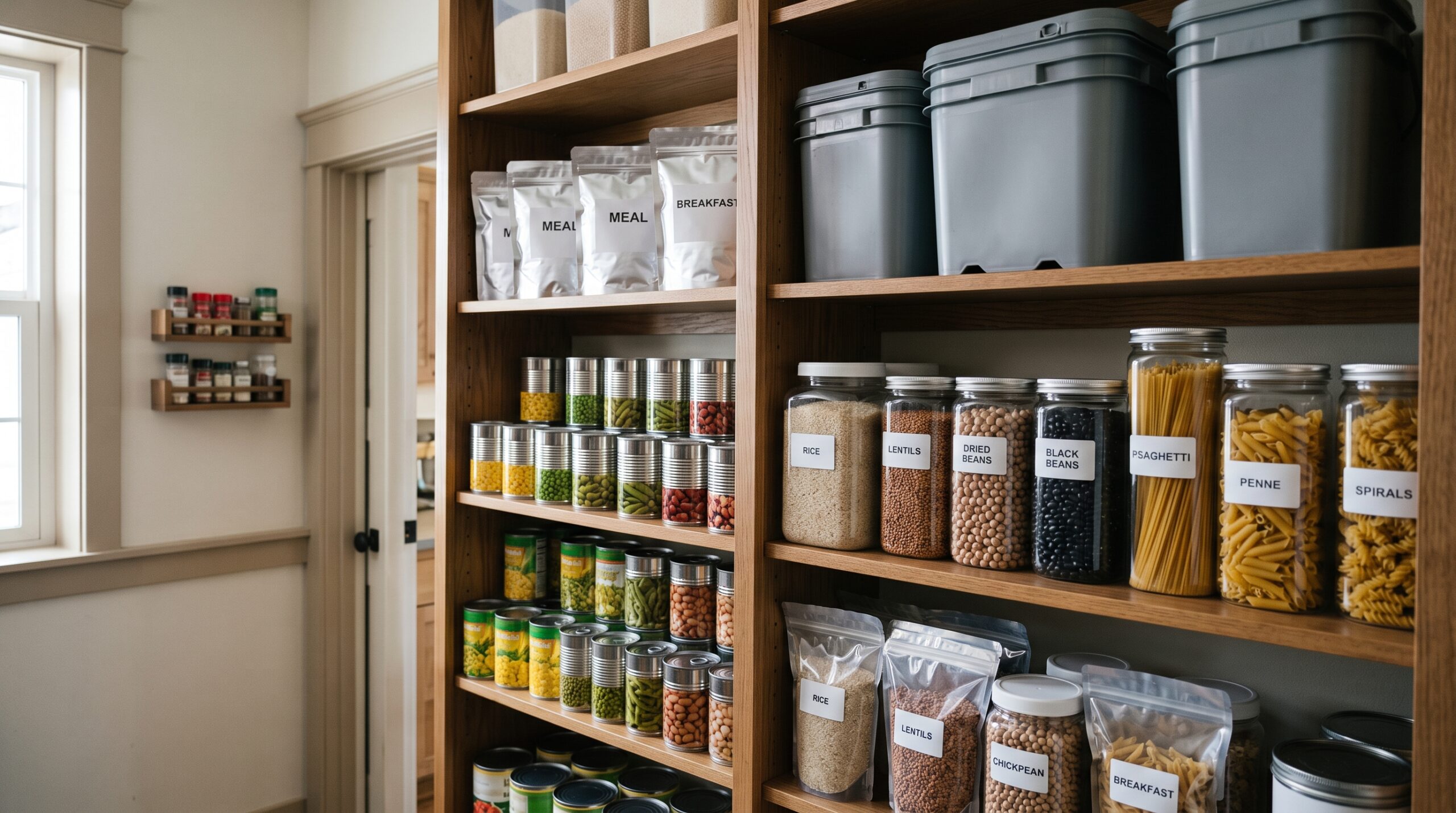
Food preparedness is not simply about storing as many calories as possible. A useful emergency food supply needs to match the people in your household, the disruptions you are preparing for, the space you have available, and the ways you will actually prepare and eat that food.
Start with familiar foods that already fit your household, build a short-term buffer, and then add longer-term storage where it makes sense. Consider calories, nutrition, dietary requirements, shelf life, water needs, cooking fuel, storage conditions, and rotation together rather than treating them as separate problems.
The objective is a food system you can maintain in normal life and rely on when shopping, refrigeration, utilities, or supply chains are temporarily disrupted.
Start With How Much Food You Need
Before buying emergency meals, buckets, or storage containers, estimate how much food your household actually needs. The answer depends on the number of people, duration, age, activity level, dietary requirements, and the type of emergency you are planning for.
Calories provide a useful planning baseline, but they are not the entire food plan. A resilient supply should also consider protein, fats, carbohydrates, micronutrients, dietary restrictions, variety, preparation requirements, and foods people will realistically eat under stressful conditions.
Build Food Storage in Layers
A practical food reserve does not need to consist entirely of specialized survival food. Building in layers makes the system easier to afford, maintain, and use.
Layer 1: Your Normal Pantry
Begin by keeping more of the shelf-stable foods your household already consumes. Pasta, rice, canned foods, sauces, grains, legumes, snacks, and other familiar staples can provide useful resilience when they are stored appropriately and rotated regularly.
Layer 2: Short-Term Emergency Food
Add foods that require little preparation and remain practical when electricity, refrigeration, time, or cooking options are limited. This layer can support short outages, evacuations, vehicle kits, and other disruptions where convenience matters.
Layer 3: Longer-Term Storage
Once your rotating pantry and short-term needs are covered, selected dry staples, properly packaged foods, and commercially prepared long-term products can extend your preparedness horizon. Actual storage life varies substantially with the food, packaging, temperature, moisture, oxygen exposure, and storage conditions.
Short-Term Emergency Food
Long-Term Food Storage
Store What You Eat, Eat What You Store
For many households, the easiest food reserve to maintain is an expanded version of the normal pantry. Buy foods you already use, keep an appropriate buffer, consume the oldest suitable stock first, and replace what you use.
Rotation reduces waste and gives you regular experience with the foods in your emergency supply. It also makes it easier to discover problems with storage, preparation, taste, or dietary compatibility before an emergency.
Food Storage Needs a Cooking Plan
Some shelf-stable foods can be eaten immediately. Others require substantial water, heat, or cooking time. That distinction becomes important when electricity or gas service is unavailable.
When choosing stored food, ask how much water it requires, how long it takes to cook, which equipment you need, and how much fuel that preparation will consume. A large supply of food with no workable cooking method is an incomplete preparedness system.
Never assume that a camping stove, grill, generator, or other fuel-burning appliance is safe to operate indoors. Carbon monoxide is colorless and odorless, and inappropriate combustion equipment can create a lethal environment. Follow manufacturer instructions and applicable safety guidance for the specific equipment and fuel you use.
Storage Conditions Matter
Shelf-life claims are not guarantees that every food will remain suitable for a stated number of years under every condition. Heat, moisture, oxygen, light, pests, damaged packaging, and the characteristics of the food itself can substantially affect storage life.
Keep food in conditions appropriate for the product and packaging, inspect supplies periodically, rotate normal pantry foods, and follow manufacturer guidance for commercially packaged products.
Long-term storage methods also need to match the food. A packaging method that is appropriate for one dry staple may be unsuitable for foods with higher moisture or fat content.
Do Not Forget Water
Food and water planning are connected. Freeze-dried meals, dry staples, powdered products, and many cooking methods require additional water beyond what you need for drinking.
When calculating your emergency water requirements, include water needed for food preparation, basic hygiene, and cleaning rather than budgeting only for drinking.
Where Should You Start?
Start by estimating how much food your household needs for a short disruption. Then increase the amount of shelf-stable food you already eat, establish a simple rotation system, and make sure you have a safe way to prepare meals when normal utilities are unavailable.
Once that foundation works, extend your storage horizon with carefully selected emergency foods or properly packaged dry staples. Longer shelf life should complement a functional pantry, not replace one.