
Civil Defense Reference
Nuclear War Survival Skills Review: Useful Classic, Modern Limits
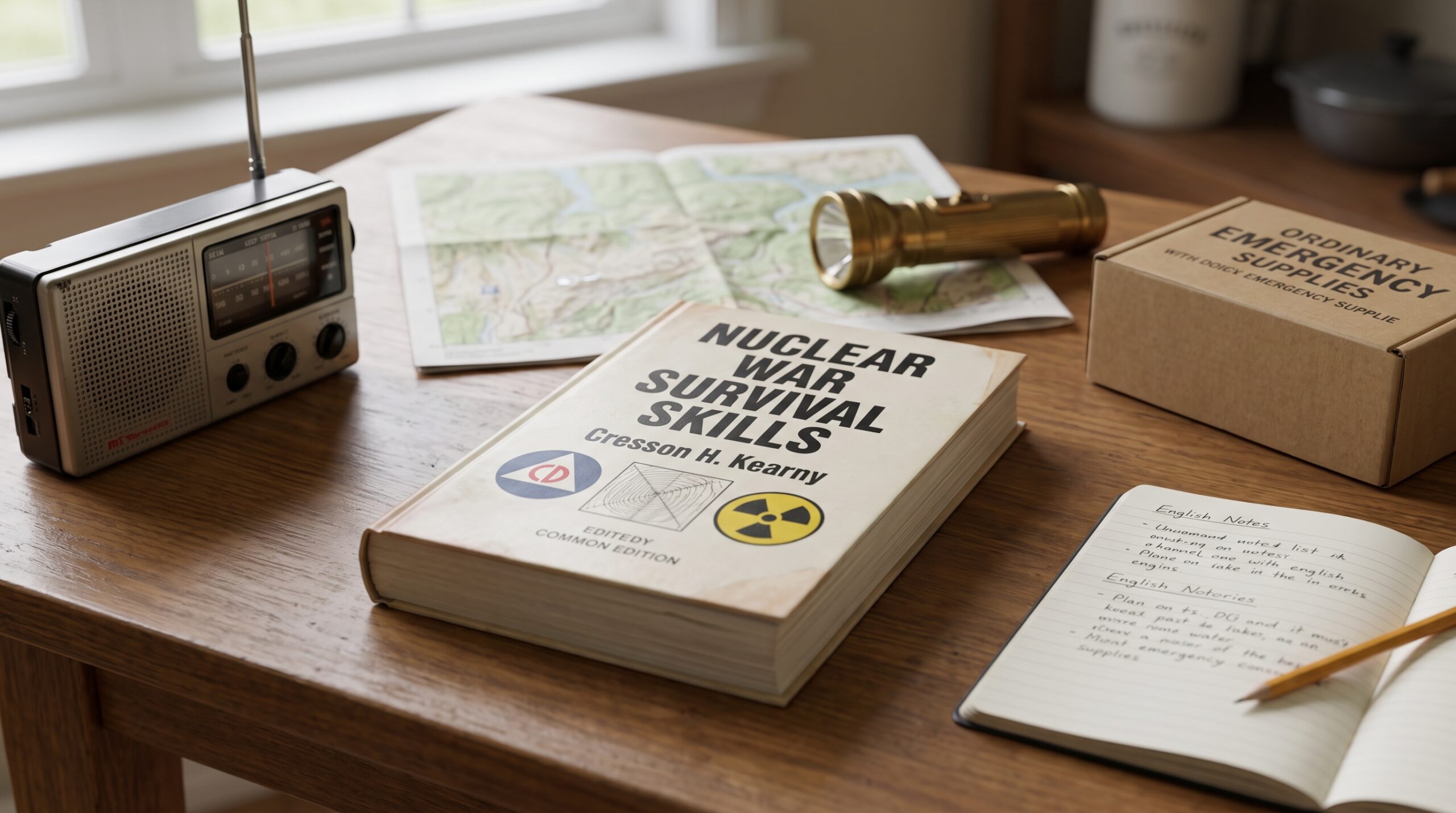
Short answer: Cresson H. Kearny’s Nuclear War Survival Skills is an important historical civil-defense manual with practical shelter, fallout and expedient-equipment concepts. The commonly available expanded edition dates to 1987. It is useful for understanding preparedness principles, but current instructions from emergency authorities should take priority during a real nuclear emergency.
Why the book still matters
Kearny’s manual was written around the problem of protecting civilians who might not have access to purpose-built shelters or sophisticated equipment. It explains fallout, shielding, expedient shelters, ventilation and improvised measurement approaches in unusually practical detail.
That engineering-minded approach is the book’s main strength. It encourages readers to think about mass, distance, shelter geometry, air movement and the logistics of remaining sheltered rather than treating nuclear preparedness as a collection of products.
Where the 1987 edition shows its age
Warning systems, communications, radiation instruments, medical guidance and public emergency procedures have changed. A historical manual cannot predict the instructions authorities will issue for a specific event in 2026. Some improvised techniques may still illustrate sound principles, but they should not automatically outrank current official information.
Current baseline: get inside, stay inside, stay tuned
Ready.gov’s current nuclear-explosion guidance prioritizes reaching the nearest suitable shelter, with underground areas or the middle of larger buildings generally providing better protection from fallout. People who may have been exposed to fallout are advised to remove contaminated outer clothing and wash exposed skin when possible, then remain sheltered and follow official instructions.
That simple modern framework should sit at the front of a preparedness plan. The book can then provide deeper background on why shielding and shelter design matter.
The Kearny Fallout Meter and improvised tools
The book is well known for the Kearny Fallout Meter, an improvised radiation-measurement concept designed for austere circumstances. It is historically significant and educational, but a properly functioning modern radiation instrument is preferable when available and appropriate. If you intend to understand an improvised design, study it and its limitations before an emergency rather than assuming it can be built accurately under stress.
Who should keep this book?
| Reader | Value |
|---|---|
| General household | Useful background, but start with current official nuclear-emergency guidance |
| Preparedness researcher | High value as a detailed historical civil-defense source |
| Engineering-minded reader | Useful for shelter and expedient-system concepts |
| Emergency reference library | Keep alongside current government guidance, not instead of it |
Preparedness verdict
Nuclear War Survival Skills remains worth reading for its depth and practical civil-defense thinking. Its age is also a reason to use it carefully. Learn the principles, keep a copy if this hazard is relevant to your plan, and pair it with current official guidance that reflects today’s warning systems, emergency response and public-health recommendations.
Sources reviewed: authorized 1987 edition information and current Ready.gov nuclear-explosion guidance. Reviewed: September 2026.