
Portuguese Prepper
Axes vs. Hatchets: Which Wood Tool Fits Your Preparedness Plan?
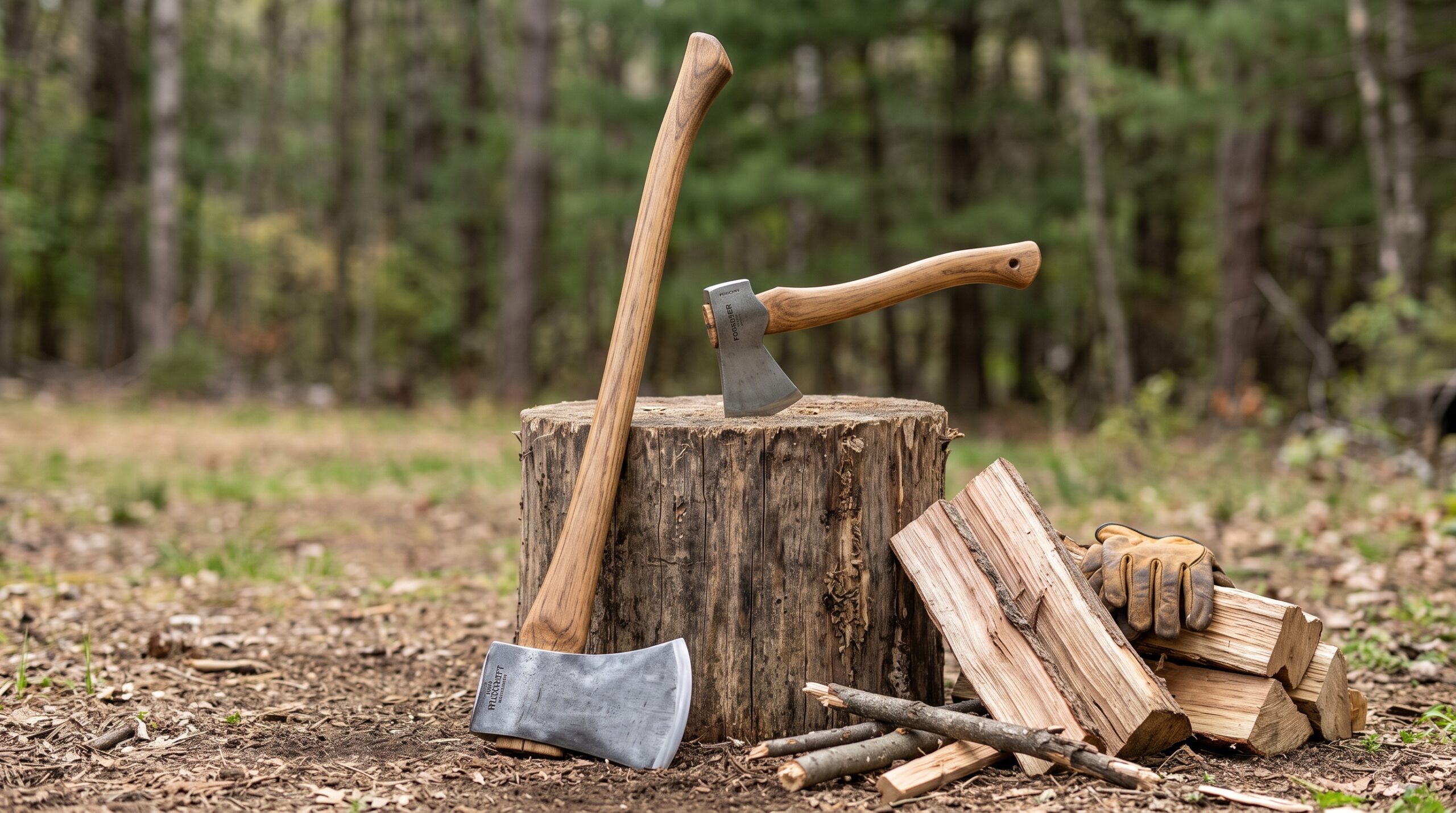
Short answer: choose a hatchet when portability and one-handed control matter most; choose a longer axe when you expect sustained chopping, limbing or splitting and can carry the extra length and weight. For smaller branches, a folding saw may be more efficient than either.
Affiliate disclosure: This page contains affiliate links. If you purchase through these links, we may earn a commission at no additional cost to you.
A wood-processing tool is useful only when your preparedness plan actually involves firewood, storm debris, rural property work or field tasks. An apartment household does not automatically need an axe in an emergency kit.
Hatchet vs. axe at a glance
| Question | Hatchet | Small/forest axe |
|---|---|---|
| Portability | Higher | Lower |
| Typical grip | Primarily one-handed | Can support controlled two-handed swings |
| Kindling and small limbs | Good | Good |
| Sustained chopping | More tiring and limited | More leverage and efficiency |
| Packability | Easier | Requires more space and safer carry planning |
When a hatchet makes more sense
A hatchet is useful when you need a compact chopping tool for kindling, small branches and controlled camp work. Its shorter handle makes it easier to store in a vehicle or carry in a larger pack, but that same short handle reduces leverage.
Do not assume “bug-out” automatically means carrying a hatchet. If you expect to travel on foot, every kilogram competes with water, weather protection, medical supplies and other essentials. The tool has to justify its weight through a realistic task.
When a small forest axe is better
A longer handle and larger head improve chopping power and efficiency when wood processing is a regular task. Gränsfors Bruk describes its Small Forest Axe as a portable felling and limbing axe with a 50 cm handle and approximately 1 kg overall weight. That class of tool is more capable than a compact hatchet for sustained work while still being smaller than a full-size felling axe.
Premium example: Gränsfors Bruk Small Forest Axe
Find it on Amazon →A 50 cm, roughly 1 kg forest axe intended for felling, limbing and outdoor use. Its value depends on whether those tasks are part of your plan; premium construction does not make an axe necessary for every household.
A saw may be the better first wood tool
For cutting branches and small logs across the grain, a folding saw can be lighter, quieter and more energy-efficient than chopping. An axe is valuable when you need splitting or chopping capability, while a saw is usually the purpose-built tool for cross-cutting. Many practical field kits benefit from a saw before they benefit from a heavy axe.
Safety and maintenance
Chopping tools create serious injury risk. Maintain a clear swing area, use stable work positioning, keep other people outside the arc of the tool and protect the edge during transport. A dull or damaged edge can make controlled work harder, but sharpening should preserve the manufacturer’s intended bevel rather than aggressively removing material.
Inspect the handle, head and sheath before use. Wood handles can loosen or become damaged; steel heads need appropriate corrosion care. Store the tool dry and protected.
Sources reviewed: current Gränsfors Bruk specifications and general tool-role comparison. Reviewed: September 2026.