
Portuguese Prepper
Emergency Shovels & E-Tools: What to Choose and Why
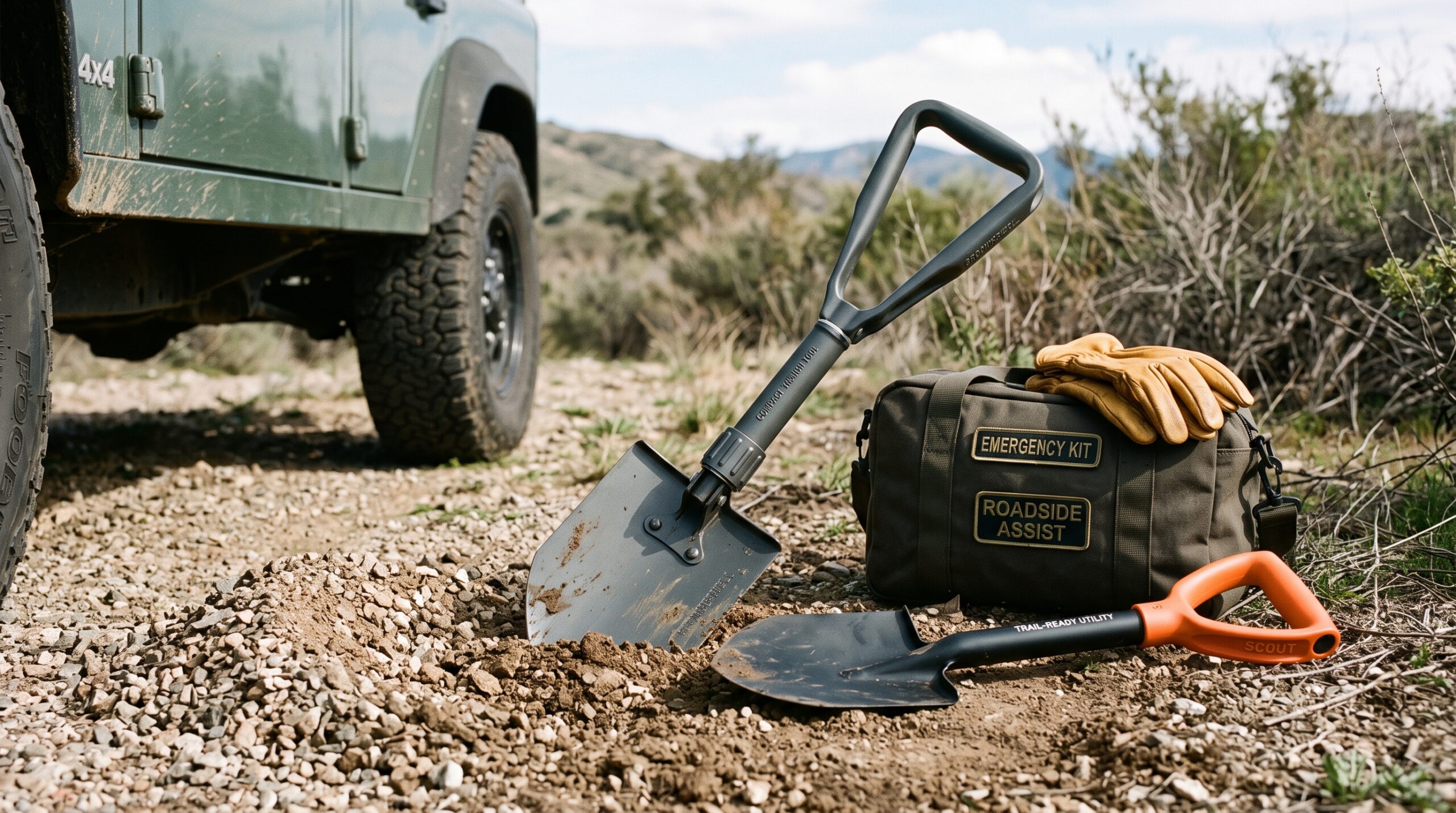
Short answer: an emergency shovel is most useful for digging, sanitation, drainage, vehicle recovery and campsite or property work. A fixed shovel is usually stronger and more comfortable for repeated digging; a folding entrenching tool saves space in a vehicle or pack but adds joints that can loosen or fail.
What an emergency shovel can realistically do
A shovel adds a capability that knives and multitools cannot replace efficiently: moving soil, sand, snow, ash or loose material. That can matter for clearing around a stuck tire, creating drainage, managing a campsite, preparing a sanitation area or handling ordinary property tasks after a storm.
The exact tool should match the environment. A narrow entrenching tool is compact but slower in loose snow. A full-size shovel moves more material but may be impractical in a small car or evacuation pack.
Fixed handle vs. folding e-tool
| Feature | Fixed shovel | Folding e-tool |
|---|---|---|
| Strength | Fewer joints; generally better for sustained digging | Depends on hinge and lock design |
| Packability | Lower | High |
| Leverage | Usually better with longer handle | Reduced by compact dimensions |
| Vehicle storage | Good if space allows | Excellent for limited space |
| Maintenance | Simple | Inspect and clean hinge/locking mechanism |
Vehicle recovery use
A compact shovel can help remove snow, sand or mud from around tires and under the chassis. It does not guarantee recovery. Avoid working under an unstable vehicle, be aware of traffic and terrain hazards, and use recovery equipment only within its rated limits.
For winter driving, a shovel with enough blade area to move snow may be more useful than a very small tactical-style e-tool. In sand or soft soil, a compact but rigid blade can be a good compromise.
Sanitation and field use
Digging can also support sanitation when normal facilities are unavailable, but waste-disposal practices depend on local rules, water sources, soil and emergency conditions. Follow public-health and land-management guidance rather than relying on a single universal burial depth or improvised rule.
What to look for
- Handle length: longer handles improve leverage; shorter handles improve storage.
- Locking mechanism: folding tools should lock positively and be checked before each use.
- Blade shape: choose for the material you expect to move rather than appearance.
- Weight: vehicle tools can be heavier than equipment intended for foot travel.
- Corrosion care: clean and dry the blade and hinges after mud, salt or wet use.
Preparedness recommendation
For a vehicle, choose the largest reliable shovel that fits the available storage space and your likely conditions. For a backpack, justify the weight against the actual likelihood of digging tasks. At home, a normal full-size garden or contractor shovel will usually outperform a compact e-tool for serious work.
Reviewed: September 2026.