
Portuguese Prepper
Door Armor Review: How to Reinforce a Door Against Kick-Ins
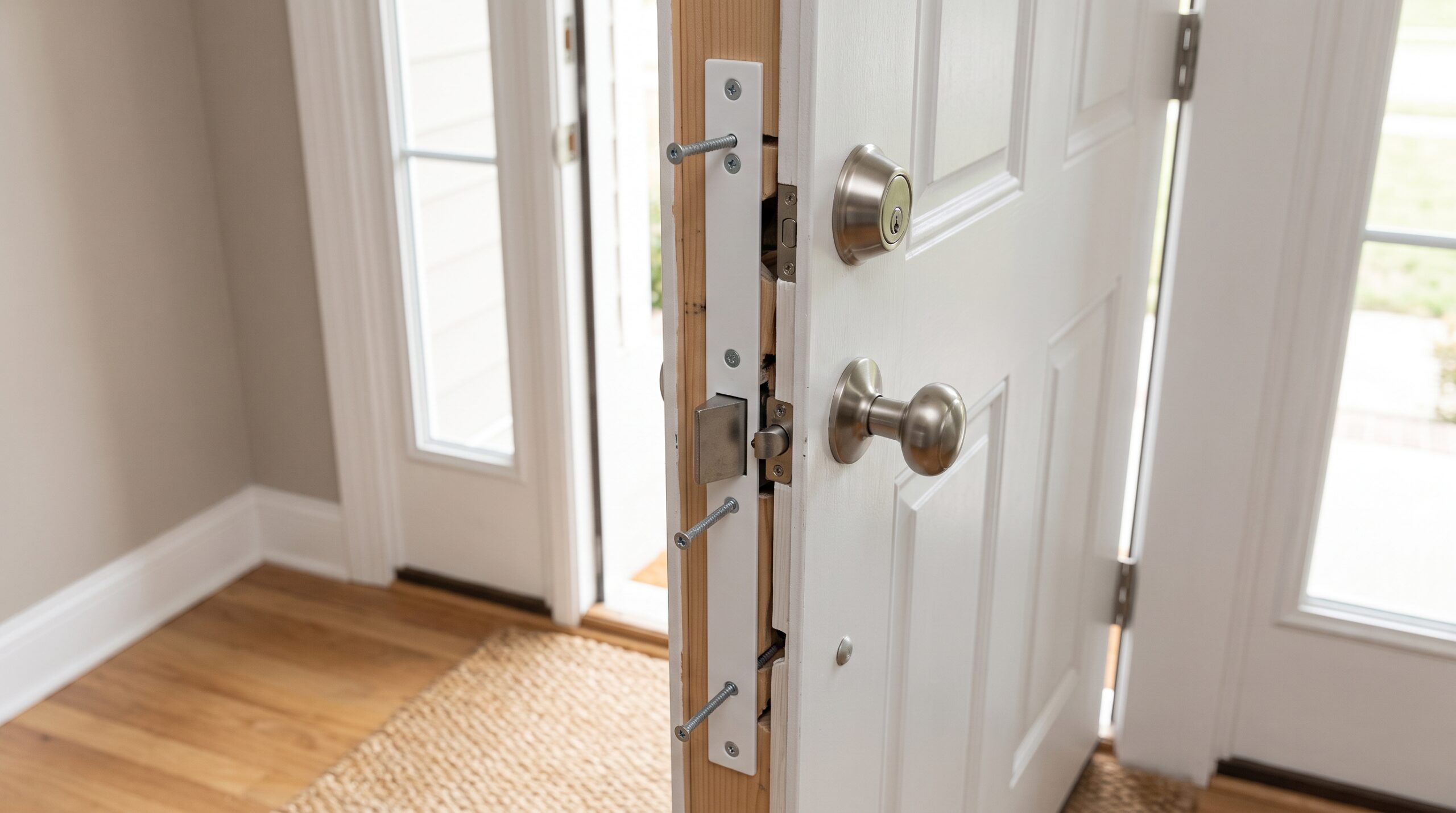
A strong deadbolt is only as effective as the door, frame, and hardware supporting it. During a forced-entry attempt, one of the most vulnerable areas is often the door jamb around the strike plate, where relatively short screws may secure the hardware primarily to the frame rather than deeply into the structural framing behind it.
That means an expensive lock alone does not necessarily solve the problem. A more complete approach is door-frame reinforcement: strengthening the jamb, strike area, hinges, and door around the lock so that impact forces are distributed across a larger and stronger structure.
The Main Upgrade: Door Armor MAX
Door Armor MAX is a multi-piece door reinforcement system designed to strengthen several common failure points around an inward-opening exterior door.
Rather than relying exclusively on the existing strike plates and relatively small areas of wood surrounding the lock hardware, the system uses steel reinforcement components and long screws to distribute impact forces over a larger section of the door assembly.
The 3 Main Components
- 1. Jamb Shield: Reinforces the lock side of the door frame. Its larger steel structure helps distribute force beyond the small area immediately surrounding the deadbolt and latch.
- 2. Door Shields: Reinforce the areas of the door surrounding the lock and deadbolt hardware, helping reduce the risk of the door material splitting around those points.
- 3. Hinge Shields: Reinforce the hinge side of the assembly, addressing another potential failure point during a forced-entry attempt.
The result is a more complete reinforcement strategy than simply replacing the strike plate. However, installation requirements depend on the door, frame, hardware, and specific Door Armor kit, so compatibility and manufacturer instructions should be checked before installation.
The Budget Upgrade: Longer Structural Screws
If you are not ready to install a complete reinforcement system, one inexpensive improvement is to inspect the screws securing the strike plate and hinges.
Some residential installations use relatively short screws that engage primarily with the door jamb. Replacing appropriate screws with longer structural screws can allow the hardware to engage more deeply with the framing behind the jamb.
This can strengthen the connection significantly, but screw length alone does not determine strength. Screw type, diameter, material, framing configuration, pilot holes, edge distance, door construction, and installation quality all matter.
Use screws intended for structural applications and verify that their length and placement will not interfere with wiring, plumbing, glass, sidelights, or other components around the door.
Which Door Reinforcement Should You Choose?
Affiliate disclosure: This page contains affiliate links. If you purchase through these links, we may earn a commission at no additional cost to you.
Door Armor vs. a Door Barricade
Door Armor and products such as Nightlock solve related but different problems.
Door-frame reinforcement is passive. Once installed, it strengthens the door assembly without requiring you to activate anything each night.
An interior door barricade adds another physical resistance point while you are inside, but it generally cannot provide the same protection when nobody is home because it must be engaged from the interior.
For that reason, the two approaches can complement each other rather than being direct substitutes.
The Delay Strategy
No conventional residential door should be treated as impenetrable. Given sufficient tools, force, and time, determined forced entry may eventually defeat a door, window, wall, or another part of the structure.
The practical objective of physical reinforcement is therefore delay.
A door that resists forced entry for longer can create additional time for occupants to recognize what is happening, move away from the entry point, contact emergency services, and follow an established household emergency plan.
In a multi-story home, additional delay may also provide time to move toward a safer area or use a secondary evacuation route if appropriate. Bedrooms on upper floors should have a viable emergency egress plan, which may include an emergency escape ladder where suitable.
Think in Layers, Not Just Locks
Door reinforcement works best as one part of a layered home-security system.
An effective sequence can begin at the property boundary with driveway or perimeter alerts, continue with exterior lighting and cameras, and then use reinforced doors and windows as the physical layer around the home.
The objective is to increase the likelihood of detecting an approach early while making unauthorized entry progressively more difficult.
Door Reinforcement FAQ
Does Door Armor prevent a door from being kicked in?
Door reinforcement can substantially increase resistance to common forced-entry methods, but no residential reinforcement product should be considered an absolute guarantee against entry. Door construction, frame condition, installation quality, surrounding structure, hardware, and the method of attack all affect performance.
Are longer screws enough to reinforce a door?
They can be a useful low-cost improvement when installed correctly, particularly when existing hardware is secured with short screws. A complete reinforcement system goes further by strengthening and distributing forces across larger areas of the jamb, door, and hinge side.
Should I reinforce the hinges as well as the deadbolt?
Yes. A door is a system, and concentrating exclusively on the deadbolt can leave other areas comparatively weak. The jamb, lock area, hinges, door material, and frame should all be considered when evaluating forced-entry resistance.
Is a door barricade better than Door Armor?
They serve different purposes. Door Armor reinforces the door assembly continuously, while an interior barricade adds resistance when it is actively engaged from inside. Depending on the property and occupants, both approaches can be used as separate layers.
Can I install Door Armor myself?
Many homeowners may be able to install compatible reinforcement kits using ordinary tools, but correct installation matters. Always follow the manufacturer’s instructions and confirm compatibility with your specific door, frame, locks, hinges, and surrounding construction.