
Home Physical Security
Window Security Film: Thicknesses, Anchoring Systems, and Forced-Entry Delay
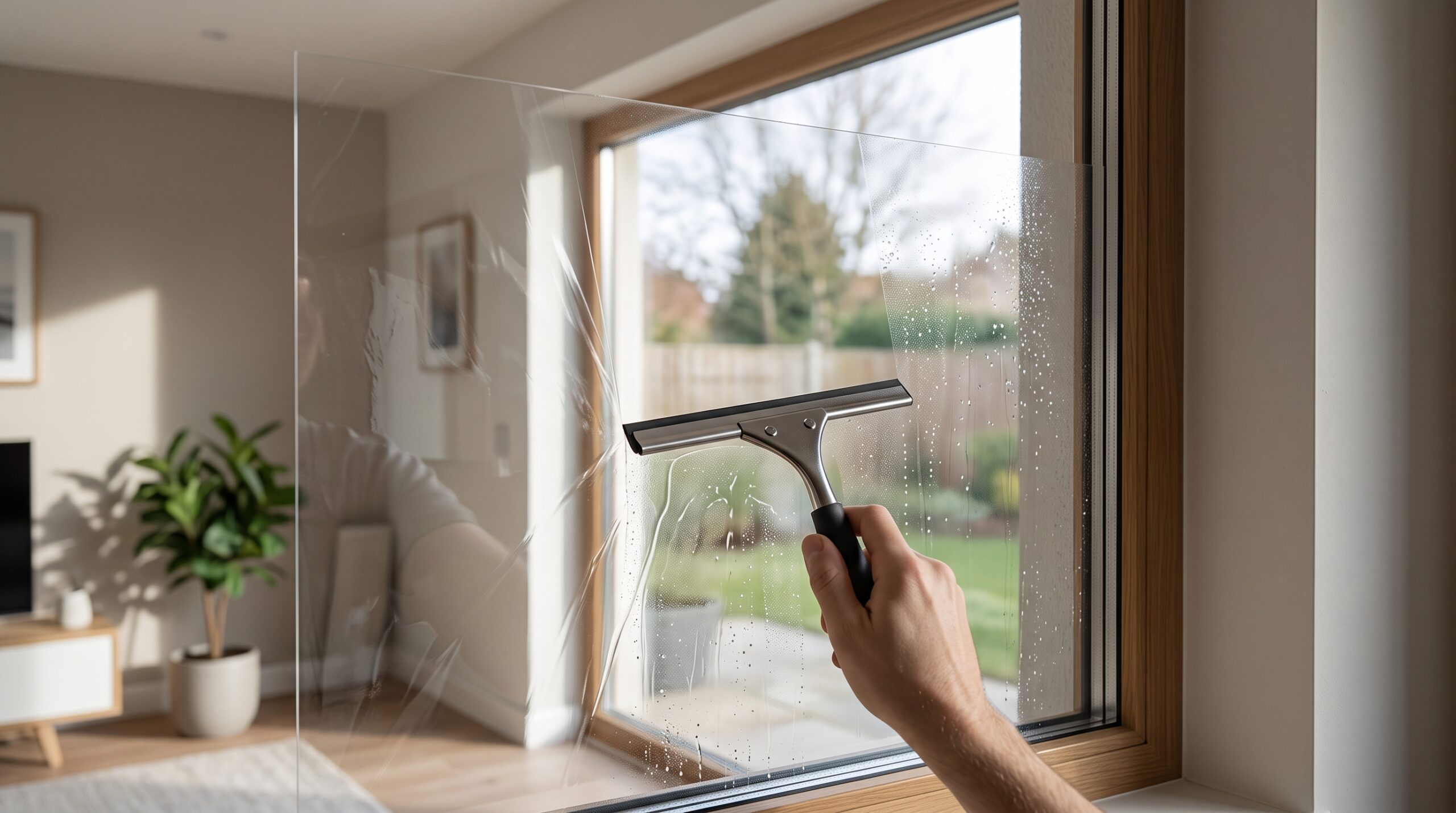
Once exterior doors are reinforced, accessible windows can become one of the easier remaining entry points into a home. Standard residential glass can often be broken quickly, which is why window reinforcement should be considered as part of a broader layered security strategy.
Security window film, also known as safety and security glazing film, is a heavy-gauge polyester membrane applied to the interior surface of window glass using a dedicated mounting adhesive.
The critical point: Security film does not make ordinary glass unbreakable, burglar-proof, or bulletproof. The glass can still fracture. The film is designed to help hold broken fragments together and make it more difficult to create a usable opening through the glazing.
Understanding Security Film Thickness: 4 Mil vs. 8 Mil vs. 12+ Mil
Window-film thickness is commonly expressed in mils. One mil equals one-thousandth of an inch, or approximately 0.0254 mm.
A thicker film generally contains more material and can provide greater tensile and tear resistance, but the complete glazing system matters. Film construction, adhesive, glass type, frame strength, edge attachment, installation quality, and the specific threat all influence performance.
1. 4 Mil (~0.10 mm) — Basic Safety and Shatter Retention
Films around 4 mil are commonly used for safety and fragment retention. When compatible glass breaks, the film can help hold fragments together rather than allowing loose pieces to scatter freely.
For applications specifically focused on forced-entry resistance, heavier security films and properly designed attachment systems are generally more appropriate.
2. 7 to 8 Mil (~0.18–0.20 mm) — Residential Security
Films in the 7- to 8-mil range are commonly marketed for residential safety and security applications. Their greater thickness and tensile strength can make a fractured pane more difficult to penetrate than glass protected only by thinner safety film.
However, an 8-mil specification by itself does not guarantee a particular level or duration of forced-entry resistance. The glass, adhesive, frame, attachment system, tools used, and installation all affect the result.
3. 12 to 14 Mil+ (~0.30–0.35 mm) — Heavy-Duty Applications
Heavy-gauge films in the 12- to 14-mil range and above are available for more demanding safety and security applications. Depending on the specific product and tested system, these may include severe-weather, impact, fragment-retention, or blast-mitigation applications.
Do not assume that simply choosing the thickest available film provides the best solution. The film must be compatible with the glass and installed as part of an appropriate glazing system.
The Crucial Role of Attachment Systems
One of the most important distinctions in security-film installations is whether the film simply covers the visible glass or is incorporated into a system that also connects the filmed glazing to the surrounding frame.
Daylight Installation
In a typical daylight installation, film is applied to the visible portion of the glass and trimmed near the edge of the glazing or gasket.
If the glass fractures, the film may continue holding many of the fragments together. However, because the filmed glass is not necessarily structurally connected to the surrounding frame, the complete fractured sheet may be more vulnerable to being displaced from the opening.
This distinction is important when the objective is forced-entry delay rather than fragment retention alone.
Wet-Glaze Attachment
Some security-film systems use an edge attachment system in which an appropriate structural sealant overlaps the film and connects it to a compatible window frame.
The objective is to help transfer loads from the filmed glass into the surrounding frame and reduce the likelihood that the fractured glazing assembly will simply separate from the opening.
Products such as structural silicone may be used in certain professionally designed attachment systems, but compatibility, bead dimensions, surface preparation, cure time, frame material, and installation requirements depend on the specific film and glazing system.
Do not substitute an ordinary household silicone sealant for a specified structural attachment product.
Mechanical Attachment Systems
Some higher-security installations use mechanical attachment systems that physically retain the perimeter of the filmed glazing with profiles, battens, or other engineered components.
These systems are more common in commercial and higher-risk applications and should be selected and installed according to the specifications of the complete glazing system.
Glass Types, Compatibility, and Thermal Stress
Security film does not behave identically on every type of residential glazing.
- Annealed Glass: Conventional annealed glass can break into large sharp fragments. Compatible safety or security film can help retain broken fragments and reduce scattering while also making the fractured glazing more difficult to clear from the opening.
- Tempered Glass: Tempered glass typically breaks into many relatively small pieces. Film can help retain the fractured material, but the behavior of the complete assembly depends heavily on the attachment system and frame.
- Insulated Glass Units: Double- and multi-pane windows require particular attention to film compatibility. Solar absorption and temperature differences can affect thermal stress, seals, and manufacturer warranties. Verify that the specific film is approved for your glazing configuration before installation.
- Laminated Glass: Laminated glazing already contains an interlayer designed to retain broken glass. Adding film may or may not be appropriate depending on the intended security objective and glazing system.
Security Film Delays Entry — It Does Not Prevent It
The most useful way to evaluate security window film is as a delay mechanism.
Security glazing tests can evaluate assemblies against defined impacts, tools, and attack sequences. Real-world resistance, however, cannot be reduced to a universal promise such as “30 seconds” or “90 seconds.”
Actual performance depends on the film, glass, adhesive, frame, edge attachment, installation, impact location, tools, and persistence of the person attempting to create an opening.
This is why security film works best as one part of layered home security.
- Early Warning: Driveway alarms, exterior sensors, and cameras can provide information before someone reaches the building.
- Deterrence: Lighting, visible cameras, and other measures may discourage some attempts before physical barriers are tested.
- Physical Delay: Reinforced doors and properly designed window-security systems can increase the effort required to enter.
- Household Response: Additional delay can provide occupants with more time to move away from the threatened opening, contact emergency services, and follow their emergency plan.
DIY Installation vs. Professional Installation
Installing thick security film is generally more demanding than applying lightweight decorative window film.
The glass must be thoroughly cleaned, the film accurately cut, and the mounting solution removed evenly without damaging the film or leaving excessive contamination beneath it. Thick films can also be more difficult to position and squeegee than conventional tint.
Small, straightforward panes may be reasonable DIY projects for experienced homeowners when the film manufacturer supports self-installation.
Large windows, unusual glazing, insulated glass units, expensive architectural windows, and installations requiring structural edge attachment are stronger candidates for professional assessment and installation.
If forced-entry resistance is the primary objective, the quality of the complete installation matters more than simply buying a roll of thick film.
Popular Security Window Film Options
Affiliate disclosure: This page contains affiliate links. If you purchase through these links, we may earn a commission at no additional cost to you.
3M Safety & Security Film (Ultra S800)
A premium security-film option from 3M’s safety and security film range. Its multilayer construction is designed for demanding glazing applications where fragment retention and increased resistance of the filmed glass are priorities. Installation requirements and performance depend on the complete glazing and attachment system.
Window Security Film FAQ
Does security film stop a window from breaking?
No. Security film is designed primarily to help retain fractured glass and increase the difficulty of creating a usable opening. The glass itself can still break when subjected to sufficient force.
Is 8-mil window film good for home security?
Eight-mil security films are commonly used for residential safety and security applications. However, thickness alone does not determine forced-entry performance. Glass type, frame strength, adhesive, attachment system, and installation quality are also important.
Does window security film need to be anchored?
If the objective is enhanced forced-entry resistance, an appropriate attachment system can significantly change how the filmed glazing behaves after the glass fractures. A daylight film installation and an engineered attached glazing system should not be treated as equivalent.
Can I install security window film myself?
Some films are suitable for DIY installation on compatible windows. Thick films, large panes, complex glazing, and structural attachment systems are more difficult and may justify professional installation.
Is security window film bulletproof?
No. Conventional residential security film should not be described as bulletproof. Ballistic protection requires glazing systems specifically designed and tested for ballistic threats.
Can security film be installed on double-pane windows?
Some films are compatible with certain insulated glass units, but compatibility varies. Check the film manufacturer’s specifications for your exact glazing configuration because inappropriate film selection can increase thermal stress or affect window warranties.
Does thicker security film always provide better protection?
Not necessarily. Film thickness is only one part of system performance. Film construction, adhesive, glass, framing, edge attachment, installation quality, and the threat being addressed all matter.
Security Glazing Standards
- ASTM International: ASTM F1233 provides test methods for evaluating security glazing materials and systems against specified attack conditions.
- ASTM International: ASTM C920 covers performance requirements for elastomeric joint sealants. Compliance with a sealant standard alone does not establish the forced-entry performance of an entire glazing system.
- Manufacturer Documentation: Use the technical specifications, glazing compatibility information, installation instructions, and test documentation for the exact security film and attachment system being installed.