
Field Skills Library
Bushcraft 101 Review: The 5 Cs, Strengths & Limits
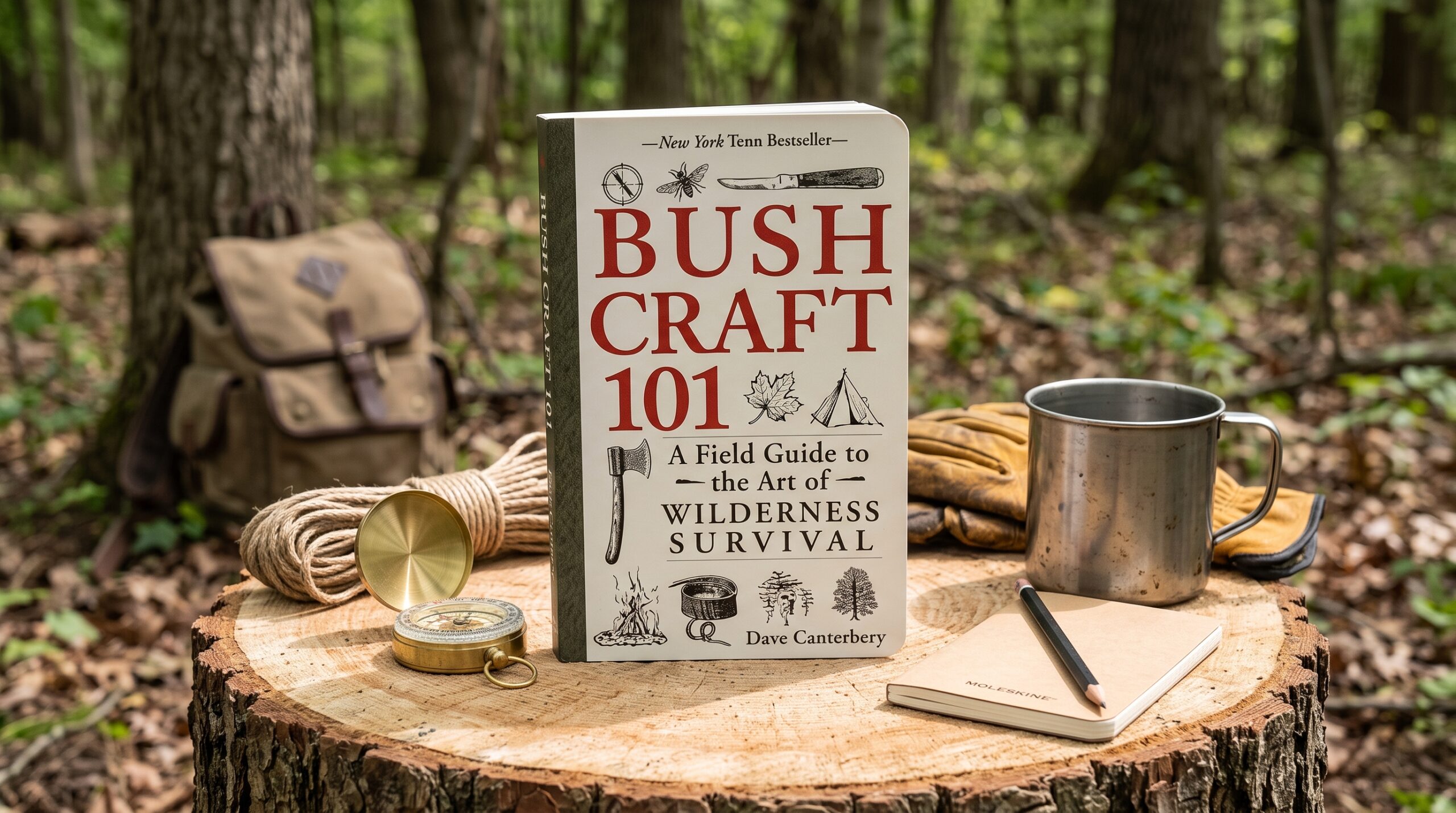
Short answer: Dave Canterbury’s Bushcraft 101 is a practical introductory field-skills book, first published by Adams Media in 2014 and listed by the publisher at 256 pages. It is a useful starting reference for outdoor skills and the “5 Cs” framework, but reading it does not replace practice with tools, fire, shelter and navigation.
What the “5 Cs” framework does
The book is closely associated with five broad capability categories: cutting tools, cover, containers, cordage and combustion. The value of the framework is not that five objects solve every survival problem. It gives beginners a simple way to think about capabilities needed for shelter, water handling, fire, repair and material processing.
A preparedness kit should still reflect climate, terrain, trip length, water availability, local rules and the user’s actual skill level.
Where the book is strongest
Bushcraft 101 focuses on foundational outdoor tasks rather than high-tech equipment. That makes it useful for learning how tools and natural materials interact: cutting safely, setting up shelter, handling cordage, building and managing fire where legal and safe, and understanding the equipment carried into the field.
For a preparedness reader, those skills can improve self-reliance during travel, camping, rural work or an evacuation that involves time outdoors.
What it is not
It is not a complete emergency-preparedness manual. It does not replace medical training, household water storage, emergency communications, power planning or location-specific disaster guidance. Wilderness skills are one layer of preparedness, not the whole system.
It also should not be read as permission to improvise in any environment. Fire restrictions, land access, plant identification and hunting or trapping laws differ by place and can change.
Book vs. hands-on practice
The fastest way to discover whether you understand a knot, fire lay, shelter setup or cutting technique is to perform it safely under normal conditions. Use the book as a reference during practice rather than saving every first attempt for an emergency.
If a technique involves blades, fire or other injury risks, start conservatively and use appropriate protective practices. Skill development should reduce risk, not encourage unnecessary improvisation.
Who should buy it?
| Reader | Fit |
|---|---|
| Outdoor-skills beginner | Strong introductory fit |
| Urban-only household preparedness | Useful secondary reference, not first priority |
| Experienced bushcraft practitioner | Likely basic; consider more specialized references |
| Offline preparedness library | Useful for fieldcraft, paired with medical, navigation and communications references |
Preparedness verdict
Bushcraft 101 is a sensible entry point for practical outdoor skills because it gives beginners a structured framework and a broad set of tasks to practice. It is not mandatory for every prepper, and it should not displace higher-priority household needs. Buy it if fieldcraft is relevant to your actual environment and then use it, rather than simply storing it on a shelf.
Sources reviewed: current Simon & Schuster / Adams Media publisher information. Reviewed: September 2026.