Preparedness Medical Reference
The Survival Medicine Handbook Review: Fourth Edition, Scope & Limits
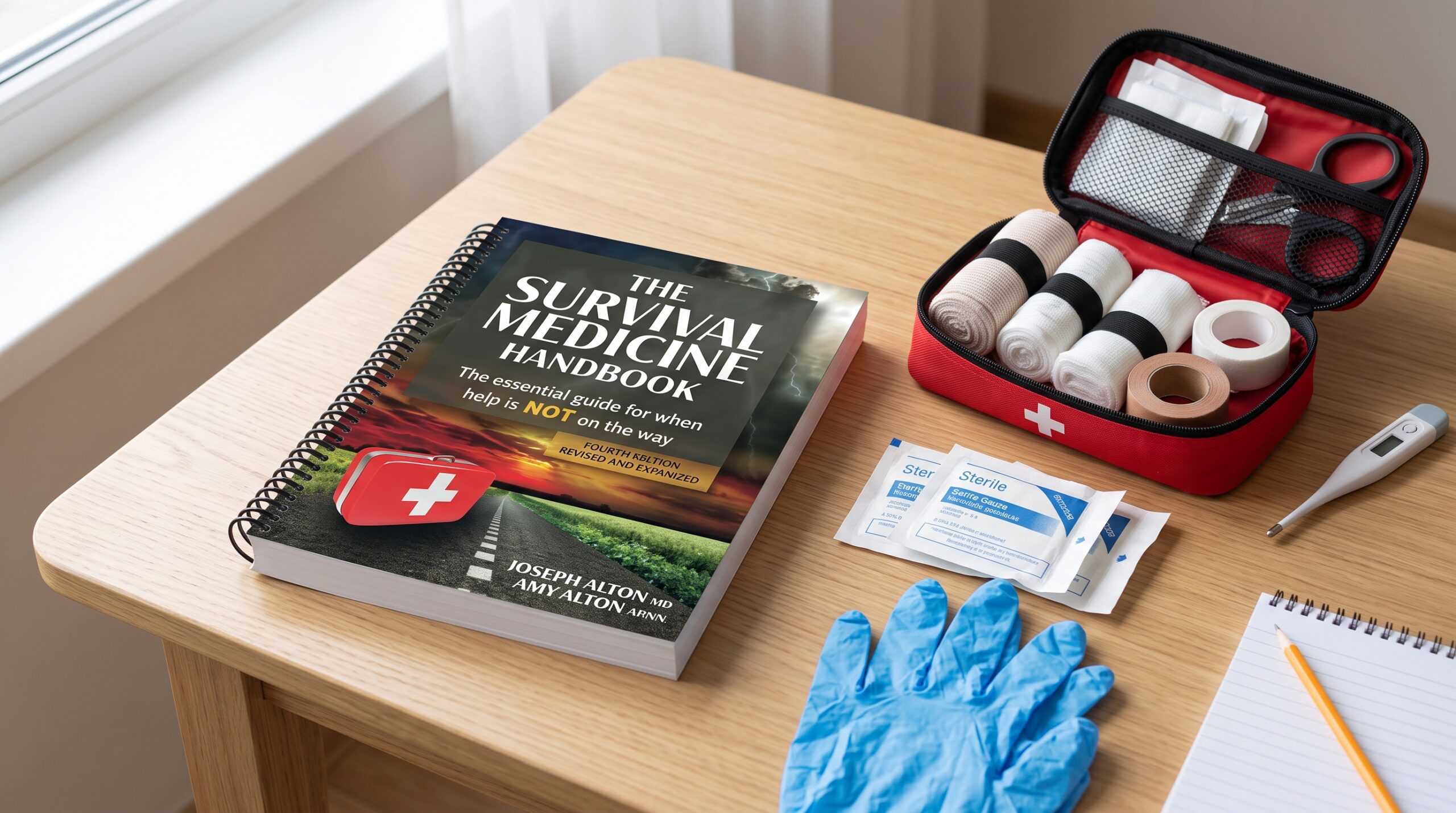
Short answer: The Survival Medicine Handbook is a large preparedness-oriented medical reference written for scenarios in which normal medical help may be delayed or unavailable. The current Fourth Edition was published in 2021 and is substantially expanded. It can be useful as an offline reference, but it is not a replacement for professional medical care, recognized training or current clinical guidance.
Affiliate disclosure: This page contains affiliate links. If you purchase through these links, we may earn a commission at no additional cost to you.
Medical safety note: A book cannot make an untrained reader the “final medical authority.” Use emergency medical services and qualified healthcare professionals whenever they are available. Do not attempt advanced treatment or medication use beyond your training and lawful scope.
What the Fourth Edition is
The authors describe the 2021 Fourth Edition as a revised and greatly expanded version of the handbook. Current publisher material places it at almost 700 pages and includes extensive illustrations, charts and step-by-step educational material.
Its scope is intentionally broader than a compact first-aid manual. It discusses medical preparedness in austere conditions, where evacuation or rapid access to a hospital may not be possible. That makes it different from books designed mainly around stabilizing a patient until an ambulance arrives.
Where it adds value
The handbook can help a preparedness reader think through medical-system problems that ordinary gear lists ignore: sanitation, wound care, longer-duration illness, medical supplies, dental problems and the organization of an austere medical reference library.
Its size also makes it useful for browsing before an emergency. The best use is to identify knowledge gaps, seek appropriate training and build realistic medical continuity plans while professional services are functioning.
Where you need caution
Preparedness medicine is a high-risk subject. Advice about prescription medicines, antibiotics, chronic disease, invasive procedures, herbal products or other treatments can have contraindications and can become outdated. A book written for extreme scenarios should not be used to justify self-treatment when ordinary professional care is available.
For medication continuity, work with an appropriate healthcare professional and follow current prescribing and storage guidance. For severe bleeding and trauma, obtain recognized hands-on training rather than relying on reading alone.
How it compares with Where There Is No Doctor
The two books overlap but have different backgrounds. Where There Is No Doctor is a long-established community-health manual for resource-constrained primary care and health education. The Survival Medicine Handbook is written specifically for preparedness readers imagining prolonged disruptions. Neither should be treated as a complete substitute for a current clinical reference or trained medical professional.
Who should buy it?
It is most useful for households that already have basic first-aid training and want a broad offline preparedness reference. If you are starting from zero, formal first-aid/CPR training and a practical first-aid kit should come before a large advanced medical book.
The Survival Medicine Handbook — Fourth Edition
A broad preparedness medical reference for austere scenarios. Use it for education and planning alongside professional care, recognized training and current medical guidance.
Find it on AmazonPreparedness verdict
The Fourth Edition is a substantial reference for a serious offline library, but the safest way to use it is as a prompt for training, planning and informed questions. It should increase respect for the limits of improvised medical care, not confidence in attempting procedures beyond your competence.
Sources reviewed: current author/publisher information for the 2021 Fourth Edition. Reviewed: September 2026.