Portuguese Prepper
Where There Is No Doctor Review: Value, Limits & Current Edition
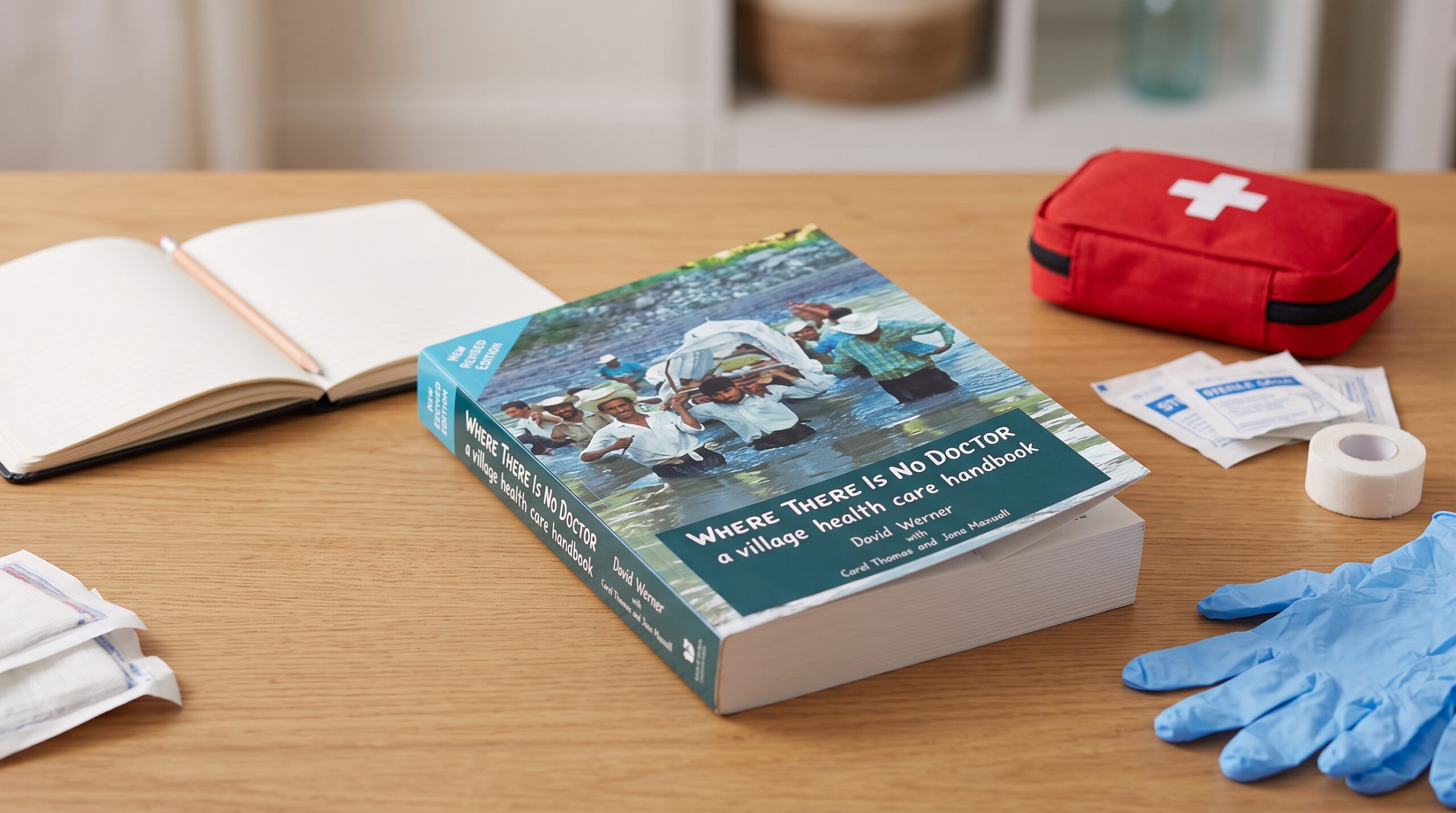
Short answer: Where There Is No Doctor is a widely used community-health reference intended for settings where access to professional care is limited. The current Hesperian edition is the Second Edition, 21st revised printing (2025), with 448 pages. It can strengthen an offline preparedness library, but it should not be treated as a substitute for a clinician, emergency medical services or current local medical guidance.
Medical safety note: This review is about a reference book, not individualized medical advice. Serious illness, significant injury, breathing difficulty, severe bleeding, poisoning, altered consciousness, suspected severe infection or uncertainty about a dangerous condition warrants appropriate professional care whenever it is available.
What the book is actually for
Hesperian describes the book as a village health care handbook for health workers, educators and others involved in primary care and health promotion. Its enduring value comes from explaining health concepts in accessible language and from addressing settings where laboratories, imaging, pharmacies and specialist care may be difficult to reach.
That context matters. A preparedness reader should use the book to improve health literacy, prevention, recognition of warning signs and understanding of basic care—not to assume that reading a manual makes diagnosis or treatment safe without training.
Why it can be useful offline
The book covers broad primary-health topics, including hygiene, nutrition, common illnesses, maternal and child health, injuries and community health. A printed copy remains available during an internet or power outage and can provide terminology and structured information when ordinary online research is unavailable.
For preparedness, that makes it a useful reference layer alongside recognized first-aid training, personal medical information, local emergency numbers and current medication instructions.
Its most important limitation: context and currency
Medicine changes. Drug choices, dosages, resistance patterns, public-health recommendations and standards of care can evolve. Hesperian has revised the book repeatedly, which is a reason to prefer the current edition rather than an old PDF or decades-old print copy.
Some guidance is also written for resource-constrained community settings and may not map directly to your country, health system or available professional services. Where modern emergency or clinical care is accessible, use it.
How to use it in a preparedness library
| Good use | Poor use |
|---|---|
| Learning prevention, sanitation and health concepts | Self-diagnosing a serious condition with false confidence |
| Recognizing warning signs and when help is needed | Replacing current emergency-services or clinician advice |
| Keeping an offline health reference | Using an obsolete edition when a current revision exists |
| Supporting formal first-aid education | Attempting advanced procedures beyond training |
Who should consider it?
It is most useful for households building an offline reference library, travelers or volunteers working in low-resource settings, and readers who want a broad introduction to community health. It is less useful as the only medical reference for someone expecting detailed modern emergency medicine, pharmacology or specialist protocols.
Preparedness verdict
Keep the current edition as a broad offline health reference, but pair it with recognized first-aid/CPR training, current local emergency guidance and reliable information specific to personal medical conditions and medications. Its value is education and orientation—not authority to practice beyond your competence.
Sources reviewed: Hesperian Health Guides current edition information and publisher guidance. Reviewed: September 2026.