
Personal Defense & Safety
Pepper Spray vs. Pepper Gel: Practical Differences and Comparison
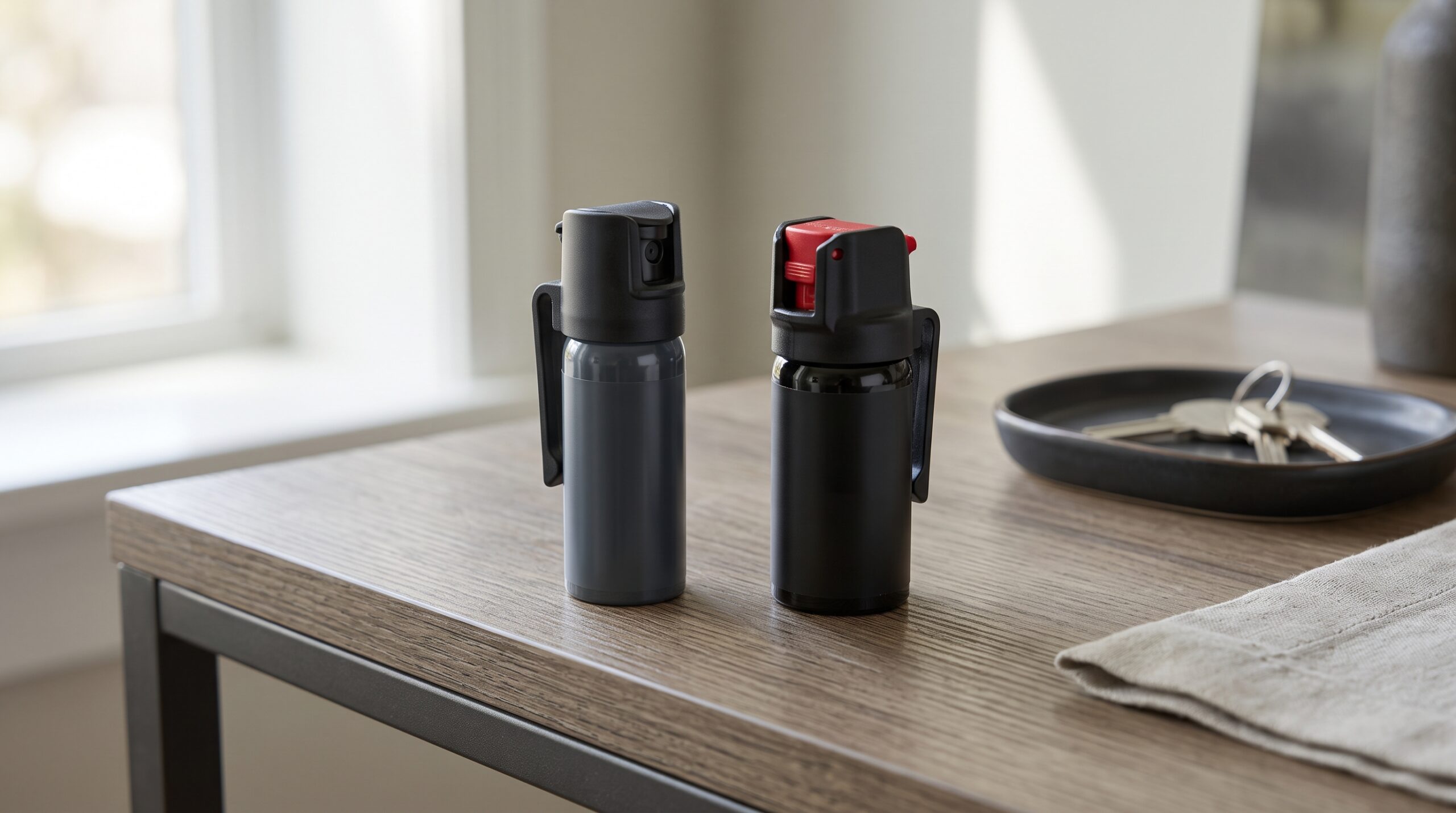
Oleoresin Capsicum (OC) is the active irritant used in many civilian defensive sprays. Exposure can cause intense burning of the eyes and skin, tearing, involuntary eye closure, coughing, and respiratory irritation. Effects vary according to formulation, exposure, individual response, and environmental conditions.
Traditional pepper spray and pepper gel use similar OC-based irritants but deliver them differently. The practical choice between them depends on factors such as spray pattern, wind, range, enclosed-space use, accuracy, canister size, and local law.
Pepper Spray vs. Gel: How the Delivery Systems Differ
The primary difference between pepper spray and pepper gel is not simply the active ingredient. It is how that irritant travels from the canister to the target.
1. Traditional Pepper Spray
Pepper spray can be delivered through several patterns, including concentrated streams, cones, and fogs. The amount of airborne material varies substantially between these patterns.
- Broader Exposure: Cone and fog patterns disperse more material through the air and may affect a wider area than a narrow stream.
- Respiratory Irritation: Airborne OC droplets can produce coughing and respiratory irritation when inhaled.
- Wind Sensitivity: Fine droplets are more susceptible to wind and air movement, increasing the possibility of unintended exposure to the user or other people nearby.
- Aiming: Depending on the spray pattern, conventional spray may provide somewhat more tolerance for imperfect aim than a narrow gel stream.
2. Pepper Gel
Pepper gel uses a thicker formulation designed to travel as a relatively cohesive stream rather than dispersing as a broad aerosol cloud.
- Reduced Airborne Dispersion: Gel generally produces less airborne material than cone or fog sprays, although splatter and secondary contamination can still occur.
- Better Wind Resistance: A cohesive gel stream is generally less susceptible to wind drift than fine aerosol droplets, but strong wind can still affect its trajectory.
- More Precise Aiming: Because gel typically uses a narrower stream, accurate placement becomes more important.
- Surface Contact: Gel depends more heavily on direct contact than highly aerosolized delivery patterns.
Pepper Spray or Gel for Indoor Use?
Enclosed environments change the trade-offs significantly.
Aerosolized OC discharged in a small room, hallway, office, or vehicle can expose people other than the intended target. Ventilation and air movement may also spread contamination beyond the immediate area.
Pepper gel generally reduces airborne dispersion compared with conventional cone or fog sprays. This can make it worth considering where limiting cross-contamination is a priority.
However, gel should not be described as contamination-free or automatically safe indoors. Impact splatter, transfer from contaminated surfaces, accidental discharge, and direct contact remain possible.
Any defensive spray used inside a home also introduces additional considerations when children, pets, older adults, or people with respiratory conditions are present.
Pepper Spray or Gel Outdoors?
Wind is one of the most important environmental variables when using any projected defensive spray outdoors.
A narrow stream or gel formulation generally provides better resistance to crosswinds than a fine cone or fog pattern. It does not become immune to wind, however, and trajectory can still be affected.
Traditional spray may provide advantages where a broader pattern is desirable, while gel generally emphasizes more concentrated delivery and reduced airborne dispersion.
The better format therefore depends on the environment and the characteristics of the specific product rather than on a universal rule that one format is always superior.
Range, Capacity, and Safety Mechanisms
Do not choose a defensive spray solely because of the advertised range. Canister size, nozzle design, delivery pattern, pressure, formulation, temperature, wind, and manufacturer specifications all affect practical performance.
- Range: Compact units generally have shorter advertised ranges than larger models. Compare the manufacturer’s specifications for the exact product rather than assuming that every gel travels farther than every spray.
- Capacity: Larger canisters generally contain more product and may provide more usable discharges, but they are less convenient to carry.
- Safety Mechanism: The actuator should reduce accidental discharge while remaining intuitive to operate. Flip-top and twist-lock mechanisms each have different handling characteristics.
- Accessibility: A defensive tool provides little value if it is buried at the bottom of a bag or otherwise inaccessible when needed.
How Strong Is Pepper Spray?
Pepper-spray marketing can make potency comparisons unnecessarily confusing.
Scoville Heat Units (SHU) may describe the heat of the raw OC resin or peppers used in a formulation, but this does not necessarily tell you the concentration of active capsaicinoids in the finished product.
When manufacturers provide it, Major Capsaicinoids (MC) concentration can offer a more useful metric for comparing the concentration of relevant capsaicinoids in finished OC products.
Potency is still only one consideration. Delivery pattern, reliability, range, accuracy, canister design, legal compliance, and the user’s familiarity with the product also matter.
Shelf Life, Storage, and Practice
Defensive sprays are pressurized products and should be stored, inspected, and replaced according to the manufacturer’s instructions.
- Expiration: Canisters have manufacturer expiration dates. Replace the product according to those instructions rather than assuming that an old canister will retain its original pressure and performance indefinitely.
- Temperature: Avoid storing pressurized canisters outside the temperature range specified by the manufacturer. Vehicles can become extremely hot or cold, potentially affecting pressure, seals, and product performance.
- Physical Inspection: Periodically check the canister for corrosion, leakage, damage, or other deterioration.
- Practice Units: Inert training canisters can help users become familiar with the safety mechanism, grip, presentation, aiming, and spray pattern without deliberate OC exposure.
Pepper Spray Laws Vary by Location
The legality of purchasing, possessing, carrying, shipping, and using defensive sprays depends on jurisdiction.
In the United States, state and local rules can address issues such as:
- maximum canister size or quantity;
- minimum purchaser or possessor age;
- where products may be sold;
- online shipping restrictions;
- prohibited locations;
- restrictions applying to particular individuals;
- permitted formulations; and
- circumstances in which defensive use is legally justified.
Always verify current state and local law before purchasing, carrying, transporting, or using pepper spray or pepper gel. Regulations can change, and rules applicable in one jurisdiction may not apply in another.
What to Do After Accidental Pepper Spray Exposure
If accidental OC exposure occurs, move away from the source and into fresh air when it is safe to do so.
- Do Not Rub: Avoid rubbing contaminated eyes or skin because this can increase irritation and spread the contaminant.
- Remove Contact Lenses: If possible, remove contaminated contact lenses. Do not reinsert them until it is safe to do so.
- Remove Contaminated Clothing: Carefully remove contaminated clothing and isolate it from clean items.
- Flush the Eyes: Rinse exposed eyes with plenty of clean water or appropriate saline. Follow poison-control or medical guidance regarding duration and further treatment.
- Wash Exposed Skin: Use cool or lukewarm water and mild soap to remove residue from exposed skin. Avoid aggressively scrubbing irritated areas.
- Avoid Oily Products: Oils, creams, and heavy ointments may retain capsaicin against the skin and should not be treated as universal decontamination remedies.
- Seek Medical Help When Necessary: Severe breathing difficulty, persistent chest symptoms, significant eye injury, prolonged symptoms, or other concerning reactions warrant prompt medical evaluation.
Informational Disclaimer: This article provides general consumer information about personal-safety equipment. It is not legal or medical advice. Verify current laws in your jurisdiction and seek appropriate medical assistance for significant exposure or injury.
Popular Pepper Spray and Gel Options
Affiliate disclosure: This section contains Amazon Associates affiliate links. If you purchase through these links, we may earn a commission at no additional cost to you.
Pepper Spray vs. Pepper Gel FAQ
Is pepper gel better than pepper spray?
Neither format is universally better. Gel generally offers less airborne dispersion and better resistance to wind than fine aerosol patterns, while conventional sprays may offer different pattern characteristics and greater tolerance for imperfect aim depending on the nozzle design.
Is pepper gel safer to use indoors?
Gel generally produces less airborne dispersion than cone or fog pepper sprays, which can reduce cross-contamination in enclosed spaces. It is not contamination-free, however, and indoor use can still expose occupants through splatter, contact, transfer, or accidental discharge.
Does pepper gel work in the wind?
Its cohesive stream is generally less susceptible to wind drift than fine aerosol droplets, but wind can still affect trajectory. No projected defensive spray should be considered completely windproof.
Does pepper gel have a longer range?
Some gel products advertise substantial range, but performance varies by manufacturer, nozzle, formulation, canister size, pressure, and environmental conditions. Compare exact product specifications rather than assuming all gels outperform all sprays.
Does pepper spray expire?
Yes. Follow the expiration and replacement guidance printed by the manufacturer. An aging pressurized canister may not perform as intended even if it still contains OC formulation.
What is Major Capsaicinoids percentage?
Major Capsaicinoids concentration describes the amount of certain active capsaicinoids in an OC formulation. When reported consistently, it can be more useful for product comparison than marketing claims based solely on Scoville Heat Units.
Should I practice with real pepper spray?
An inert training canister is the safer way to practice basic handling and deployment without deliberately releasing OC. Follow the manufacturer’s training instructions and avoid aiming any practice device at another person unless it is specifically designed and approved for that type of training.
Sources and Regulatory References
- Poison Control: General guidance for irritant exposure and decontamination.
- Product Manufacturers: Current technical specifications, safety instructions, storage requirements, expiration guidance, and product-specific performance information.
- State and Local Authorities: Current legal requirements governing purchase, possession, carry, shipping, and lawful defensive use.