
Portuguese Prepper
Emergency ration bars: Datrex vs. SOS vs. Mainstay
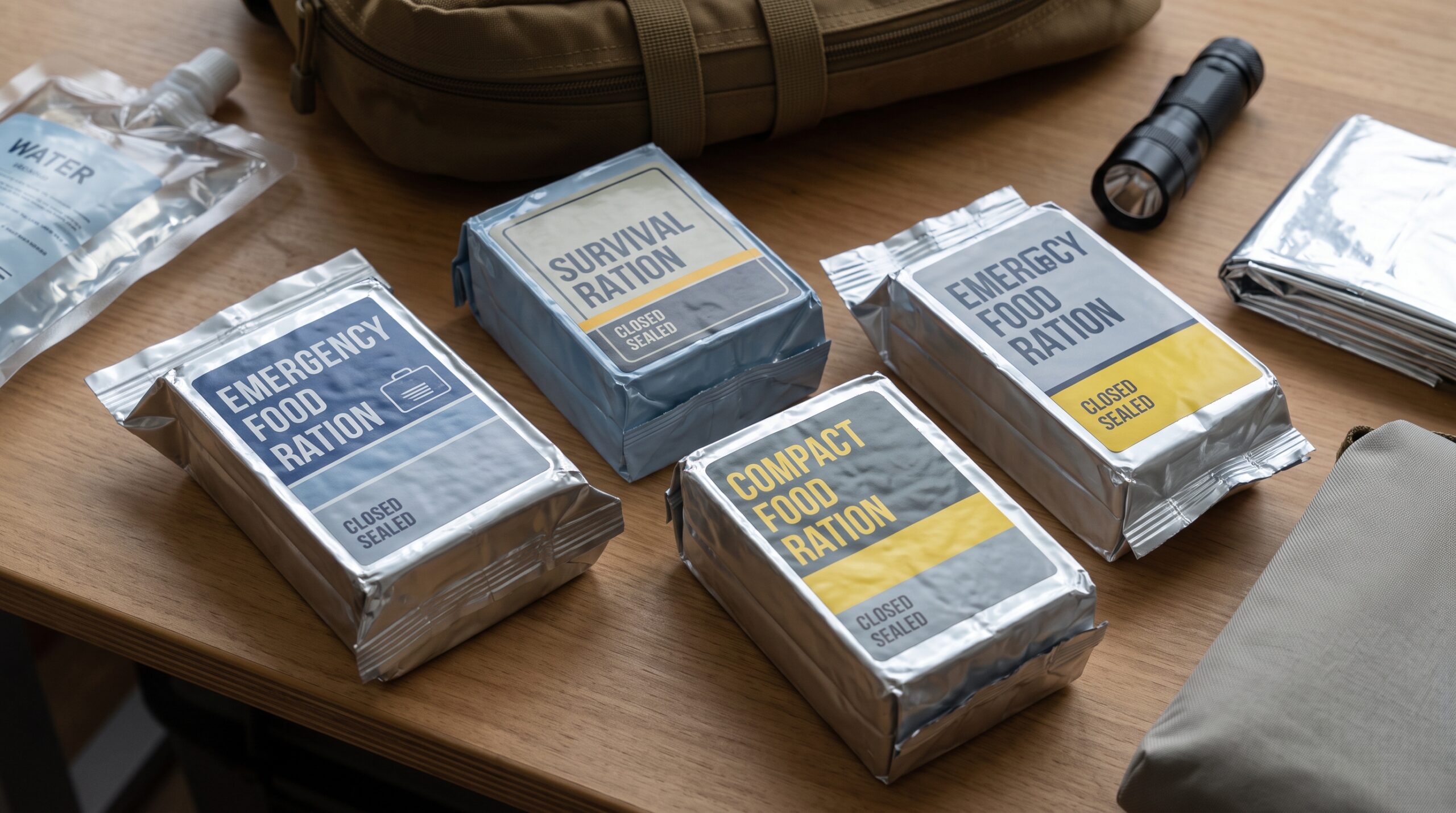
Short answer: emergency ration bars make the most sense where compactness, no-cook use and storage tolerance matter more than meal quality: vehicle kits, evacuation bags, boats and very small 72-hour kits. They are not a nutritionally complete replacement for a normal emergency-food plan.
Affiliate disclosure: This page contains affiliate links. If you purchase through these links, we may earn a commission at no additional cost to you.
Datrex, SOS and Mainstay are commonly sold as 2,400- or 3,600-calorie emergency rations. The useful comparison is not simply taste: check the exact package for total calories, serving size, shelf-life statement, certification/approval markings, allergens, packaging and storage instructions.
What these bars are actually for
Emergency ration bars originated around lifeboat and disaster-survival requirements: dense calories, compact packaging and no preparation. That makes the format useful when a stove, fuel or extra preparation water may not be available.
Their strength is logistics, not culinary quality. For sheltering at home, ordinary shelf-stable pantry foods, freeze-dried meals or a mixed emergency pantry can provide more variety and make it easier to build a balanced diet.
Datrex vs. SOS vs. Mainstay: what to compare
| Factor | Why it matters |
|---|---|
| Total calories | Determines how much energy the package actually provides; do not infer duration from the product name alone. |
| Packaging | Individually portioned pieces can make rationing and sharing easier after the outer package is opened. |
| Expiration/shelf-life marking | Use the date and storage conditions on the package you receive rather than assuming every emergency bar has an identical life. |
| Certification/approval | If a listing claims maritime or Coast Guard compliance, verify the marking/documentation for that exact product and package size. |
| Ingredients/allergens | Critical when the ration may be shared among family members or stored for an unknown future user. |
| Size and weight | Especially important in vehicle, evacuation and compact emergency kits. |
Datrex
Datrex is a strong candidate when compact emergency calories and portion control are the priority. Some Datrex products divide the ration into smaller wrapped portions inside the main package, which can be useful when a kit is opened over more than one eating period. Verify the exact configuration on the product you buy because package sizes and market versions can differ.
SOS
SOS Food Lab produces emergency food rations in multiple package sizes. Treat claims such as “five-year shelf life” or maritime approval as product-specific: verify the current package and documentation rather than assuming the claim applies to every SOS item sold by every reseller.
Mainstay and other alternatives
Mainstay is another established emergency-ration format, but availability varies by country and reseller. Millennium-style individual energy bars can also be useful when you want separate portions or flavor variety, although cost per calorie may be higher.
Do not confuse 3,600 calories with a complete three-day food plan
Dividing a 3,600-calorie package into three 1,200-calorie days is simple arithmetic, but it does not establish that the ration meets an individual’s nutritional or energy needs. Requirements vary with body size, age, health, temperature and physical activity. We therefore do not describe one 3,600-calorie brick as a universal “three-day minimum.”
For a 72-hour kit, use ration bars as compact backup calories and build the overall food quantity around the people, conditions and likely activity level involved.
Vehicle storage: shelf life is not a license to ignore heat
Emergency products are often marketed for demanding storage, but a parked vehicle can experience severe temperature swings. Follow the manufacturer’s stated storage range and inspect packages periodically for damage, swelling, broken seals or expired dates. Rotate questionable food rather than assuming a nominal shelf-life claim overrides actual storage conditions.
Our preparedness recommendation
For a compact vehicle or evacuation kit: choose the verified ration that gives you the best combination of intact dated packaging, useful portions, calories, acceptable ingredients and local availability. Datrex is our starting comparison because its portioning can be convenient, but we would choose a fresh, verifiable SOS or Mainstay product over an old or poorly documented Datrex listing.
For home preparedness: do not build the entire food reserve around ration bars. Use them as a no-cook fallback alongside normal shelf-stable foods or longer-duration emergency meals.
Sources and methodology
This comparison deliberately avoids repeating reseller claims such as “best tasting,” universal five-year life, or blanket Coast Guard approval without product-specific documentation. Maritime survival equipment in the United States is regulated through U.S. Coast Guard requirements, while individual manufacturers are responsible for the specifications and markings of their products. Check the exact package and current manufacturer documentation before relying on a ration for an emergency kit.
- Datrex — Emergency Food Ration
- SOS Food Lab — manufacturer information
- U.S. Coast Guard — Lifesaving and Fire Safety Division
Reviewed: September 2026. Product formulations, package sizes, approvals and availability can change.