
Portuguese Prepper
How Much Emergency Food Should You Store? A Practical Household Method
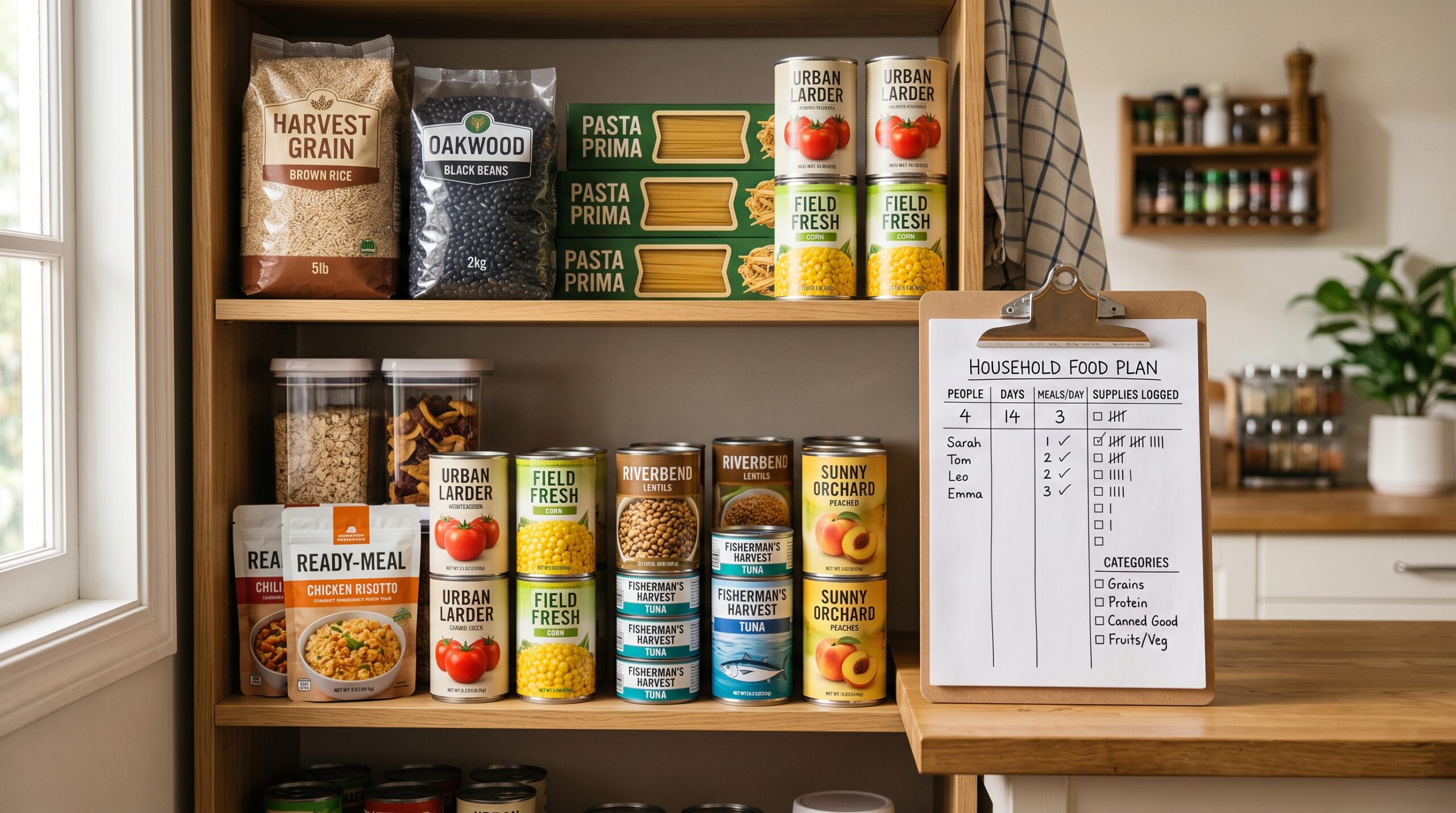
Short answer: if you are deciding how much emergency food to store, there is no single number of calories or buckets that fits every household. Start with people × days × realistic meals, then account for individual energy needs, dietary restrictions, cooking water, fuel, storage space, rotation and the foods you already keep at home.
A three-day supply is a manageable first milestone and is consistent with basic U.S. emergency-kit guidance, but it should be treated as a starting layer rather than proof that every disruption lasts only 72 hours.
Step 1: choose a planning horizon
Use several horizons rather than one dramatic target. A sensible sequence is a short baseline for routine outages, then a larger rotating pantry, then selected longer-term storage if your risks and space justify it.
| Horizon | Planning focus |
|---|---|
| 3 days | Low-complexity food that works during an outage or evacuation |
| 1–2 weeks | Expanded pantry, rotation and realistic cooking capability |
| 1–3 months | Storage space, nutrition variety, fuel, water and inventory management become more important |
| Longer term | Replacement, production, preservation and sustainable household systems matter more than simply adding calories |
Step 2: plan for people, not abstract “servings”
Energy requirements vary by age, body size, health, pregnancy, activity and environment. Instead of choosing one universal calorie target, use your household’s normal intake and any professional dietary guidance as the starting point, then ensure the stored menu provides enough food across the period you are planning.
For packaged emergency food, compare the total calories in the container with the number of people and days it is supposed to support. A large “serving count” can still produce a small daily intake if each serving is only a side dish or partial meal.
Step 3: build in layers
Step 4: calculate the hidden requirements
Dry food is not independent of water. Rice, beans, pasta, dehydrated meals and powdered products can increase the amount of stored water and fuel needed. If the normal stove is unavailable, cooking time also becomes an energy-planning issue.
A more resilient reserve therefore includes some foods that can be eaten with little or no cooking alongside staples that are efficient for longer storage.
Step 5: rotate and inspect
The easiest reserve to maintain is often an expanded normal pantry. Use older suitable stock first, replace what you consume, check packaging and dates, and keep an inventory that another household member can understand.
Long-term packaged food still needs storage discipline. Temperature, moisture, pests and damaged packaging can shorten useful life. Manufacturer shelf-life statements assume specified storage conditions rather than guaranteeing that every package remains unchanged for the maximum advertised period.
A simple worksheet
- List each household member and dietary constraints.
- Choose the number of days for the first layer.
- Write a realistic breakfast, lunch, dinner and snack plan.
- Add total package calories and portions.
- Calculate the water and fuel required to prepare those foods.
- Check whether all supplies fit the available storage space.
- Repeat for the next longer planning horizon.
Reviewed: September 2026. Food needs are individual; this page provides a planning framework rather than a medical nutrition prescription.