
Portuguese Prepper
Best Vehicle IFAK: What should actually be in your car medical kit?
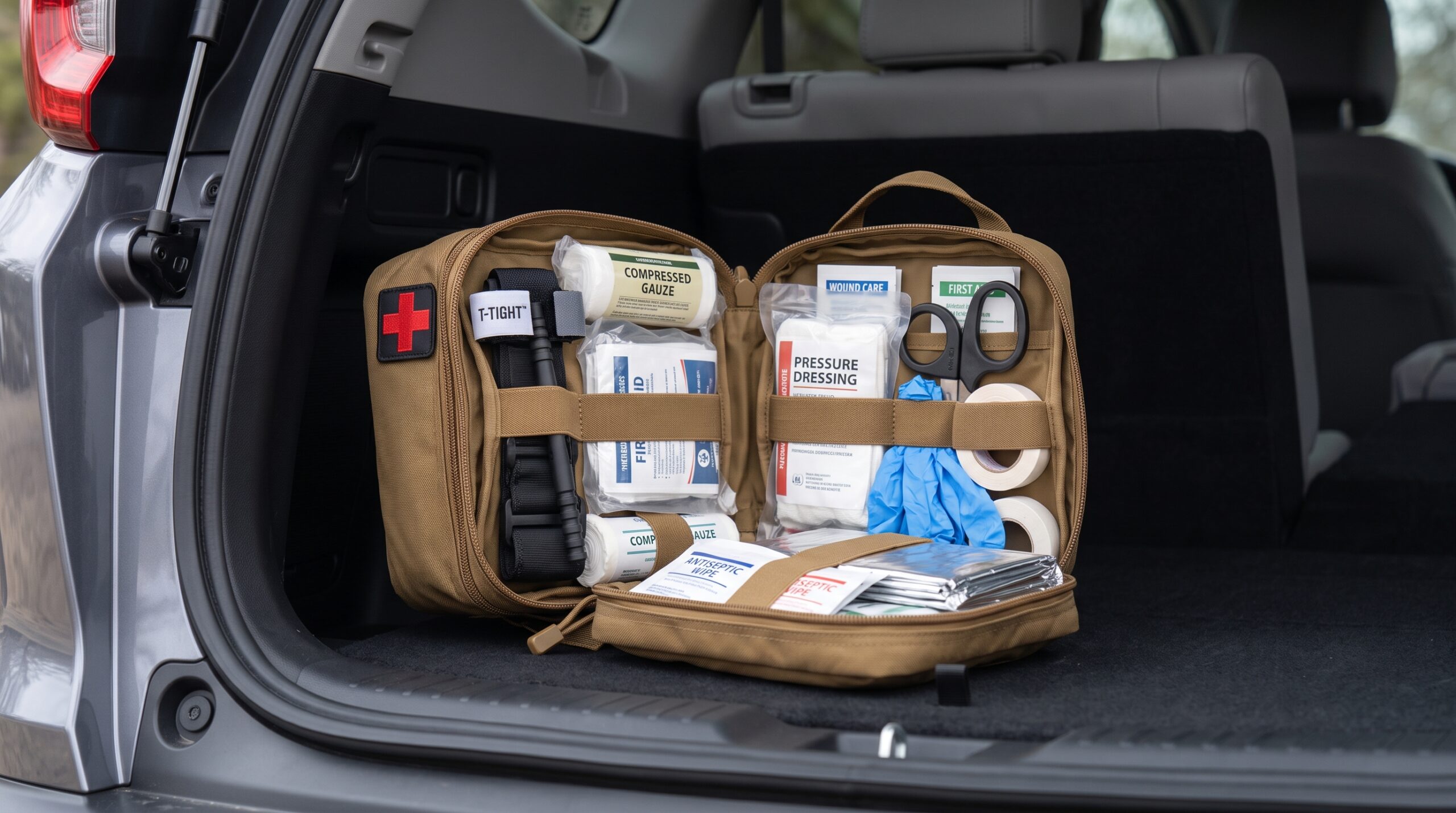
Short answer: the best medical setup for a vehicle is usually not a tiny first-aid box or an ultra-minimal trauma IFAK by itself. A more complete approach combines supplies for common injuries with dedicated equipment for life-threatening bleeding.
The American Red Cross recommends keeping a first-aid kit in your vehicle and includes a bleeding-control kit with a tourniquet among its car-kit essentials. That combination covers a much broader range of emergencies than choosing between Band-Aids and trauma equipment as if only one category mattered.
Medical disclaimer: This guide is for preparedness and product-comparison purposes only. It is not medical advice and does not replace professional first-aid, CPR or bleeding-control training. In a medical emergency, contact emergency medical services and follow the instructions of qualified professionals.
Best Vehicle IFAK: The Short Answer
For most drivers, we recommend thinking in terms of a vehicle medical system rather than a single IFAK.
One part should handle ordinary first-aid problems such as cuts, scrapes, minor wounds and other common injuries. A second layer should provide appropriate bleeding-control equipment for severe trauma.
These functions can be combined in one well-organized bag or divided between a general first-aid kit and a compact bleeding-control kit. What matters is knowing where everything is and being trained to use the equipment you carry.
First Aid vs. Bleeding Control
A conventional first-aid kit and a bleeding-control kit solve different problems.
| Kit type | Typical role | Typical contents |
|---|---|---|
| First-aid kit | Common injuries and minor emergencies | Adhesive bandages, gauze, tape, antiseptic supplies, gloves, cold pack, tweezers and related supplies |
| Bleeding-control kit | Life-threatening external bleeding | Commercial tourniquet, compressed or hemostatic gauze, pressure dressing, gloves, trauma shears, marker and instructions |
| Combined vehicle medical kit | Broader roadside preparedness | First-aid supplies plus dedicated bleeding-control equipment |
The American College of Surgeons notes that STOP THE BLEED kits contain equipment not typically found in standard first-aid kits. That does not make ordinary first-aid supplies unnecessary; it means the two categories complement each other.
Core Bleeding-Control Components
A useful reference point is the equipment included in American College of Surgeons STOP THE BLEED kits.
- Commercial tourniquet: specialized equipment for life-threatening extremity bleeding.
- Compressed or hemostatic gauze: used as part of appropriate wound-packing techniques.
- Emergency trauma or compression dressing: supports bleeding control and wound coverage.
- Trauma shears: provide access when clothing obstructs an injury.
- Gloves: provide a barrier while assisting an injured person.
- Marker: included in STOP THE BLEED kits for recording relevant information such as tourniquet application time.
- Instructions: useful as a reference, although they do not replace training and practice.
Enhanced STOP THE BLEED kits can also contain chest seals and an emergency blanket. Chest seals are therefore a legitimate addition to some trauma kits, but they are not a reason to reject every vehicle kit that does not contain them.
Everyday First-Aid Supplies Still Matter
Roadside medical preparedness is not limited to catastrophic collisions. The Red Cross identifies vehicle first-aid needs ranging from minor cuts and wounds to burns, fractures, dehydration and other medical emergencies.
Its current car-kit guidance includes items such as:
- adhesive bandages;
- adhesive tape;
- antiseptic supplies;
- bandages and gauze;
- disposable gloves;
- first-aid instructions;
- saline solution;
- tweezers;
- appropriate personal items and medications where applicable;
- and a bleeding-control kit with a tourniquet.
This is why replacing the entire first-aid kit with a minimalist IFAK is not necessarily an upgrade. The better strategy is to add serious bleeding-control capability without losing the supplies needed for more common problems.
Accessibility Matters
Emergency equipment is less useful if nobody can find or reach it when needed. A vehicle medical kit should have a consistent, identifiable storage location rather than being moved around underneath luggage, shopping or other cargo.
That does not mean every driver must mount a medical kit to a headrest. Headrest, seat-back, visor, console, door-area and cargo-area solutions all involve different compromises involving accessibility, visibility, passenger space, crash security and kit size.
A compact trauma module may be kept closer to occupants while a larger general first-aid kit remains elsewhere in the vehicle. Another approach is one securely stored combined bag that regular occupants know how to locate.
Whatever arrangement you choose, make sure loose medical equipment cannot itself become hazardous during sudden braking or a collision.
Do You Need a Headrest-Mounted Kit?
A tear-away mounting system can be convenient, but it is a feature rather than a universal requirement.
The advantage is rapid removal of the complete kit from a known mounting point. The disadvantage is that the location may not suit every vehicle interior, passenger arrangement or kit size.
Choose the mounting system after deciding what equipment you need. Do not choose the medical contents merely because a particular bag happens to attach neatly to a headrest.
Which Vehicle Medical Kit Should You Buy?
Affiliate disclosure: This page contains affiliate links. If you purchase through these links, we may earn a commission at no additional cost to you.
Broader Medical Kit: MyMedic MyFAK Pro
A larger prebuilt option combining general first-aid and trauma-oriented supplies. Check the exact current configuration and included components before purchasing, because kit contents and versions can change.
Compact Trauma Option: RHINO RESCUE Trauma IFAK
A compact trauma-oriented option for users who prioritize portability, organization and rapid access to emergency bleeding-control supplies. Verify the exact current contents and match specialized equipment to your training.
Vehicle Escape Tool: Resqme
A separate seatbelt-cutter and window-breaker tool. Keep it accessible to vehicle occupants and confirm what type of side-window glass your vehicle uses.
Compact Bleeding-Control Supplement
If you already have a conventional vehicle first-aid kit, adding a compact bleeding-control module can be more efficient than replacing everything.
Adventure Medical Kits Trauma Pak with QuikClot
An example of a compact trauma supplement. Treat products in this category as additions to a broader vehicle medical system rather than assuming a small bleeding-control pouch replaces a complete first-aid kit.
What About a Compact Trauma IFAK?
A compact trauma IFAK can be useful in a vehicle when it keeps critical bleeding-control supplies organized and readily accessible without replacing the broader first-aid capability you may also need.
The RHINO RESCUE Trauma IFAK represents this more focused approach. Its role is different from a larger general-purpose kit such as the MyMedic MyFAK Pro: the emphasis is compact trauma capability rather than comprehensive treatment of routine first-aid problems.
If you use this approach, maintain ordinary first-aid supplies elsewhere in the vehicle and verify the exact contents of the trauma kit against your training and intended use.
Seatbelt Cutters and Window Breakers Are a Separate Category
A vehicle escape tool is useful preparedness equipment, but it should not be confused with medical equipment.
The Resqme combines a protected seatbelt cutter with a spring-loaded window-breaking mechanism. The manufacturer states that the glass-breaking function is intended for tempered side windows and does not work on a front windshield. Some modern vehicles also use laminated side glass, so check the markings on your own windows rather than assuming every side window can be broken by the tool.
Accessibility matters here as well. Resqme identifies several possible locations, including a keychain, door or window handle area, headrest, glove compartment or sun visor. The manufacturer specifically warns that a tool hanging from the rearview mirror may be displaced during a crash.
The appropriate location is therefore somewhere secure and reachable in your particular vehicle — not automatically the rearview mirror.
Vehicle Heat, Cold and Storage
A vehicle is a demanding storage environment. Medical supplies can be exposed to substantial temperature changes, sunlight, vibration, moisture and repeated movement.
Do not use a universal replacement rule such as replacing the entire kit every two years. Different components have different expiration dates, storage requirements and manufacturer instructions.
The American Red Cross recommends regularly checking vehicle first-aid kits to make sure contents are undamaged, functioning correctly and within their expiration dates.
Check the storage requirements printed on individual products, particularly products whose performance can be affected by environmental conditions. Replace anything damaged, contaminated, expired or otherwise outside the manufacturer’s specified condition.
Prebuilt Kit vs. Build Your Own
A prebuilt kit provides convenience and organization. A carefully assembled kit provides more control over individual components.
Neither approach is automatically superior.
When comparing prebuilt kits, ignore headline piece counts initially. A 200-piece kit can contain large numbers of small adhesive bandages and wipes while lacking dedicated bleeding-control equipment.
Instead, evaluate:
- whether it covers both common first-aid needs and the serious emergencies you are preparing for;
- the exact manufacturer and model of critical components such as tourniquets;
- organization and accessibility;
- whether replacement components can be obtained individually;
- expiration dates and storage requirements;
- bag dimensions and suitability for your vehicle;
- and whether you have actually trained with the equipment.
Training Is Part of the Kit
Owning trauma equipment does not provide the skills required to use it correctly.
The American College of Surgeons STOP THE BLEED program provides training in recognizing life-threatening bleeding and using bleeding-control techniques. The American Red Cross also recommends first-aid training as part of vehicle preparedness.
If your vehicle kit contains a tourniquet, train with the same type of tourniquet you carry. If it contains other specialized equipment, understand its intended use and follow the manufacturer’s instructions and recognized training.
Keep dedicated training equipment separate from the operational supplies reserved for emergencies.
Our Vehicle Medical Strategy
- Layer 1 — General first aid: supplies for common cuts, wounds and other routine first-aid needs.
- Layer 2 — Bleeding control: an established commercial tourniquet plus appropriate gauze, dressing, gloves, shears, marker and instructions.
- Layer 3 — Additional trauma equipment: selected according to training and needs rather than automatically adding every specialized medical product available.
- Layer 4 — Vehicle escape: a securely accessible seatbelt cutter/window tool appropriate to the vehicle’s glass.
- Layer 5 — Training: first aid, CPR and recognized bleeding-control education.
- Layer 6 — Maintenance: regular inspection of condition, expiry dates and manufacturer storage requirements.
The Bottom Line
The best vehicle IFAK is not necessarily the bag with the most trauma equipment or the largest number printed on the package.
For most people, a better vehicle medical system combines ordinary first-aid capability with dedicated bleeding-control equipment. The first handles the injuries you are more likely to encounter; the second adds capability for a much more serious emergency.
Keep the equipment organized and accessible, verify the provenance of critical medical components, inspect the kit regularly and train with the equipment you actually carry.
If you already own a good general first-aid kit, you may not need to replace it. Adding a properly equipped bleeding-control module can close the more important capability gap.
Sources and Methodology
- American Red Cross — Vehicle Kit Essentials
- American Red Cross — Make a First Aid Kit
- American College of Surgeons — STOP THE BLEED Kit Contents
- Resqme — Vehicle Escape Tool Guidance
This page evaluates vehicle medical preparedness by capability rather than advertised piece count. Product configurations, medical-kit contents and manufacturer specifications can change, so verify the current contents and storage instructions before purchasing or relying on a kit.
Reviewed: September 2026.
Related pages
Medical disclaimer: This content is for general preparedness and educational purposes only and does not provide medical diagnosis or treatment advice. Seek appropriate professional first-aid, CPR and bleeding-control training, follow the instructions supplied with medical equipment, and contact emergency medical services in an emergency.