
Portuguese Prepper
CAT vs. SOF-T Tourniquets: Which one should you carry?
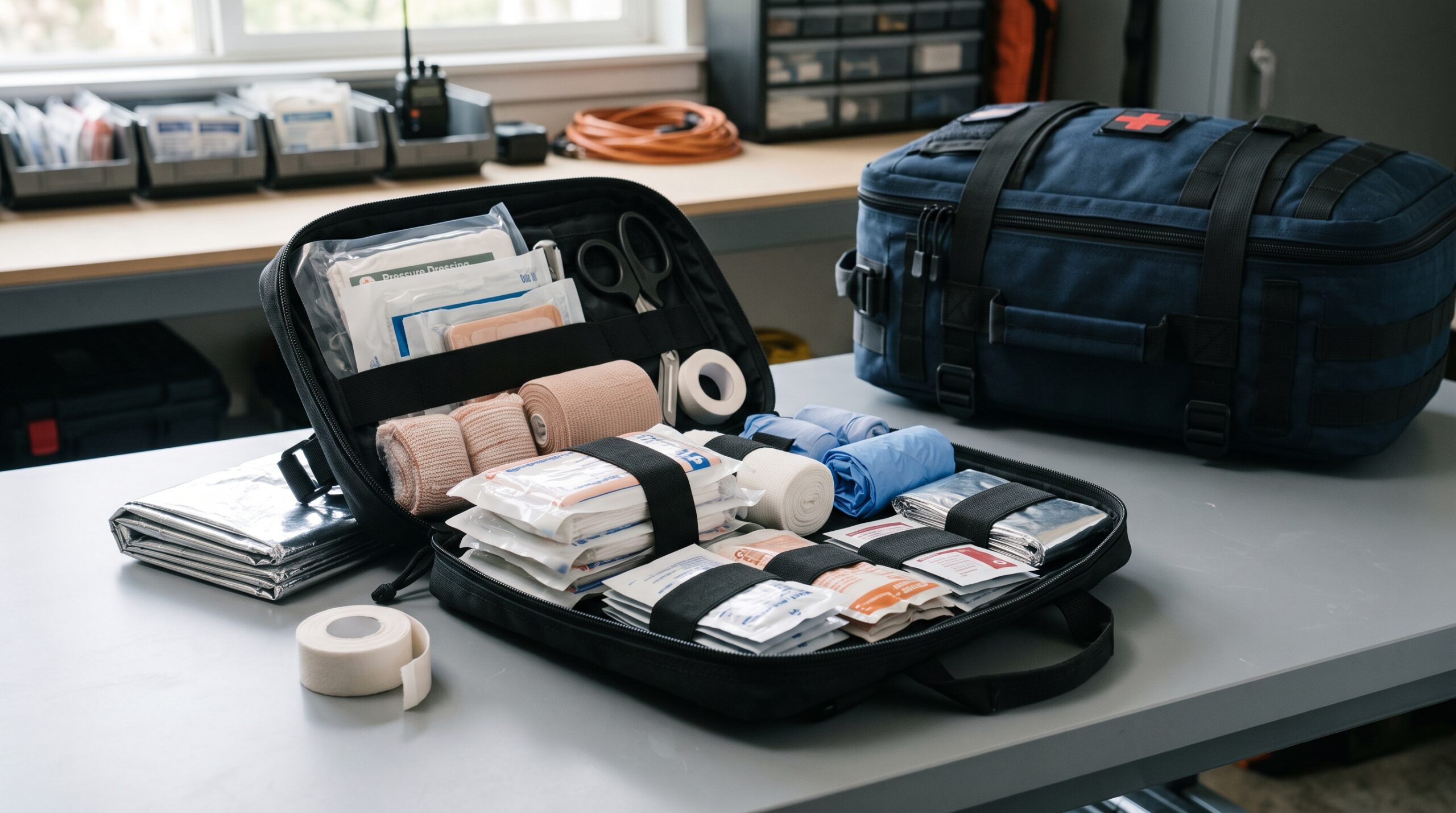
Short answer: the C-A-T Gen 7 and SOF Tourniquet are both established commercial windlass tourniquets designed for controlling life-threatening extremity bleeding. The meaningful differences are in construction, buckle design, packed form, weight and handling — not that one is universally safe and the other is not.
For preparedness, the priorities are more fundamental: buy an authentic commercial tourniquet from a reliable source, choose equipment appropriate to your training, keep it accessible, inspect it periodically and learn how to use it through recognized bleeding-control training.
Medical disclaimer: This guide is for preparedness and product-comparison purposes only. It is not medical advice and does not replace professional first-aid or bleeding-control training. In a medical emergency, contact emergency medical services and follow the instructions of qualified professionals.
CAT vs. SOF Tourniquet: The Short Answer
There is no need to turn this comparison into a winner-takes-all contest. Both designs belong to an established class of commercial windlass tourniquets used for severe extremity bleeding.
The C-A-T Gen 7 from North American Rescue uses a polymer windlass, a free-moving internal band, hook-and-loop securing system and single-routing buckle. It is lightweight and widely available through professional medical-supply channels.
The current SOF Tourniquet from TacMed Solutions uses a 1.5-inch reinforced polyester pressure band, detachable buckle, aircraft-grade aluminum windlass, Tri-Ring Lock and Tourniquet Retention Assistance Clip.
Your training, carry system and ability to deploy the tourniquet correctly matter more than small differences in specifications between two established products.
Comparison at a Glance
| Feature | C-A-T Gen 7 | SOF Tourniquet |
|---|---|---|
| Manufacturer | North American Rescue | TacMed Solutions |
| Mechanism | Windlass | Windlass |
| Windlass material | Polymer | Aircraft-grade aluminum |
| Pressure system | Free-moving internal band | 1.5-in reinforced low-stretch polyester band |
| One-handed application | Designed for it | Designed for it |
| Published weight | Approx. 2.7 oz | 3.7 oz / 105 g |
| Published packed dimensions | Approx. 6.5 × 2.4 × 1.5 in | 5.5 × 2 × 1.75 in |
| Distinctive feature | Lightweight single-routing design | Detachable buckle and aluminum windlass |
Specifications refer to the current manufacturer documentation reviewed for this comparison. Product generations and configurations can change.
What Is a Tourniquet For?
A tourniquet is specialized bleeding-control equipment intended for life-threatening bleeding from an extremity. It is not a general replacement for every other bleeding-control method.
The American College of Surgeons STOP THE BLEED program teaches three major bleeding-control techniques: applying pressure, packing wounds and applying a tourniquet. Which method is appropriate depends on the injury and circumstances.
STOP THE BLEED specifically recommends commercial-grade tourniquets rather than relying on improvised devices whose effectiveness cannot be assured.
C-A-T Gen 7: Lightweight and Widely Established
The Combat Application Tourniquet, or C-A-T, is manufactured by North American Rescue. The current Gen 7 uses a free-moving internal band to create circumferential pressure around the extremity.
The system uses a windlass that is rotated to create pressure and then secured using the integrated retention system. North American Rescue designed the Gen 7 with a single-routing buckle to simplify the configuration.
At approximately 2.7 oz, the C-A-T is lighter than the current SOF Tourniquet. Its relatively low weight can matter when several tourniquets are carried in a medical kit or distributed across multiple emergency kits.
North American Rescue also sells dedicated carrying cases and mounting systems for the Gen 7, which can be useful when immediate accessibility is part of the equipment plan.
SOF Tourniquet: Aluminum Windlass and Detachable Buckle
The SOF Tourniquet from TacMed Solutions uses a different mechanical design. The current model has a 1.5-inch reinforced low-stretch polyester pressure band and a machined aircraft-grade aluminum windlass.
Its buckle can be detached and reattached. TacMed identifies this as useful when access around an extremity is restricted or when the tourniquet cannot conveniently be slid over the limb.
The windlass is secured using TacMed’s Tri-Ring Lock and Tourniquet Retention Assistance Clip. The current design also incorporates an indicator beneath the windlass intended to provide visual confirmation that slack has been removed.
TacMed lists the current SOF Tourniquet at approximately 5.5 × 2 × 1.75 inches folded in its package and 3.7 oz / 105 g.
SOF, SOF-T and SOFTT-W: The Naming Can Be Confusing
Older articles, retailers and users may refer to TacMed’s product as the SOF-T, SOFTT or SOFTT-W. Product generations and naming have evolved.
TacMed currently markets its main product as the SOF Tourniquet and also documents the SOF Tourniquet Gen 4 under SKU SOFTT-W.
When buying, compare the exact manufacturer, generation and model rather than assuming that every listing using a similar name represents the same product.
Weight and Packed Size
The C-A-T is lighter according to the manufacturers’ current published specifications: approximately 2.7 oz compared with 3.7 oz for the SOF Tourniquet.
The SOF’s published packaged dimensions are somewhat shorter and narrower, while the C-A-T’s published packed form is longer. Real-world carry volume also depends on how each tourniquet is staged, folded and protected.
For a home or vehicle medical kit, the difference is relatively small. For on-body carry, a compact IFAK or multiple-tourniquet loadout, the geometry of the specific pouch or carrier may matter more.
One-Handed Application
Both manufacturers design their current tourniquets to support one-handed application. That makes it inaccurate to describe the SOF Tourniquet simply as a two-handed or inherently difficult system.
Design differences can nevertheless affect how a particular person handles each product. Familiarity matters. Training repeatedly with one system may be more valuable than choosing equipment solely from a specification sheet.
This page deliberately does not provide a step-by-step application tutorial. Proper bleeding-control training provides instruction and supervised practice that written product comparisons cannot replace.
Which Tourniquet Belongs in Your Kit?
Affiliate disclosure: This page contains affiliate links. If you purchase through these links, we may earn a commission at no additional cost to you.
C-A-T Gen 7
A lightweight established windlass tourniquet from North American Rescue. Consider it when you train with the C-A-T system or want compatibility with C-A-T-specific carriers and equipment.
View on AmazonSOF Tourniquet
TacMed’s windlass tourniquet uses a reinforced polyester band, detachable buckle and aircraft-grade aluminum windlass. Consider it when you train with and prefer the SOF system.
View on AmazonThere Are More Than Two Valid Commercial Tourniquets
The original version of this article described the C-A-T and SOF-T as the only two tourniquets that should be trusted. That is too absolute.
STOP THE BLEED educational materials have identified multiple recommended commercial non-pneumatic limb tourniquets, including the C-A-T Gen 7 and SOFTT-Wide alongside other designs.
The practical lesson is not that every tourniquet on the market is equivalent. It is that purchasing decisions should be based on recognized commercial designs, reliable sourcing, current professional guidance and appropriate training rather than a claim that only two products can work.
Authentic vs. Counterfeit Tourniquets
A life-safety device is not the place to optimize for the lowest possible price. Buy operational tourniquets through the manufacturer or a reputable medical-equipment supplier where product provenance can be verified.
Avoid deciding authenticity from price alone. A low price can be a warning sign, but price by itself does not prove that a product is counterfeit.
Likewise, do not assume that a listing is authentic merely because photographs and branding look correct. For equipment intended for life-threatening emergencies, supply-chain confidence matters.
Check the manufacturer’s current product information and authorized or reputable distribution channels before purchasing. Keep operational equipment separate from obvious training copies or unknown products.
Training Tourniquets vs. Operational Tourniquets
Training should be treated as a separate equipment requirement rather than repeatedly using the tourniquet reserved for emergencies.
Both North American Rescue and TacMed offer blue training versions of their tourniquet systems. The different color provides a clear visual distinction between training equipment and operational equipment.
A dedicated trainer allows repeated practice while leaving the tourniquet in your emergency kit reserved for its intended role.
If you maintain several kits — for example home, vehicle and evacuation supplies — training with the same tourniquet design that you actually carry reduces the number of unfamiliar systems you may have to operate under stress.
Storage and Inspection
A tourniquet should be accessible when needed rather than buried beneath unrelated equipment. How it is carried will depend on whether the kit is stored at home, in a vehicle, in a backpack or on the body.
Periodically inspect emergency medical equipment for visible damage, contamination, deterioration or compromised packaging where applicable. Follow the manufacturer’s current storage, inspection and replacement guidance for the exact model you own.
Vehicle equipment deserves particular attention because it can experience temperature extremes, sunlight, vibration and repeated handling.
Do not assume that equipment remains ready indefinitely simply because it has never been used. Include medical supplies in the same periodic inspection schedule as batteries, water, food and other preparedness equipment.
Training Matters More Than Small Specification Differences
The American College of Surgeons STOP THE BLEED program teaches members of the public how to recognize life-threatening bleeding and respond using appropriate bleeding-control techniques.
Current STOP THE BLEED training covers direct pressure, wound packing and tourniquet application. The program also emphasizes commercial-grade tourniquets rather than improvised devices whose effectiveness cannot be guaranteed.
Written instructions can support emergency preparedness, but STOP THE BLEED itself notes that instructions are not a complete substitute for proper training and practice.
If you decide to carry a C-A-T, train with a C-A-T. If you decide to carry a SOF Tourniquet, train with that system. Familiarity with your actual equipment is more useful than memorizing small differences between product specifications.
The Bottom Line
The C-A-T Gen 7 and SOF Tourniquet are both established commercial windlass tourniquet designs. The C-A-T is lighter and uses North American Rescue’s polymer-windlass and internal-band system. The SOF uses an aluminum windlass, reinforced polyester band and detachable buckle.
Neither specification sheet can determine which product you will use more effectively. Your training, familiarity, accessibility and confidence in the authenticity of the equipment matter substantially.
For preparedness, choose an established commercial tourniquet from a trustworthy source, maintain dedicated training equipment, inspect your operational equipment periodically and obtain recognized bleeding-control training.
Sources and Methodology
- American College of Surgeons — STOP THE BLEED
- STOP THE BLEED — Recommended commercial tourniquets and course materials
- North American Rescue — C-A-T Gen 7
- TacMed Solutions — SOF Tourniquet
- TacMed Solutions — SOF Tourniquet Gen 4 / SOFTT-W
This comparison is based on current manufacturer specifications and American College of Surgeons STOP THE BLEED materials. Product generations, specifications and professional recommendations can change.
Reviewed: September 2026.
Related pages
Medical disclaimer: This content is for general preparedness and educational purposes only and does not provide medical diagnosis or treatment advice. Seek appropriate professional bleeding-control and first-aid training, follow the instructions supplied with medical equipment, and contact emergency medical services in an emergency.