
Portuguese Prepper
Emergency Toilets: How to Manage Waste During a Water or Sewer Outage
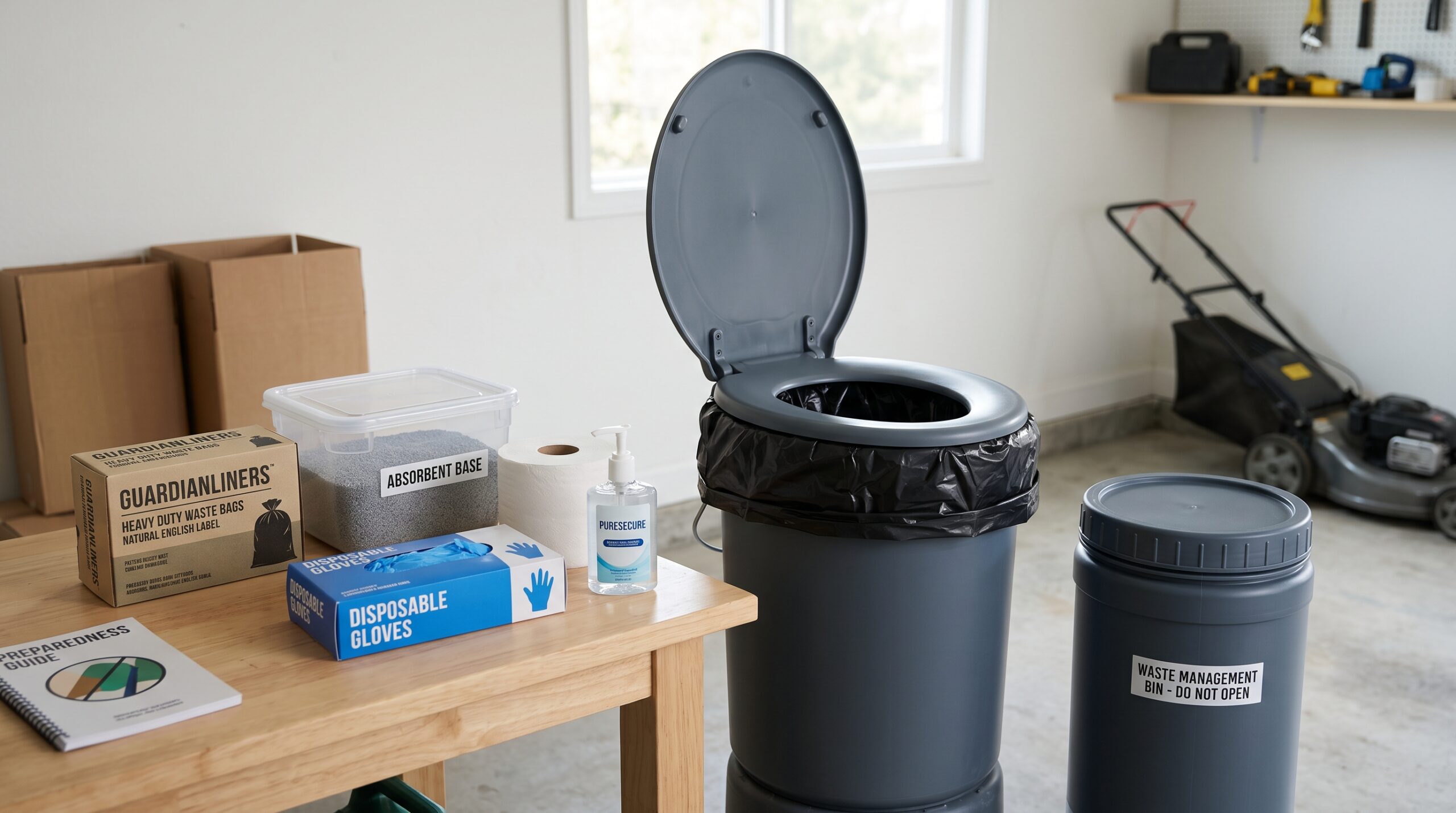
Short answer: if your normal toilet cannot be used safely during an emergency, a lined 5-gallon bucket with a proper toilet seat is one of the simplest backup sanitation systems to keep at home. For greater comfort and longer-term use, a self-contained portable toilet with separate fresh-water and waste tanks is another option.
Do not automatically assume that a power or water outage means your household toilet is unusable. The critical question is whether the sewer or septic system can still accept waste safely. If authorities report sewer damage, backups, flooding or other sanitation problems, stop using the normal system as directed and switch to an emergency toilet.
Can you still flush a toilet during a water outage?
Sometimes. Loss of household water service and failure of the sewer system are two different problems. If the sewer or septic system is functioning normally, the lack of tap water does not necessarily make the toilet itself unusable.
However, a flood, earthquake, sewer backup, damaged septic system or official order not to use wastewater infrastructure changes the situation. Do not continue sending waste into a system that may be damaged or backing up into buildings.
Preparedness rule: determine whether the wastewater system is safe before improvising a flush. When local authorities tell residents to restrict or stop toilet use, follow those instructions and switch to an offline sanitation system.
The simplest emergency toilet: a 5-gallon bucket system
A bucket toilet is inexpensive, compact and requires no electricity or plumbing. The basic system consists of:
- A sturdy 5-gallon bucket.
- A toilet seat designed to fit the bucket.
- Purpose-made waste bags or liners.
- Waste-treatment material where appropriate for the bag system.
- Toilet paper.
- Disposable gloves.
- Soap and safe hand-washing water.
- A secure location for temporarily storing sealed waste according to local emergency guidance.
A dedicated bucket toilet is preferable to improvising the entire system after an outage begins. Store the components together so the toilet can be assembled quickly without searching for bags, gloves or sanitation supplies.
Best emergency toilet options
Affiliate disclosure: This page contains affiliate links. If you purchase through these links, we may earn a commission at no additional cost to you.
Best Simple Emergency Toilet: Reliance Luggable Loo
The Luggable Loo combines a portable toilet seat and bucket-style system into a straightforward sanitation backup. It requires no plumbing or electricity and is easy to store with the rest of a household emergency kit.
Best for: inexpensive home emergency sanitation, camping and backup use.
View on AmazonBest Waste Bags: Reliance Double Doodie
Purpose-made toilet waste bags provide a cleaner containment system than ordinary household trash bags. Reliance describes its Double Doodie system as using a double-lock design intended to contain waste.
Best for: pairing with a bucket toilet and keeping replacement sanitation consumables in storage.
View on AmazonWaste-Treatment Option: Reliance Bio-Blue
Bio-Blue is intended for portable-toilet waste treatment and odor control. It can be stored alongside an emergency toilet system as a sanitation consumable.
Important: odor treatment does not make human waste harmless or eliminate the need for correct containment and disposal.
View on AmazonBest Portable Flush Toilet: Thetford Porta Potti 365
The Porta Potti 365 is a more complete alternative to a bucket toilet. It uses a manual piston-pump flush and separates the fresh-water and waste-holding tanks. The manufacturer specifies a 4-gallon fresh-water tank and 5.5-gallon waste tank.
Best for: home backup, RV use, longer outages and households where a conventional-height portable toilet is preferable to a bucket.
View on AmazonBucket toilet vs. portable flush toilet
| Feature | Bucket Toilet | Portable Flush Toilet |
|---|---|---|
| Example | Reliance Luggable Loo | Thetford Porta Potti 365 |
| Electricity required | No | No for the manual-pump model |
| Water required for flushing | No | Yes, stored in its fresh-water tank |
| Waste containment | Disposable liner/bag system | Reusable holding tank |
| Storage simplicity | Excellent | Good |
| Comfort | Basic | Closer to a conventional toilet |
| Consumables | Bags and optional treatment products | Water and appropriate toilet-treatment supplies |
| Best role | Low-cost emergency backup | More comfortable extended use |
Our preparedness choice: for most households, a bucket toilet is worth storing even if you also own a portable flush toilet. It is inexpensive, has few components that can fail and requires no flushing water. A Porta Potti becomes attractive when comfort, repeated use and a self-contained holding tank justify the extra size and maintenance.
How to set up a 5-gallon emergency toilet
- Choose the location. Use a private, ventilated area away from food preparation and stored drinking water.
- Install the liner. Fit the compatible waste bag according to its manufacturer’s instructions.
- Attach the seat. Make sure the toilet seat is securely fitted before use.
- Use treatment products as directed. Follow the instructions supplied with the waste bags or treatment product rather than improvising chemical mixtures.
- Close and seal used bags correctly. Avoid direct contact with human waste.
- Store sealed waste safely. Keep it away from children, animals, food and water until it can be disposed of according to local emergency instructions.
- Wash your hands. Treat hand hygiene as part of the toilet system, not as an optional extra.
Should urine and solid waste be separated?
Urine diversion can reduce the amount of liquid entering a dry toilet system, but it should not be presented as a universal rule. Whether separation makes sense depends on the toilet design, local disposal options and emergency conditions.
Do not assume that urine or other human waste can simply be dumped outdoors. Local regulations, proximity to water, flooding, soil conditions and public-health instructions all matter. For a household preparedness plan, containment and compliance with local emergency guidance are safer defaults than improvising disposal locations.
How should emergency toilet waste be disposed of?
There is no single disposal method appropriate to every disaster. Municipal garbage collection may continue during one outage while another emergency may require special collection points or sanitation instructions.
For short disruptions, securely contained waste may need to be held until normal services or designated disposal options become available. Follow instructions from local public-health, sanitation and emergency-management authorities.
Do not automatically bury bagged human waste or construct a latrine simply because an emergency lasts several days. Flooding, groundwater, local regulations, population density and environmental conditions can make burial inappropriate.
Hand washing is part of your emergency toilet
An emergency toilet plan is incomplete without a hand-hygiene plan. Store soap, safe water and a way to dispense that water next to—but not where it can be contaminated by—the sanitation area.
Disposable gloves can reduce direct contact while handling waste, but they do not replace proper hand washing. Keep sanitation equipment physically separated from food preparation and drinking-water equipment.
Build a complete emergency sanitation kit
For a household emergency toilet, store the entire system together rather than just buying a toilet seat. A practical kit includes:
- Portable toilet or 5-gallon bucket and compatible seat.
- Purpose-made toilet waste bags.
- Enough replacement bags for the planned emergency period.
- Waste-treatment or odor-control product compatible with the system.
- Toilet paper.
- Disposable gloves.
- Soap.
- Dedicated hand-washing water.
- Paper towels or another hygienic drying method.
- Household disinfectant suitable for the surfaces being cleaned.
- Separate sealed storage for sanitation supplies.
- Written local emergency and waste-disposal instructions where available.
Consumables are the limiting factor. A toilet that lasts for years is of little use if you only stored two waste bags. Estimate the number of people in the household, expected uses per day and the replacement interval specified for the bag or holding system you choose.
Emergency toilet mistakes to avoid
- Continuing to flush into a compromised sewer system.
- Using thin bags that are not suitable for waste containment.
- Storing too few replacement bags or treatment supplies.
- Handling waste without a hand-washing plan.
- Placing the sanitation area near stored food or drinking water.
- Mixing improvised chemicals in the toilet.
- Assuming deodorized or gelled waste is biologically harmless.
- Dumping or burying human waste without considering local public-health and environmental requirements.
What should you buy first?
If you currently have no emergency sanitation equipment, start with the simplest complete system rather than the most sophisticated toilet.
Minimum setup: Luggable Loo + compatible waste bags + gloves + toilet paper + soap + hand-washing water.
Better stocked setup: add multiple packs of replacement waste bags and compatible waste-treatment supplies.
Comfort setup: consider the Porta Potti 365 where a conventional seating position, reusable holding tank and manual flush are worth the additional storage space and cleaning requirements.
Sources and methodology
We distinguish between manufacturer specifications for individual toilet systems and general sanitation guidance. Product features were checked against current manufacturer documentation. Emergency disposal decisions should follow instructions from the relevant local authorities because wastewater conditions vary between disasters.
- Reliance Outdoors — emergency preparedness sanitation products
- Reliance Outdoors — portable toilets and waste-management products
- Thetford — Porta Potti 365 specifications and support
- CDC — disaster cleanup and sewage safety guidance
Reviewed: September 2026. Product availability, specifications and local emergency-sanitation guidance can change.
Related pages
Safety note: Emergency sanitation procedures depend on local wastewater conditions and public-health instructions. Follow directions from local authorities during an actual sewer, flood or sanitation emergency.