
Portuguese Prepper
Potassium Iodide: IOSAT vs. ThyroSafe for Radiation Emergencies
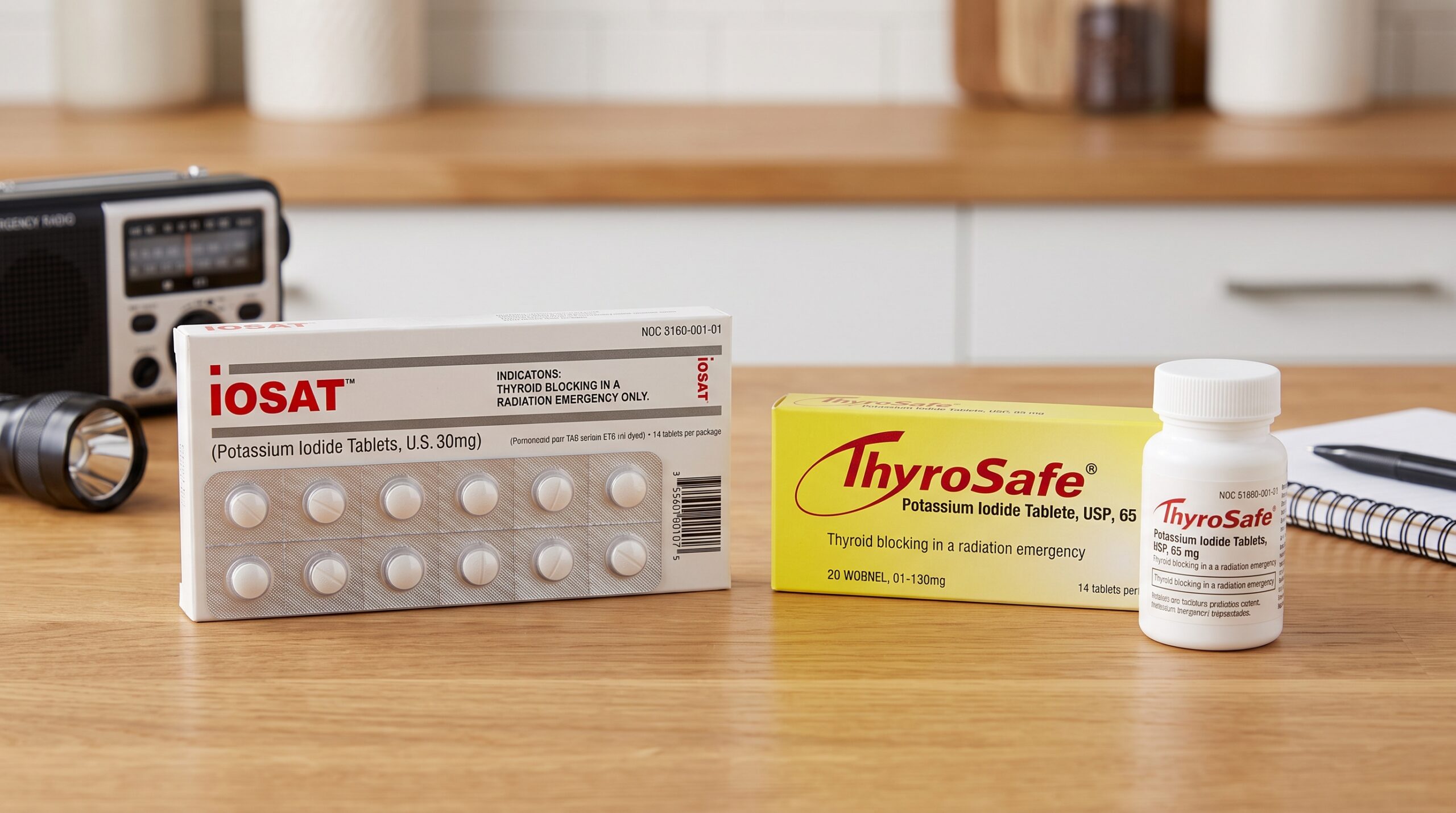
Short answer: IOSAT and ThyroSafe are FDA-approved potassium iodide (KI) products used to help protect the thyroid from radioactive iodine in specific radiation emergencies. KI is not a general-purpose radiation pill. It does not protect the rest of your body, does not protect against external radiation, and does not protect against radioactive materials other than radioactive iodine.
The most important rule is therefore not which brand you buy, but when you take it. Do not take potassium iodide simply because a radiation emergency has occurred. Take it only when public-health or emergency-response officials, or a healthcare provider, instruct you to do so.
Affiliate disclosure: This page contains affiliate links. If you purchase through these links, we may earn a commission at no additional cost to you.
What Potassium Iodide Actually Does
Potassium iodide contains stable, non-radioactive iodine. Your thyroid absorbs iodine as part of its normal function and cannot distinguish between stable iodine and radioactive iodine.
When the correct dose of KI is taken at the appropriate time, the thyroid absorbs the stable iodine and becomes saturated. This helps reduce the amount of radioactive iodine that the thyroid can absorb.
That matters because internal contamination with radioactive iodine can increase the risk of thyroid cancer, particularly in infants, children, adolescents, and younger adults.
But KI has a very narrow job: protecting the thyroid from radioactive iodine.
What KI Does Not Protect You From
Potassium iodide does not provide general protection from radiation.
- It does not protect against external radiation.
- It does not shield your body from gamma radiation.
- It does not protect organs other than the thyroid.
- It does not protect against radioactive materials other than radioactive iodine.
- It cannot reverse thyroid damage that has already occurred.
- It does not replace sheltering, evacuation, decontamination, or other instructions from emergency authorities.
This distinction is particularly important when discussing nuclear detonations and radioactive fallout.
KI Is Not a Nuclear Fallout Shield
After a nuclear detonation, radioactive fallout can contain many different radioactive materials. Radioactive iodine is only one possible component.
CDC guidance emphasizes that KI does not protect against the primary external-radiation hazards associated with nuclear fallout. Taking KI should therefore never create a false sense that it is safe to go outside or leave shelter.
During a radiation emergency, the fundamental protective action is:
Get inside. Stay inside. Stay tuned.
Follow official instructions concerning sheltering, evacuation, decontamination, food and water, and whether KI should be taken.
IOSAT vs. ThyroSafe
| Feature | IOSAT | ThyroSafe |
|---|---|---|
| Active ingredient | Potassium iodide (KI) | Potassium iodide (KI) |
| FDA-approved KI product | Yes | Yes |
| FDA-listed tablet strengths | 130 mg and 65 mg | 65 mg |
| Purpose | Thyroid blocking following appropriate radioactive-iodine exposure | Thyroid blocking following appropriate radioactive-iodine exposure |
| Protection from external radiation | No | No |
| Protection from other radionuclides | No | No |
The fundamental medical function is the same: both provide potassium iodide for thyroid blocking. The practical differences include tablet strength, packaging, and availability.
Do not select a product by assuming that one tablet automatically equals the correct dose for every member of your household. KI dosing varies significantly with age and, for some adolescents, body weight.
FDA Potassium Iodide Doses
The following summarizes current U.S. FDA/CDC guidance for a single dose when KI has been recommended because of predicted radioactive-iodine exposure.
| Group | KI Dose |
|---|---|
| Birth through 1 month | 16 mg |
| 1 month through 3 years | 32 mg |
| Over 3 through 12 years | 65 mg |
| 12 through 18 years | 65 mg |
| Adolescents over 150 lb / 70 kg | 130 mg |
| Adults over 18 through 40 years | 130 mg |
| Pregnant or breastfeeding women | 130 mg |
| Adults over 40 | 130 mg only when officials or healthcare providers recommend it at the substantially higher predicted exposure threshold |
These are not instructions to self-administer KI during every radiation event. The predicted thyroid exposure thresholds differ between groups, and authorities determine whether KI is appropriate for the specific incident.
Why Age Matters
Children and younger people are at greater risk of developing thyroid cancer following significant internal contamination with radioactive iodine, which is why KI recommendations prioritize these groups.
Adults over 40 generally have a much lower risk of radioactive-iodine-induced thyroid cancer and a greater risk of adverse effects from KI. CDC therefore states that people over 40 should generally receive KI only when officials or healthcare providers determine that predicted thyroid exposure is sufficiently high.
Infants younger than one month also require particular care. CDC warns that more than one dose can increase the risk of hypothyroidism and may require medical follow-up.
When Should You Take KI?
Do not take KI preemptively just because you hear about a nuclear or radiological incident.
CDC states that KI is most effective when taken shortly before or shortly after internal contamination with radioactive iodine. Current CDC guidance states that it is most effective when taken within 24 hours before or within approximately four hours after exposure.
One recommended dose provides thyroid protection for approximately 24 hours. Emergency officials will determine whether another dose is necessary.
Taking a larger dose or taking KI more frequently than recommended does not provide additional protection and can increase the risk of adverse effects.
Which KI Product Belongs in Your Emergency Kit?
For a household preparedness kit, the important consideration is having an FDA-approved product in a strength that allows the appropriate dose for the people in your household—not choosing a brand because of marketing claims.
Do Not Use a Geiger Counter to Decide When to Take KI
A radiation detector can be useful for certain preparedness and monitoring purposes, but a consumer Geiger counter does not by itself tell you that you have received the specific radioactive-iodine exposure for which potassium iodide is recommended.
The decision to use KI depends on the radionuclides released, predicted thyroid exposure, location, age, and other factors evaluated by emergency and public-health authorities.
Do not take KI simply because a radiation detector shows an elevated reading.
The Iodized Salt Myth
Table salt, sea salt, foods containing iodine, and dietary iodine supplements are not substitutes for FDA-approved potassium iodide used for thyroid blocking.
CDC specifically warns against attempting to obtain the required iodine by consuming large quantities of iodized salt or iodine-rich foods. They do not provide an appropriate substitute, and excessive consumption can itself be harmful.
Side Effects and Contraindications
Potassium iodide is medication, not a general nutritional supplement for emergencies.
CDC notes that adverse effects can include gastrointestinal upset, rash, inflammation of the salivary glands, and allergic reactions. Incorrect dosing or unnecessary repeated dosing can create additional risks.
People with certain medical conditions, including some thyroid disorders or known sensitivities, may require individual medical guidance before taking KI.
This is another reason to purchase KI before an emergency and discuss any personal contraindications with a healthcare professional rather than trying to resolve them during an incident.
A Better Radiation Preparedness Strategy
Potassium iodide should be treated as one narrowly targeted medical countermeasure within a much broader radiation-emergency plan.
Your plan should prioritize:
- knowing how to shelter quickly;
- staying inside until authorities say it is safe to leave;
- having a reliable way to receive emergency information;
- keeping emergency food and water protected from contamination;
- understanding basic decontamination procedures;
- having appropriate particulate respiratory protection available; and
- keeping FDA-approved KI available if authorities recommend its use.
The presence of KI in your kit should never encourage you to leave shelter during dangerous fallout conditions.
Potassium Iodide FAQ
Does potassium iodide protect against nuclear radiation?
KI does not provide general protection against nuclear radiation. It protects the thyroid specifically by reducing its uptake of radioactive iodine. It does not shield the body from external radiation or protect against other radioactive materials.
Is IOSAT better than ThyroSafe?
Both are FDA-approved potassium iodide products for thyroid blocking. The more important practical differences include tablet strength, packaging, availability, and whether the product configuration allows appropriate dosing for members of your household.
Should I take KI immediately after a nuclear accident?
No. Take KI only when public-health or emergency-response officials, or a healthcare provider, recommend it for the specific incident. KI is useful only when radioactive iodine is a relevant hazard and timing matters.
How long does one dose of KI protect the thyroid?
A recommended dose provides thyroid protection for approximately 24 hours. Whether another dose is appropriate should be determined by emergency authorities or healthcare professionals.
Can iodized salt replace potassium iodide tablets?
No. Iodized table salt, iodine-rich foods, and dietary iodine supplements are not appropriate substitutes for approved KI medication used for thyroid blocking.
Can I use a Geiger counter to decide whether to take KI?
No. An elevated radiation reading does not by itself establish that radioactive iodine is present at a level requiring thyroid blocking. Follow official public-health instructions.
The Bottom Line
IOSAT and ThyroSafe can both provide FDA-approved potassium iodide. The more important distinction is tablet strength and whether your household can follow the appropriate official dosing instructions if KI is recommended.
For preparedness, buying KI in advance can make sense because it allows you to store an approved product and understand its instructions before an emergency.
But KI is not a universal radiation antidote. It protects only the thyroid, only against radioactive iodine, and only when taken at the appropriate time and dose.
During an actual radiation emergency, the priority remains: get inside, stay inside, stay tuned, and follow official instructions about whether to take KI.
Sources and Methodology
This guide uses current U.S. CDC and FDA guidance for potassium iodide as a thyroid-blocking agent during radiation emergencies. Product approval status and dosage information are based on FDA documentation rather than retailer or manufacturer marketing claims.
- CDC — Potassium Iodide (KI)
- FDA — Frequently Asked Questions on Potassium Iodide
- FDA — Potassium Iodide (KI)
- CDC — Nuclear Blast Frequently Asked Questions
Reviewed: September 2026.
Related Pages
Medical and radiation safety note: Potassium iodide should be taken only when directed by public-health or emergency-response officials or a healthcare provider. KI protects only the thyroid from radioactive iodine and is not a substitute for sheltering, evacuation, decontamination, or other protective actions.