
Portuguese Prepper
Best Headlamps: Hands-Free Light for Survival
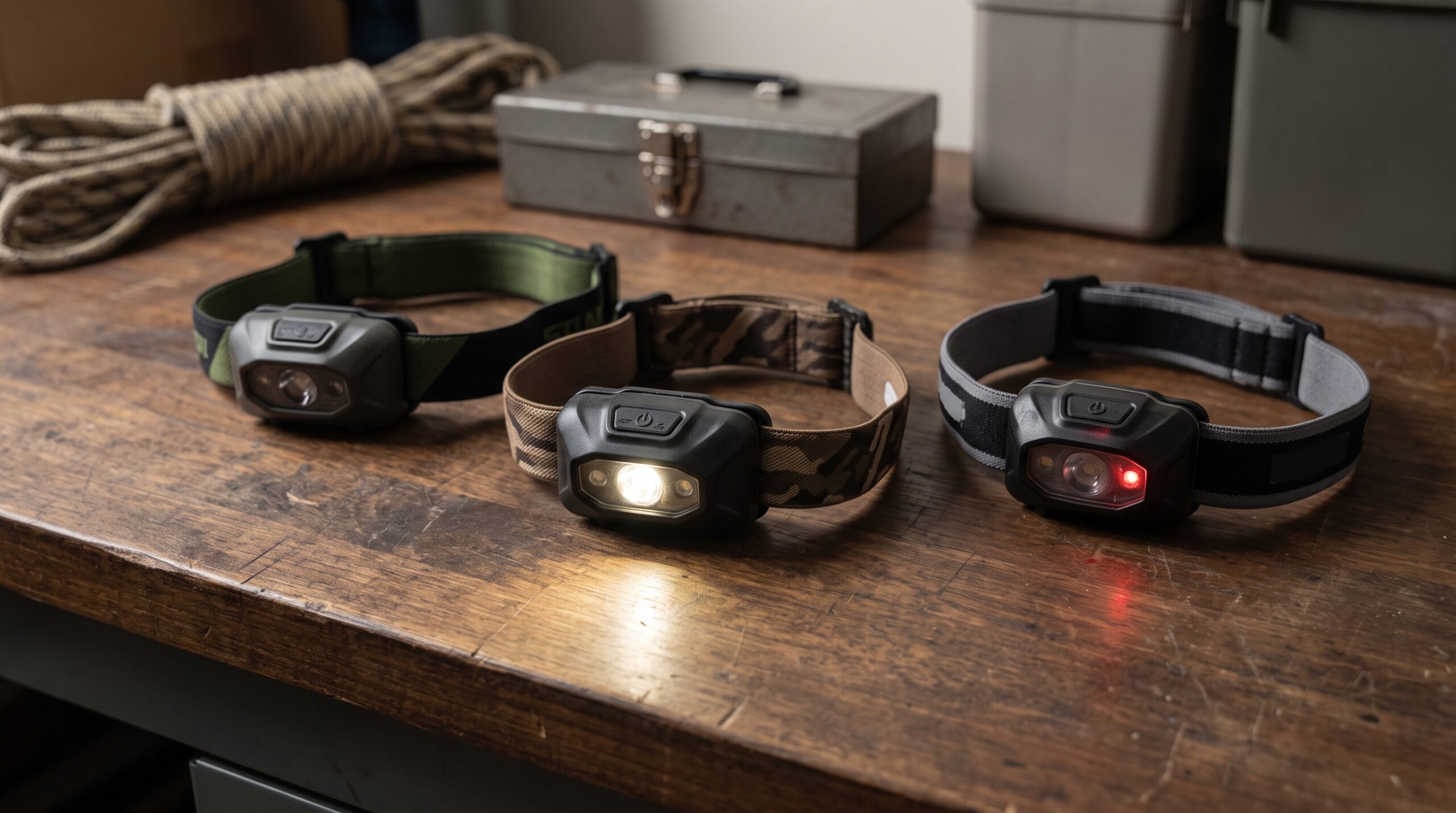
In a crisis, light is a tool. Whether you are changing a tire in the rain, performing first aid in the dark, or navigating a forest at night, you need your hands free. A handheld flashlight is useful, but for tasks that require both hands, a headlamp should be part of your emergency lighting system.
For preparedness, the best headlamp is not simply the model with the highest lumen number. Battery flexibility, weather resistance, low-output modes, colored light, runtime, controls, and the ability to prevent accidental activation all matter when the light may need to work during a prolonged outage or evacuation.
The “Big Two” Recommendations
Affiliate disclosure: This page contains affiliate links. If you purchase through these links, we may earn a commission at no additional cost to you.
Why a Headlamp Belongs in Every Emergency Kit
A flashlight and a headlamp solve different problems. A handheld flashlight can be excellent for deliberately directing a beam over distance, but it occupies one hand. A headlamp keeps the light aligned approximately with your field of view while leaving both hands available.
That matters when changing a tire, shutting off utilities, treating an injury, preparing food, setting up shelter, carrying equipment, reading a map, or performing repairs during a blackout.
For that reason, a preparedness lighting system should not necessarily force you to choose between a headlamp and a handheld flashlight. They are complementary tools.
Petzl Aria 2 RGB: The Rugged Choice
The Petzl Aria 2 RGB is designed around durability and practical hands-free illumination. Its combination of white light and red, green, and blue lighting modes makes it particularly versatile for work and low-light use.
Colored modes can be useful when you do not need the full intensity of white light. Red light is commonly used when preserving dark adaptation is useful, while the additional green and blue options broaden the headlamp’s utility for specialized tasks.
For preparedness, the main attraction is not simply brightness. It is a headlamp intended for demanding environments where weather resistance and physical durability matter.
Black Diamond Storm 450: The Flexible Choice
The Black Diamond Storm 450 takes a different approach. It combines substantial light output with a feature set designed for outdoor use and flexible power management.
That power flexibility is particularly relevant to preparedness. A rechargeable system is convenient when electricity is readily available, while replaceable batteries can provide another option when normal charging infrastructure is unavailable.
For someone building a broader emergency-lighting system rather than buying a headlamp only for occasional outdoor use, the ability to plan around multiple sources of stored energy can be more important than a small difference in maximum brightness.
What to Look For in a Survival Headlamp
- Hands-Free Operation: The primary advantage of a headlamp is keeping both hands available for work, first aid, repairs, navigation, or carrying equipment.
- Low-Light or Red-Light Mode: Maximum brightness is not always desirable. Lower-output modes conserve energy and reduce glare when reading, working at close range, or moving around at night.
- Weather Resistance: Emergency equipment may be used in rain, snow, dust, or damp conditions. Check the manufacturer’s current ingress-protection specifications for the exact model.
- Battery Flexibility: Consider not only which battery the headlamp uses, but how you will replace or recharge it during an extended power outage.
- Lock Feature: A lockout function can help prevent the headlamp from switching on accidentally inside a backpack and exhausting its battery before you need it.
- Multiple Brightness Levels: High output is useful for distance, but lower settings generally provide longer runtime and are more comfortable for close-range tasks.
Brightness Is Not Everything
Manufacturers prominently advertise maximum lumens because the number is easy to compare. For preparedness, however, maximum output represents only one part of the system.
A headlamp capable of producing hundreds of lumens may run for considerably longer when operated at a lower setting. During a multi-day blackout, runtime and access to replacement or rechargeable batteries can become more important than maximum brightness.
Beam pattern also matters. Flood lighting is useful for close work and peripheral visibility, while a more concentrated beam is useful when you need to see farther ahead.
Rechargeable vs. Replaceable Batteries
Rechargeable headlamps are convenient and reduce dependence on disposable batteries during normal use. During a prolonged outage, however, rechargeability only helps if you still have access to a functioning charging source.
Replaceable batteries provide a different type of redundancy. You can store additional compatible cells and install them without waiting for the headlamp to recharge.
The strongest preparedness approach is therefore to think about the entire power system: headlamp, battery chemistry, spare batteries, charger, power bank, power station, solar charging, or whatever combination your emergency plan uses.
Where to Keep Your Headlamps
Do not keep every emergency light in one location. A blackout can occur when you are nowhere near your main preparedness supplies.
- Bedroom: Keep one accessible from the bed.
- Vehicle: Useful for roadside repairs and nighttime emergencies.
- Bug-out bag: A compact headlamp provides hands-free lighting without occupying a hand.
- First-aid kit: Hands-free illumination can be particularly valuable when treating an injury.
- Home emergency supplies: Maintain at least one additional light with spare power available.
The Bottom Line
The Petzl Aria 2 RGB is the stronger choice when rugged construction and multiple colored-light options are priorities.
The Black Diamond Storm 450 is particularly attractive when power flexibility and a versatile outdoor-oriented feature set are more important.
Whichever model you choose, treat the headlamp as part of a complete emergency-lighting system. Keep compatible spare power available, understand the controls before an emergency, and test the light periodically rather than discovering a dead battery during a blackout.