
Portuguese Prepper
FIFO Can Racks vs. Shelving: The Best Way to Rotate Emergency Food
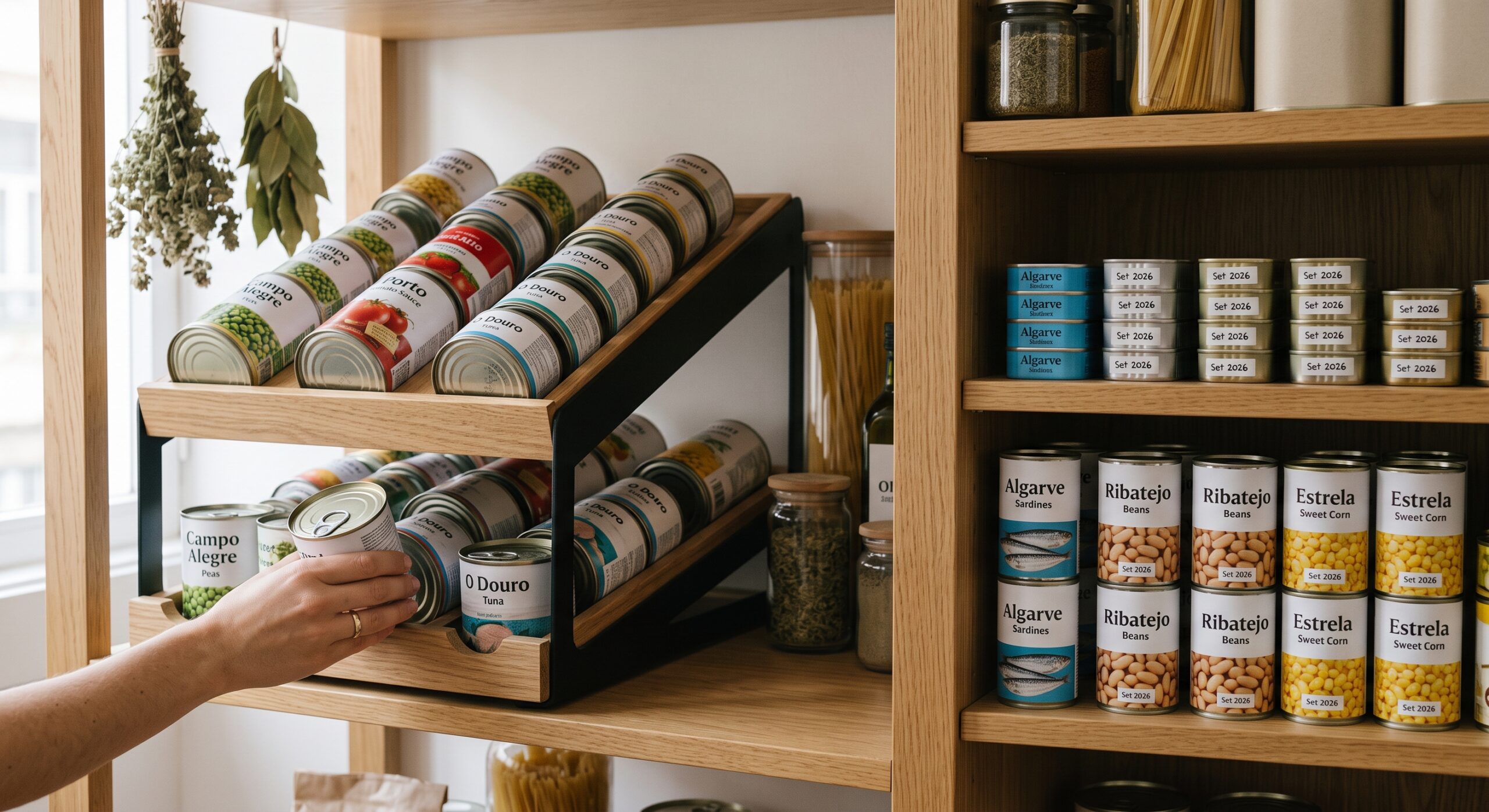
Short answer: FIFO can racks are better for automatically rotating frequently used canned food, while heavy-duty shelving is more flexible for large and mixed emergency food inventories. For most preparedness pantries, the best solution is a combination: shelving for bulk storage and a smaller FIFO or gravity-fed organizer for cans you regularly use.
Affiliate disclosure: This page contains affiliate links. If you purchase through these links, we may earn a commission at no additional cost to you.
The objective is simple: first in, first out (FIFO). Older food should normally be used before newer food. A well-organized pantry makes that rotation visible and easy instead of allowing older cans and packages to disappear behind newer purchases.
FIFO Can Racks vs. Shelving: Quick Comparison
| Feature | FIFO / Gravity Can Rack | Heavy-Duty Shelving |
|---|---|---|
| Automatic rotation | Best option | Manual |
| Different food types | Mostly canned goods | Excellent |
| Bulk food storage | Limited | Excellent |
| Inventory visibility | Good | Good if organized |
| Space efficiency | Good for compatible cans | Good for mixed inventory |
| Best use | Daily-use canned foods | Complete preparedness pantry |
Why Food Rotation Matters
An emergency pantry works best when it is part of your normal food system. Instead of buying food exclusively for emergencies and leaving it untouched for years, stock foods your household already uses and replace them as they are consumed.
This approach helps reduce waste, makes inventory easier to understand, and ensures that stored food is periodically inspected. Rotation is particularly important for a deep pantry where multiple cans or packages of the same product may have different dates.
Remember that package dates do not all mean the same thing. A “best by” or similar quality date should not automatically be interpreted as the exact date on which food becomes unsafe. Follow applicable food-safety guidance and discard containers that are leaking, bulging, badly damaged, severely rusted, or otherwise show signs of compromised integrity.
Option 1: FIFO and Gravity-Fed Can Racks
A gravity-fed can organizer is designed to make rotation easier. Depending on the design, new cans are loaded into one part of the rack and move through the organizer as older cans are removed.
This can reduce the common problem of repeatedly placing newly purchased cans in front of older ones. It does not eliminate the need to inspect dates, packaging, or inventory. You should still check cans when loading the organizer and periodically review what you have stored.
FIFO racks are best for:
- Frequently consumed canned vegetables and fruit.
- Canned soups and prepared foods.
- Canned proteins.
- Households that regularly replenish the same products.
- Pantries where manual rotation is difficult to maintain.
Before buying, check the rack dimensions and compatible can sizes. Not every gravity organizer accommodates every can format.
Option 2: Heavy-Duty Wire Shelving
For a larger preparedness pantry, shelving is considerably more versatile. One shelving unit can accommodate canned food, boxed goods, #10 cans, sealed containers, buckets, water, cooking supplies, and other preparedness equipment.
The tradeoff is that shelving does not automatically enforce FIFO rotation. You need an organizational system that keeps older inventory accessible.
A simple method is to place newly purchased products behind existing stock whenever the shelf layout allows it. Another is to dedicate separate shelf sections or bins to different purchase batches and label them clearly.
Heavy-duty shelving is best for:
- Large mixed food inventories.
- Bulk packages and #10 cans.
- Food-grade buckets and other large containers.
- Households building a deeper pantry.
- Storage rooms, utility rooms, and other dedicated pantry areas.
Always check the manufacturer’s load rating and assembly instructions for the specific shelving unit. Canned food and water become heavy quickly, so distribute weight appropriately and place heavier items on lower shelves where practical.
Option 3: Stackable Bins and Simple Can Organizers
You do not necessarily need a large shelving unit or elaborate FIFO system. Stackable wire bins and compact can organizers can work well in kitchen pantries, cabinets, closets, or apartments where space is limited.
These systems improve visibility and access, although many do not provide true first-in, first-out rotation automatically. Their main advantage is organization: keeping similar products together so you can see what you have before buying more.
Recommended Pantry Organization Options
Gravity-Fed Can Organizer
A practical option for organizing frequently used canned foods and making older cans easier to access before newly added inventory. Check dimensions and compatible can sizes before purchasing.
View on AmazonMETRO Heavy-Duty Wire Shelving
A larger shelving solution for mixed pantry storage. Better suited to bulk food, cases, large containers, and other preparedness supplies than a dedicated can organizer.
View on AmazonStackable Wire Storage Bins
Useful for keeping packaged foods and pantry categories visible and accessible. A good option where a full-size shelving system is unnecessary or space is limited.
View on AmazonSimple Houseware Can Rack Organizer
A compact alternative to a larger gravity system. Useful for increasing can visibility and organizing multiple rows while using pantry space more efficiently.
View on AmazonWhich System Should You Choose?
Choose a FIFO or gravity-fed rack if most of your inventory consists of standard canned foods that you consume and replace regularly.
Choose heavy-duty shelving if you need to store many different types of food, larger containers, cases, buckets, or other preparedness supplies.
Choose stackable bins or compact can organizers if you have a small pantry or apartment and primarily need better visibility rather than maximum storage capacity.
For a larger preparedness pantry, the most practical arrangement is often a hybrid system: heavy-duty shelving provides the main storage structure, while frequently consumed canned foods are kept in smaller organizers that make rotation easier.
The “Shop Your Pantry” Rule
A preparedness pantry should function as inventory, not as a sealed time capsule. Use stored food in normal meals and replace what you consume. This keeps products moving through the system and makes it easier to notice shortages, damaged packaging, or foods your household simply does not use.
A simple rule is: eat from your pantry, replace what you eat, and place the replacement behind the older stock.
Simple FIFO Pantry Routine
- Group similar foods together: keep beans, vegetables, soups, proteins, fruit, and other categories organized.
- Check dates when unpacking groceries: do not assume the newest purchase always has the latest date.
- Put older stock where it will be used first: use the front, bottom, or dispensing position depending on your storage system.
- Place newer stock behind it: maintain the rotation whenever you replenish the pantry.
- Inspect containers: look for damage, leaks, swelling, severe rust, or compromised seals.
- Keep an inventory: even a simple written list can prevent unnecessary purchases and reveal shortages.