
Portuguese Prepper
Mylar Bags & Oxygen Absorbers: Safe Long-Term Dry-Food Storage
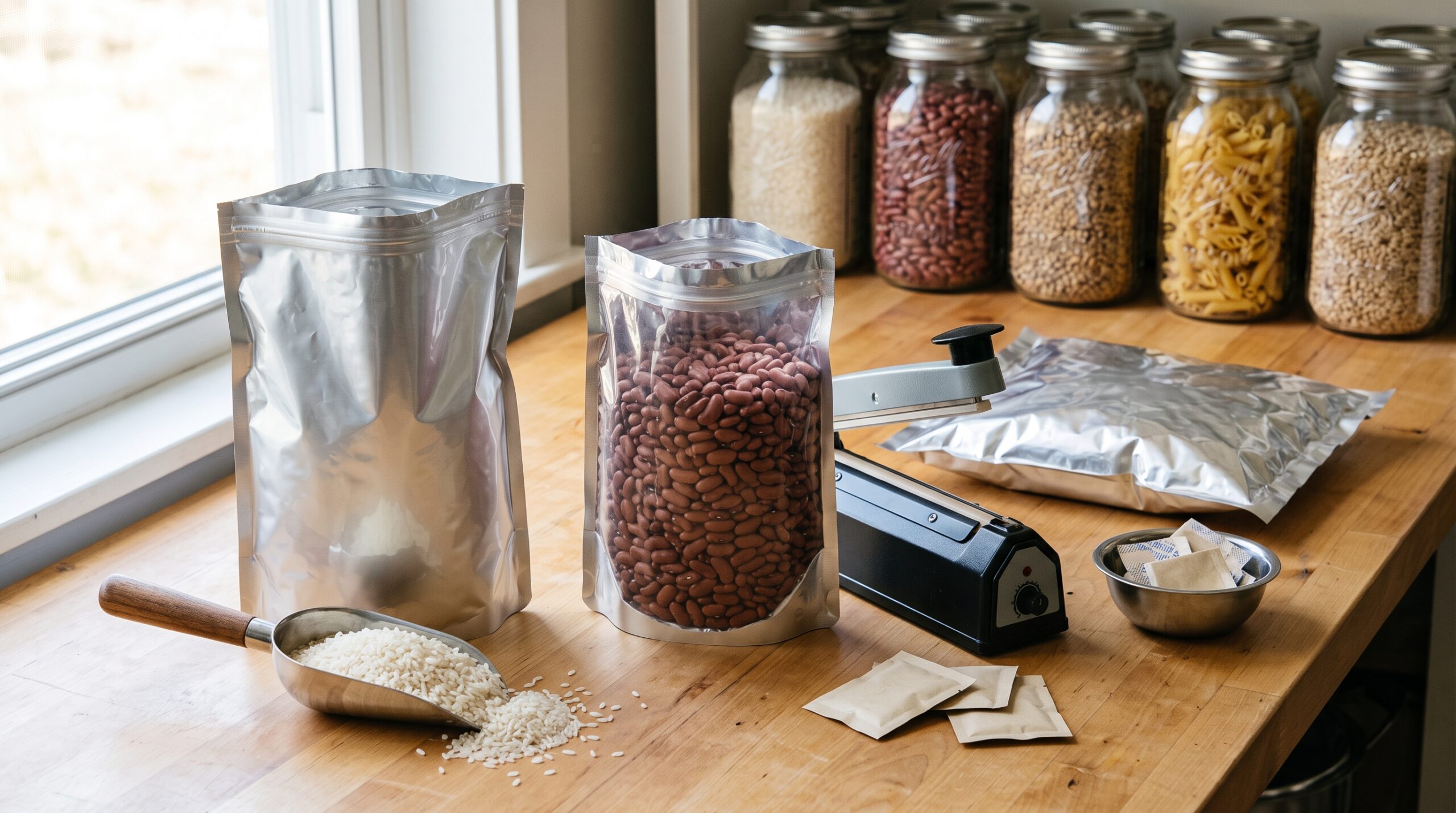
Short answer: Mylar-type foil laminate bags and oxygen absorbers can be useful for properly dried, low-moisture foods when you want an oxygen- and moisture-resistant package for longer storage. They are not a universal preservation method. Foods that require refrigeration or contain too much moisture should not be made “shelf stable” simply by sealing them with an oxygen absorber.
Affiliate disclosure: This page contains affiliate links. If you purchase through these links, we may earn a commission at no additional cost to you.
Utah State University Extension notes that foil laminate pouches provide a strong barrier to oxygen and moisture and recommends oxygen absorbers for suitable dry foods. It also warns that reducing oxygen around moist foods can create a botulism risk. The food itself must be appropriate for low-oxygen dry storage.
What Mylar-type bags actually do
Food-storage pouches commonly called “Mylar bags” are multilayer laminate packages. The foil layer dramatically reduces the transmission of oxygen and moisture compared with ordinary plastic bags. Once properly heat-sealed, the package creates a more stable environment for appropriate dry foods.
Ordinary plastic buckets are useful protective containers but are not perfect oxygen barriers. For long storage, the common system is therefore dry food inside a sealed foil-laminate pouch, then the pouch inside a food-grade bucket.
Which foods are appropriate?
The best candidates are low-moisture staples that are already suitable for dry shelf storage, such as many grains, dry beans and similar products. Foods with substantial moisture or foods that normally require refrigeration need different preservation methods.
Do not assume that removing oxygen makes unsafe food safe. Vacuum packaging and oxygen absorption do not destroy microorganisms. Moist low-oxygen environments can make botulism more concerning, which is why dryness and correct food selection are fundamental.
Bag size: large vs. small portions
Five-gallon-size pouches reduce the number of packages needed for bulk staples, but opening one exposes a large amount of food at once. One-gallon pouches create smaller modules that are easier to rotate, inspect and distribute. A mixed system often works better than using only one size.
A safer packing workflow
- Choose a food that is appropriate for dry, low-oxygen storage.
- Use clean, food-contact-compatible packaging and equipment.
- Portion the food into a bag size that fits how you will use it.
- Add the correct oxygen absorber according to the product instructions and package volume.
- Heat-seal the laminate completely and inspect the seal.
- Label contents and date.
- Place the sealed pouch in a rigid protective container where useful.
- Store in a cool, dry location and inspect the system periodically.
Buckets protect the pouch
A rigid bucket can protect laminate bags from puncture, crushing and rodents. For frequently accessed food, a reusable gamma-style lid can make the outer bucket more convenient, while the sealed inner packages maintain the primary food barrier.
Sources reviewed: Utah State University Extension food-storage and packaging guidance. Reviewed: September 2026.