
Portuguese Prepper
Gas Generator vs. Solar Power Station: Which Backup System Fits?
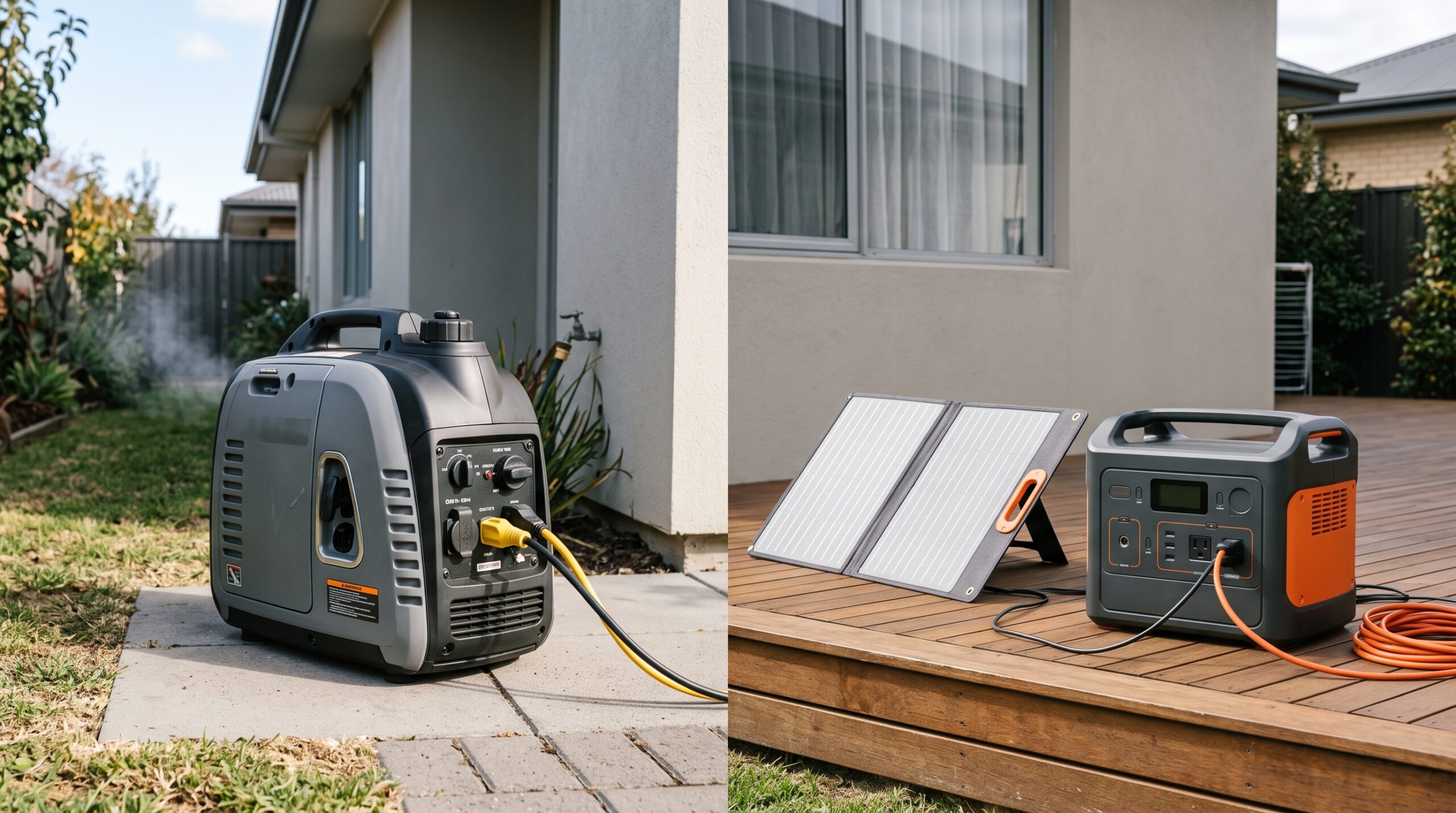
Short answer: a fuel generator and a battery power station solve different problems. A fuel generator can produce substantial power as long as you can operate it safely and maintain fuel. A battery power station is quiet and produces no exhaust at the point of use, but its stored energy is finite until you recharge it. Solar panels can replenish a compatible battery system when sunlight and panel capacity are sufficient.
The best emergency-power system may combine both. Size either option from the appliances you actually need to run using our emergency power sizing calculator.
Affiliate disclosure: This page contains affiliate links. If you purchase through these links, we may earn a commission at no additional cost to you. As an Amazon Associate I earn from qualifying purchases.
Choose your backup power system
Two different approaches to emergency power. Choose based on where you’ll use it, your energy needs and how you’ll recharge or refuel.
FUEL-POWERED BACKUP
Honda EU2200i
A compact gasoline inverter generator for households needing engine-generated AC power.
Outdoor operation only. Keep exhaust away from the home.
Find it on Amazon →INDOOR BATTERY BACKUP
EcoFlow DELTA 2
A portable battery power station for electronics and compatible appliances, with solar recharging capability.
Quiet, exhaust-free operation at the point of use.
Find it Here →Gas generator vs. battery power station
| Factor | Fuel generator | Battery power station + solar |
|---|---|---|
| Indoor operation | No — combustion exhaust creates carbon-monoxide risk | Battery unit itself can operate indoors; follow product electrical/charging guidance |
| Energy source | Gasoline, propane or other supported fuel | Stored battery energy; recharge from grid, vehicle or compatible solar |
| Noise | Engine noise | Generally quiet aside from cooling fans |
| Runtime | Can continue with fuel, maintenance and safe operation | Limited by battery capacity until recharged |
| Maintenance | Engine, fuel and oil maintenance | Battery care, firmware/electronics and charging-system management |
| Best role | Higher or sustained loads with fuel logistics | Electronics, quiet loads and indoor stored-power use |
Carbon monoxide is the non-negotiable safety issue
A portable generator should never be run inside a home, basement, garage or other enclosed or partially enclosed space, even with doors or windows open. CDC guidance says to operate portable generators outdoors more than 20 feet from windows, doors and vents and to use a battery-powered or battery-backup carbon-monoxide detector in the home.
This safety requirement applies regardless of generator brand, inverter technology or how quiet the engine is.
Three examples for different roles
Honda EU2200i — compact inverter generator
A small gasoline inverter-generator format for households that need engine-generated AC power and can manage outdoor placement, fuel and maintenance.
Find it on AmazonEcoFlow DELTA 2 — battery power station
A portable battery system for indoor stored-power use, electronics and compatible appliances. Runtime depends on load and usable battery energy; solar input depends on panels and conditions.
Find it HereChampion Dual Fuel — fuel flexibility
A dual-fuel generator format for users who value gasoline/propane options. Fuel storage, generator placement and manufacturer maintenance requirements still apply.
Find it on AmazonHow to choose
Start with wattage and watt-hours, not brand. Determine running load, startup surge where applicable and how many hours per day each device must operate. A refrigerator, phone, medical device and space heater have very different power profiles.
Then decide how energy will be replenished. A large battery with no recharge strategy eventually becomes empty; a generator with no safe fuel plan is equally incomplete.
Preparedness verdict
For quiet indoor loads and electronics, start with appropriately sized battery storage. For sustained high-energy needs, a fuel generator can add valuable generation capacity when it can be operated safely outdoors. Where budget and circumstances allow, combining storage with a safe generation method creates more redundancy than treating the two technologies as rivals.
Sources reviewed: current CDC generator/CO safety guidance and current manufacturer product information. Reviewed: September 2026.