
Portuguese Prepper
Indoor Emergency Cooking: Can You Use Butane or Propane Indoors?
Quick answer: Do not use an outdoor camping stove inside a home, garage, tent, or other enclosed space, even if a window is open. Butane or propane does not make an outdoor-only appliance safe indoors. Follow the instructions for the exact model; the Iwatani 35FW’s indoor-use provision is for commercial restaurants, not general residential cooking. During a power outage, start with no-cook foods and keep working carbon monoxide detectors in the home.
Affiliate disclosure: This page contains affiliate links. If you purchase through these links, we may earn a commission at no additional cost to you.
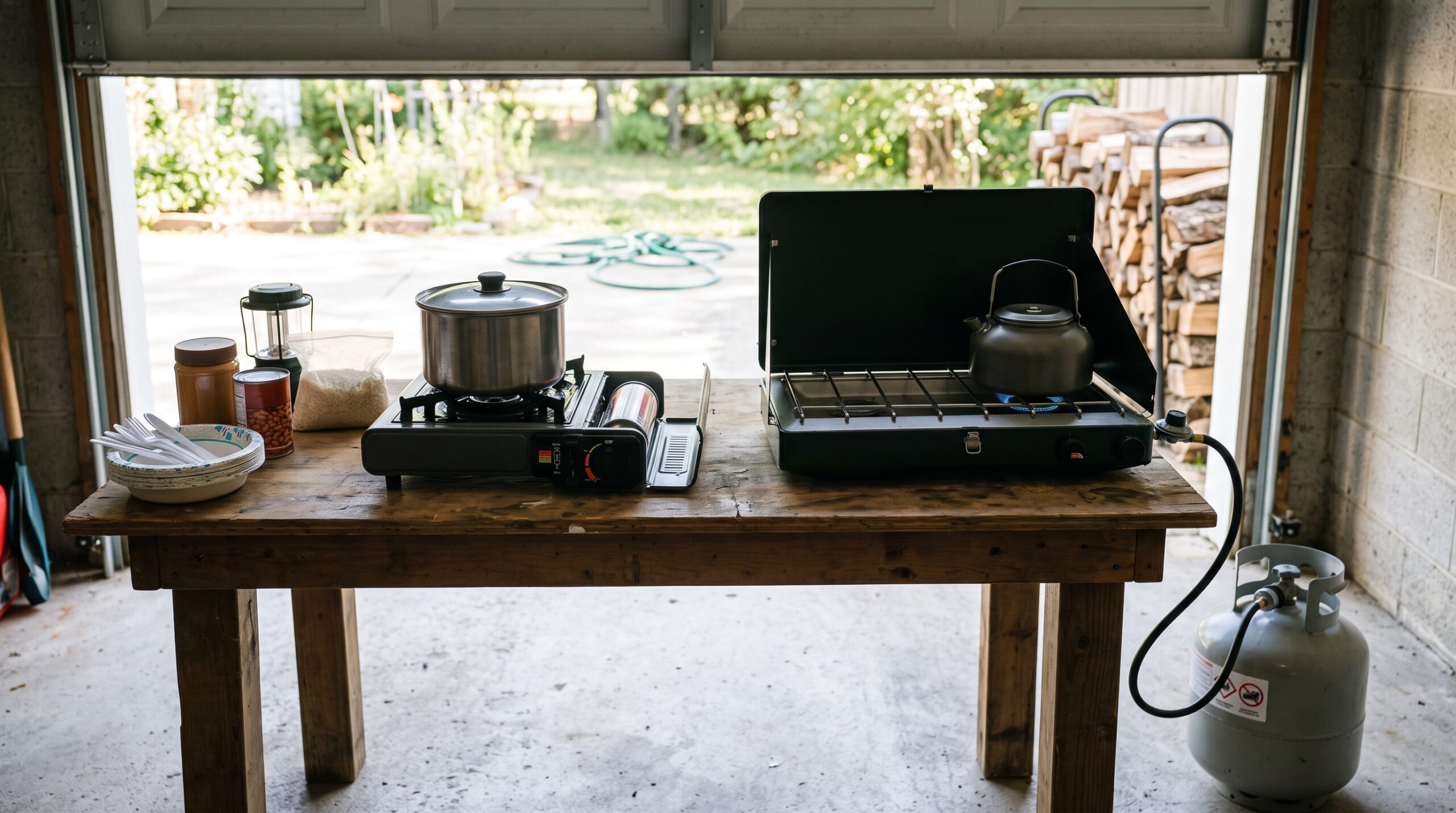
When the power goes out, an electric stove can become useless at exactly the wrong time. You may need to heat food, boil water, or prepare emergency meals without grid power.
That does not mean an outdoor camping stove should come inside. Fuel-burning equipment can produce carbon monoxide (CO), an odorless and colorless gas that can cause serious illness or death. The important distinction is not simply Butane vs. Propane. It is whether the specific appliance is designed and approved by its manufacturer for the environment where you intend to use it.
Can You Use a Butane Stove Indoors?
Do not assume that a stove is safe indoors simply because it burns Butane. Check the certification and manufacturer’s instructions for the exact model you own.
For example, the Iwatani 35FW has provisions concerning commercial indoor use as well as outdoor use. That should not be interpreted as blanket approval for emergency cooking inside a residence. Always follow the current instructions and warnings supplied for the exact appliance.
Can You Use a Propane Camping Stove Indoors?
If the manufacturer specifies outdoor use only, no. Standard Propane Camping Stoves, such as the Coleman Classic, are designed for outdoor cooking rather than operation inside a home.
Opening a window or door does not turn an outdoor-only stove into an indoor appliance. The same principle applies to garages and other partially enclosed spaces. If the manufacturer’s instructions require outdoor use, operate the stove outdoors and follow the specified clearances and safety requirements.
Which stove belongs in your kit?
The Main Risk: Carbon Monoxide
Carbon monoxide can be produced when fuels burn. You cannot see or smell it, and dangerous concentrations can accumulate without obvious warning.
Symptoms of carbon monoxide poisoning can include headache, dizziness, weakness, nausea, vomiting, chest pain, and confusion. Severe exposure can cause unconsciousness or death. Simply opening a window should never be treated as permission to use an outdoor-only stove indoors.
A battery-powered or battery-backup CO detector should be part of a household emergency setup. Place and maintain detectors according to their manufacturer’s instructions.
What Should You Use for Emergency Cooking Indoors?
A resilient emergency cooking plan should not depend on a single fuel-burning stove. Where practical, start with foods that require no cooking. Canned foods, nut butters, crackers, ready-to-eat emergency foods, and MREs can reduce or eliminate the need to burn fuel during a blackout. Keep a manual can opener with your emergency food supplies.
If you have a sufficiently capable portable power station or other properly configured backup electrical system, a compatible electric cooking appliance can avoid combustion inside your living space. Check the appliance’s wattage and your power source’s continuous and surge output before connecting a hot plate, kettle, microwave, or induction cooker.
If you intend to use any fuel-burning appliance indoors, use only equipment whose manufacturer explicitly permits that particular use. Do not infer indoor suitability from the fuel type, product photographs, retailer descriptions, restaurant use, or an open window. The instructions for the exact model are the controlling reference.
Indoor Emergency Cooking Safety Checklist
Before a blackout occurs, know which cooking appliances are approved for your intended environment and which are outdoor-only. Keep the manuals for your emergency cooking equipment, maintain working CO detectors, store fuels according to manufacturer instructions and applicable local requirements, and keep an appropriate fire extinguisher accessible.
Maintain foods that require no cooking, keep a manual can opener with your supplies, and know how much power your electrical backup system can actually deliver. Most importantly, never improvise indoor use of outdoor camping equipment during an emergency.
Fuel Shelf Life
Propane and butane do not degrade in the same way as gasoline during normal storage, but that does not mean fuel containers should be considered maintenance-free or universally safe to store indefinitely. The condition of the cylinder or canister matters.
Follow the fuel and appliance manufacturers’ requirements concerning storage temperature, permitted storage locations, corrosion, physical damage, inspection, and disposal. Never store fuel simply on the assumption that “it never expires.”
Frequently Asked Questions
Is a butane stove safer indoors than a propane stove?
Fuel type alone does not determine whether a stove is safe for indoor use. Both fuels involve combustion, and combustion can produce carbon monoxide. Use an appliance only in environments permitted by the manufacturer of that exact model.
Can I use a propane camping stove in my kitchen if I open a window?
Not if the stove is specified for outdoor use only. Opening a window does not override the manufacturer’s safety instructions or convert an outdoor appliance into an indoor appliance.
Can I use a camping stove in my garage with the garage door open?
Do not treat a garage as equivalent to an outdoor cooking area. If your stove is specified for outdoor use only, operate it outdoors according to its manufacturer’s instructions.
Is the Iwatani 35FW approved for indoor use?
The Iwatani 35FW has provisions concerning indoor commercial restaurant use as well as outdoor use. That should not be interpreted as unrestricted approval for residential indoor emergency cooking. Always consult the current manufacturer’s instructions and warnings for the exact model.
What is the safest way to cook during a power outage?
Where practical, start with food that requires no cooking. Other options can include appropriately powered electric appliances and cooking equipment specifically approved by its manufacturer for the intended environment. Outdoor-only camping equipment should remain outdoors.
Can I use charcoal to cook indoors during a blackout?
No. Never use a charcoal grill or similar charcoal-burning equipment inside a home, garage, tent, or other enclosed space. Burning charcoal produces carbon monoxide.
The Bottom Line
Do not choose an emergency stove on the assumption that butane is for indoors and propane is for outdoors. That distinction is too simplistic.
Instead, ask: Is this exact appliance approved by its manufacturer for the place where I intend to operate it? If the answer is outdoor-only, keep it outdoors.
A robust emergency cooking plan combines no-cook foods, appropriate backup power, outdoor cooking capability, working carbon monoxide detection, and equipment whose limitations you understand before an emergency begins.
Safety disclaimer: This article provides general preparedness information and is not a substitute for the instructions, warnings, certifications, or safety requirements supplied by an appliance or fuel manufacturer. Always follow the current documentation for your exact equipment and applicable local fire, fuel-storage, and building regulations.