
Portuguese Prepper
GRAYL GeoPress vs. LifeStraw Go: Which is better for emergency water?
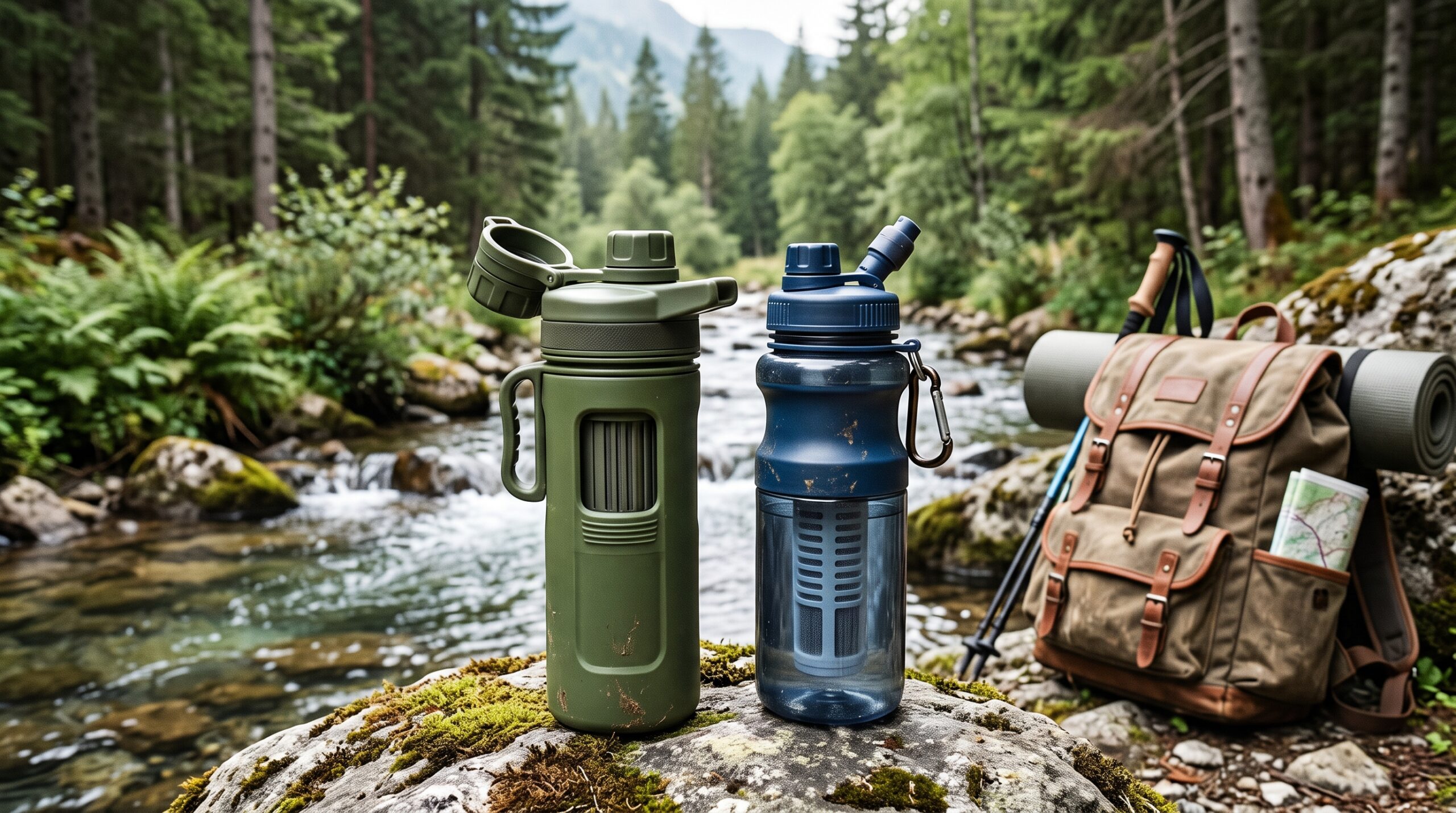
Short answer: choose the GRAYL GeoPress when documented virus reduction is an important part of your emergency water plan. Choose the LifeStraw Go when you mainly need long-life filtration for bacteria, parasites, microplastics and sediment from appropriate freshwater sources.
The distinction matters because these two bottles do not provide identical treatment. GRAYL states that the GeoPress reduces viruses as well as bacteria and protozoan cysts. LifeStraw’s current Go Series specifications list bacteria and parasite removal but do not list virus removal.
Neither product should replace stored drinking water, and neither should be treated as permission to drink from water contaminated by fuel, toxic chemicals or radioactive material.
Affiliate disclosure: This page contains affiliate links. If you purchase through these links, we may earn a commission at no additional cost to you. As an Amazon Associate I earn from qualifying purchases.
Our Emergency Water Bottle Picks
These bottles address different water-treatment needs. Select based on the specific contaminants you need to reduce, not just cartridge lifespan.
EMERGENCY PURIFIER PICK
GRAYL GeoPress
A press-style purifier with documented virus-reduction claims, alongside bacteria and protozoa reduction, for suitable water sources.
Find it on Amazon →LONG-LIFE FILTER PICK
LifeStraw Go
A bottle filter for bacteria, parasites and particulates in appropriate freshwater. Its published specifications do not claim virus removal.
Find it on Amazon →
GRAYL GeoPress vs. LifeStraw Go at a Glance
| Question | GRAYL GeoPress | LifeStraw Go Series |
|---|---|---|
| Virus reduction claimed? | Yes — 99.99% | Not listed for current Go Series |
| Bacteria | 99.9999% reduction claimed | 99.999999% removal claimed |
| Protozoa / parasites | 99.9% protozoan-cyst reduction claimed | 99.999% parasite removal claimed |
| Microplastics / particulates | Yes | Yes |
| Chemical-treatment component | Activated carbon; GRAYL also publishes reduction claims for specified chemicals and heavy metals | Activated carbon reduces chlorine, odors and organic chemical matter |
| Typical bottle capacity | 710 mL / 24 oz | Multiple sizes; 650 mL and 1 L are current European options |
| Main treatment-element life | 350 cycles / approximately 250 L rated cartridge life | Membrane microfilter up to 4,000 L |
| Carbon-stage life | Integrated into replaceable purifier cartridge | Up to 100 L |
| Treatment method | Press water through cartridge, then drink or pour | Drink through filter |
| Best preparedness fit | Higher-risk travel and emergency use where documented virus reduction matters | Routine filtration where bacteria and parasites are the principal microbiological concern |
Our verdict: for a single treatment bottle in a bug-out or travel emergency kit, we prefer the GeoPress because its documented treatment claims include viruses. For frequent filtration from appropriate freshwater sources where viruses are not the primary concern, the LifeStraw Go offers substantially longer rated membrane life.
Filter vs. Purifier: What Actually Matters?
The words filter and purifier are useful only when you understand what the specific product has been tested to reduce or remove.
According to the CDC, many portable water filters can remove parasites and bacteria but do not remove viruses. Other treatment technologies can provide broader microbiological protection. The correct system therefore depends on what may be present in the source water.
Do not assume that every product sold under the LifeStraw brand has the same capabilities. This page specifically compares the LifeStraw Go Series with the GRAYL GeoPress. Other LifeStraw products use different treatment technologies and may have different performance claims.
GRAYL GeoPress: Broader Microbiological Treatment
The GeoPress uses a replaceable purifier cartridge and treats water by physically pressing it through the cartridge before drinking.
GRAYL’s current specifications state 99.99% virus reduction, 99.9999% bacteria reduction and 99.9% protozoan-cyst reduction. The manufacturer also publishes performance claims for particulates and specified chemicals and heavy metals.
GRAYL lists a capacity of 710 mL / 24 oz and a press time of approximately 8 seconds under its stated test conditions.
Because the water is treated before you drink it, you can also pour the processed water into another clean container. That can be useful for sharing water or preparing food rather than drinking exclusively through the bottle.
LifeStraw Go: Longer-Life Everyday Filtration
The current LifeStraw Go Series uses a membrane microfilter together with an activated-carbon stage. Water is treated as you drink through the bottle rather than being processed as a separate batch first.
LifeStraw states that the Go membrane removes 99.999999% of bacteria and 99.999% of parasites, as well as microplastics, dirt, sand and cloudiness. The current Go specification does not list virus removal.
The membrane has a rated life of up to 4,000 litres, while the activated-carbon filter is rated for up to 100 litres. Those figures describe different components and should not be treated as 4,000 litres of unchanged carbon-stage performance.
The Virus Question
This is the most important difference between the two products in this comparison.
The current GeoPress specification includes virus reduction. The current LifeStraw Go specification does not.
That does not mean that every LifeStraw product lacks virus protection. LifeStraw manufactures other systems with different treatment technologies and specifications. It means only that you should not rely on the Go Series for a capability its current specification does not claim.
For emergency preparedness, choose the treatment method around the suspected hazard rather than the brand name.
What About Chemicals and Floodwater?
This is where the word “purifier” can create dangerous expectations.
GeoPress includes activated carbon and GRAYL publishes reduction claims for specified chemicals, pesticides and heavy metals. LifeStraw Go also includes an activated-carbon stage that reduces chlorine, odors and organic chemical matter.
Those capabilities do not mean that either bottle can make any contaminated water safe.
The CDC warns that water contaminated with fuel, toxic chemicals or radioactive materials cannot be made safe simply by boiling or disinfecting it. Portable treatment products should therefore not be used as justification for deliberately collecting water from an unknown chemical spill, fuel-contaminated floodwater or another hazardous source.
Use the safest water source available and match the treatment system’s documented performance to the suspected contamination.
250 L vs. 4,000 L: Why Filter-Life Numbers Need Context
At first glance, 250 litres versus 4,000 litres appears to make the LifeStraw Go an overwhelming winner. But the numbers describe systems with different treatment capabilities and different consumable components.
GRAYL rates the GeoPress purifier cartridge for 350 cycles / approximately 250 litres. The manufacturer also indicates replacement when press time reaches approximately 25 seconds or after three years from first use. Water with heavy sediment can reduce practical cartridge life.
LifeStraw rates the Go membrane microfilter for up to 4,000 litres, but its activated-carbon component is rated for up to 100 litres.
Therefore, compare treatment capability, replacement components and expected use—not the largest litre figure alone.
Speed and Practical Use
The two bottles also behave differently in actual use.
With GeoPress, you fill the outer bottle and press the water through the cartridge. GRAYL lists an approximately 8-second press time for 710 mL under its test conditions. The treated water can then be drunk normally or poured elsewhere.
With LifeStraw Go, you fill the bottle and drink through the filter. There is no separate pressing operation.
For an individual drinking directly from the bottle, the LifeStraw approach is simple. For treating water that will be transferred to another clean container, shared or used for food preparation, the GeoPress batch-treatment design can be more convenient.
Emergency Home Use vs. Bug-Out Use
A portable purifier or filter bottle is useful preparedness equipment, but it should not be the foundation of a household water plan.
The CDC recommends storing at least 1 US gallon (about 3.8 L) per person per day for three days and trying to store a two-week supply when possible.
Stored potable water should therefore be your first layer. Portable treatment becomes a backup when stored supplies are exhausted, when travelling, during evacuation or when you must obtain water from another source.
For a bug-out bag, vehicle evacuation kit or international travel, a bottle-format system is attractive because treatment and drinking equipment are combined in one compact item.
For a household or group that needs many litres per day, a bottle can become slow and inefficient. A higher-volume gravity or other appropriate treatment system may be more practical.
When Neither Bottle Is Enough
Do not rely on either bottle as a universal solution when:
- the source is known or suspected to contain fuel or hazardous industrial chemicals;
- radioactive contamination is suspected;
- the water is saltwater;
- the treatment element is exhausted, damaged or outside the manufacturer’s service guidance;
- you need to process large quantities of water for a household or group;
- the exact contaminant falls outside the product’s documented treatment claims.
Preparedness works best with multiple layers: stored potable water first, an appropriate portable treatment method second, and additional disinfection or treatment options where the identified hazard requires them.
Which One Should You Buy?
Choose the GRAYL GeoPress if your priority is broader documented microbiological treatment, particularly when virus reduction matters, and you accept a shorter cartridge life and periodic replacement cost.
Choose the LifeStraw Go if your expected sources are appropriate freshwater sources where bacteria and parasites are the main microbiological concerns and you value substantially longer membrane life.
For Portugal and the rest of Europe, also consider replacement-element availability. A treatment system is only useful for preparedness if you can maintain its consumable components.
The Bottom Line
For a dedicated emergency or travel bottle, we prefer the GRAYL GeoPress because its current documented treatment claims include viruses in addition to bacteria and protozoan cysts.
The LifeStraw Go remains the stronger choice when long membrane life and routine filtration from appropriate freshwater sources matter more than virus reduction.
Neither replaces a stored emergency water supply, and neither should be treated as a universal solution for unknown chemical contamination. Start with the safest source available, identify the likely hazard, and use a treatment method documented for that hazard.
Sources and Methodology
We compare current manufacturer specifications with independent public-health guidance. Manufacturer percentage-reduction figures are reported as manufacturer-published test claims; they are not measurements performed by Portuguese Prepper.
- GRAYL — GeoPress Technical Specifications
- GRAYL — GeoPress Cartridge Specifications
- LifeStraw Europe — Go Series 650 mL Specifications
- LifeStraw Europe — Go Series 1 L Specifications
- CDC — Water Treatment While Hiking, Camping and Traveling
- CDC — How to Create and Store an Emergency Water Supply
Product specifications, test documentation and replacement-element availability can change. Verify the current documentation for the exact model before relying on it during an emergency.
Reviewed: September 2026.